

Click on the toggle button above for full screen slideshow
Wedding Visual Art and Music
Whereas music for me has always been every bit as important as visual art, I learned to draw when I was about 11 years old but didn’t pick up a musical instrument (a guitar) until I went away to school at age 18. The first serious artwork I created was when I was 22 but the first song I wrote was when I was about 30. The trajectory of both endeavors was completely different, for my artwork began to receive serious professional recognition while I pursued my musical inclinations in relative secrecy for many years.
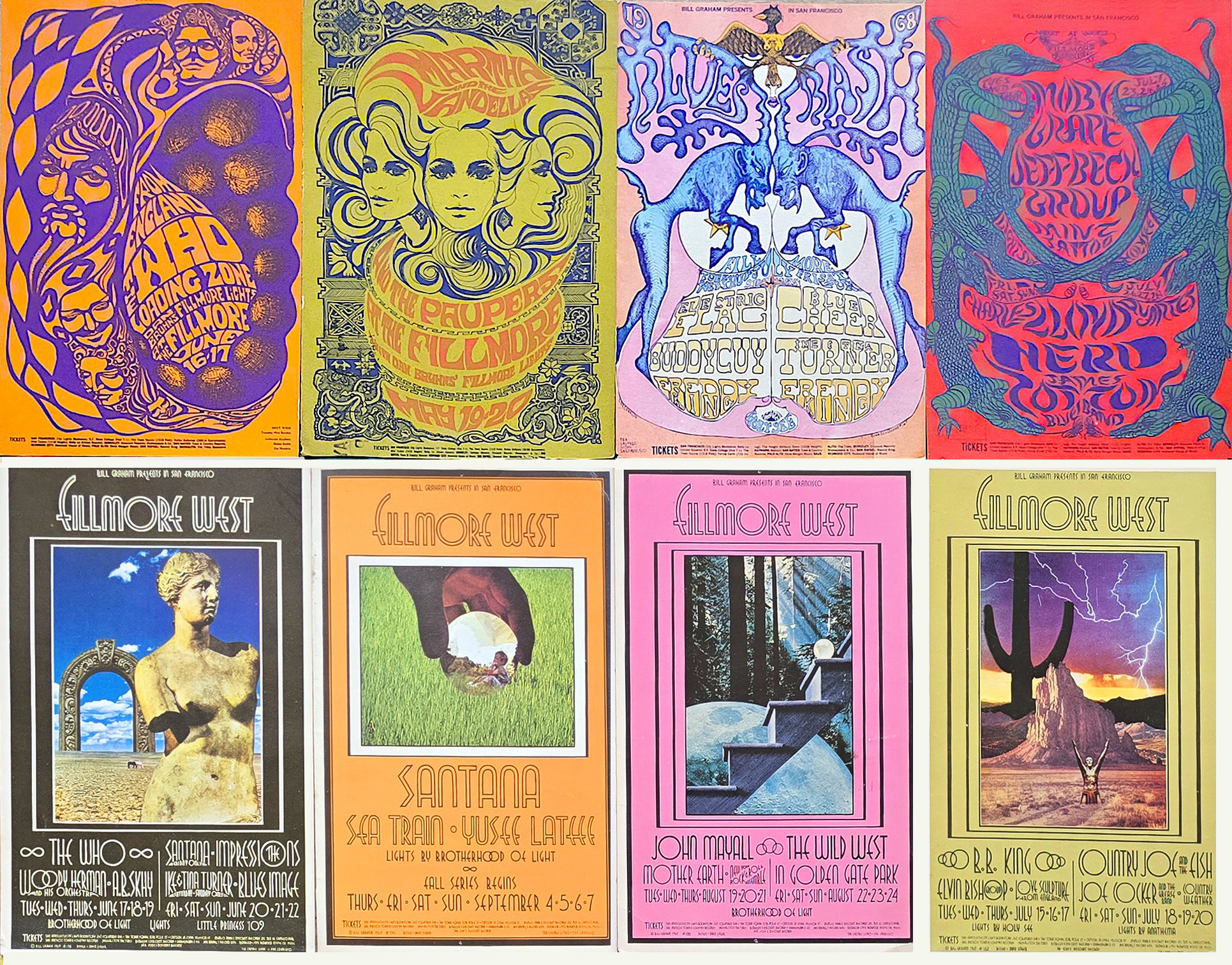
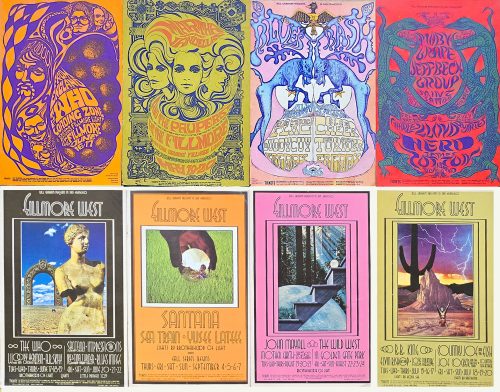
Yet, the instinct to wed the two was always in my bones from a very early age. For me, music, sound and visuals always went hand-in-hand. What would a firework show be without the whizzing, whistling and popping sounds as they shoot up into the night sky, exploding into glorious, shimmering patterns of color and light? Further, the most ambitious of such displays are sometimes accompanied by music. An unforgettably profound wedding of artistic light shows and music occurred weekly at Bill Graham’s Fillmore West in San Francisco, when I was a student at the University of California at Berkeley during the psychedelic era.
Promotional posters for the weekly performances were works of art. I collected postcard-size versions of them that were handed out for free at local music stores. These are just some of them that I’ve saved:

Although the same impetus that drove me to express myself in an ancient mesmerizing light-art medium also inspired me to begin composing my own songs, unlike my art, which was being exhibited across the nation and lucrative commercial commissions were coming my way, I had never once yet stood on a stage as a performer, nor was my recorded music ever heard by the public. That I had learned to play guitar so belatedly was surely one reason, However, there were others. For one, I could not grasp a link between the two. Nor were there any models of other artists I was aware of who had succeeded in wedding the two. With an acoustic guitar and simple analog synthesizer I began recording original songs, which were mainly inspired by the folk rock and what now is labeled “classic rock” of the 1960s and ’70s but I could not fathom where or how they could creatively interact with and enhance the stained glass artworks I was creating or vice versa. Bottom line, it is also extremely difficult to devote one’s time and energy at a high level to creating both visual art and music. When a member of the psychedelic rock group, “Cream,” Eric Clapton wrote in the lyrics of the song, “White Room,” “Goodbye windows.” He had studied stained glass creation in art school but an obsession with playing guitar and blues music interfered with his studies.
At the same time, I was in culture shock, for a few of the rock musicians I most admired fell prey to the hazardous consequences of a life of sex, drugs and rock ‘n roll. It did not help that my sister became close to several of the stars of the Hollywood rock scene and what I became exposed to from the inside was anything but inspiring, for several succumbed to the excesses, as became the fate of both my former boss, when I was art director of ROCK magazine (See From Glass to Rock) and my sister.
Finally, I found a most unimaginably unconventional bridge between my artistic exploration of an ancient luminous visual art medium and music, upon preparing for my first solo installation of The Underground Cathedral in 1988, at the USC Atelier in Santa Monica. What made that bridge possible was a third element: sounds I had recorded inside of the underground. Playing both electric guitar and a simple analogue synthesizer, I conceived a combined music and sound recording, entitled, “F Train Fugue,” which incorporated the third element, in the form of a recording of a ride on the New York Subway. The 25-minute end result was played continuously on a loop for the duration of the one-month exhibition. It consisted of brief musical motifs combining original, popular and traditional compositions, which I chose for the sake of representing rituals, ranging from a wedding procession to the classic theme song, “Take Me Out to the Ballgame,” the classic surf song, “Pipeline” by the Chantays (riding in the “tube,” which the underground is affectionately called in London, as opposed to that of an ocean wave), and a funeral, all recorded with the sound of a church organ with a few electrical guitar embellishments. Here is a detailed description of the original recording and a few samples of the soundtrack:
A decade later this visual-art-sound concept began to evolve in several ways, thanks to the advent of multimedia computer tools which had entered the consumer marketplace. No longer were the visuals merely static artworks but video. I sought out to make my own music videos, but not at all in the style or with the purpose of what had become commonplace on MTV: videos intended to promote the artist, who normally performed in them. This was not at all my intention. Rather, my music compositions, as in the case of the installation many years earlier, were composed to interact rhythmically and thematically with the visuals I edited for the sake of creating a narrative that had nothing at all to do with me personally, for I never once appeared in them, aside from taking credit for the fact that the wedding of visuals, music and sound was my creation.
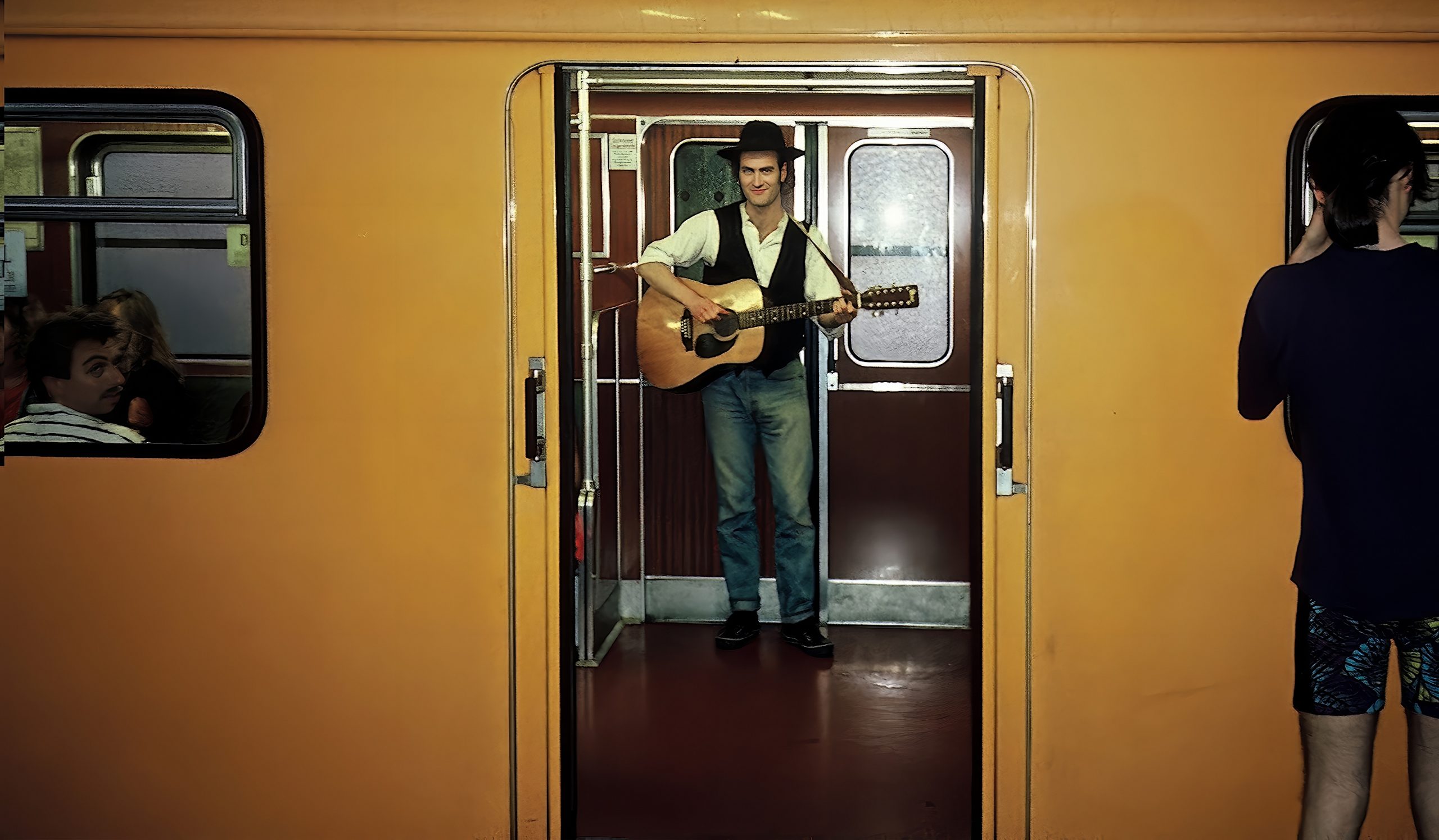
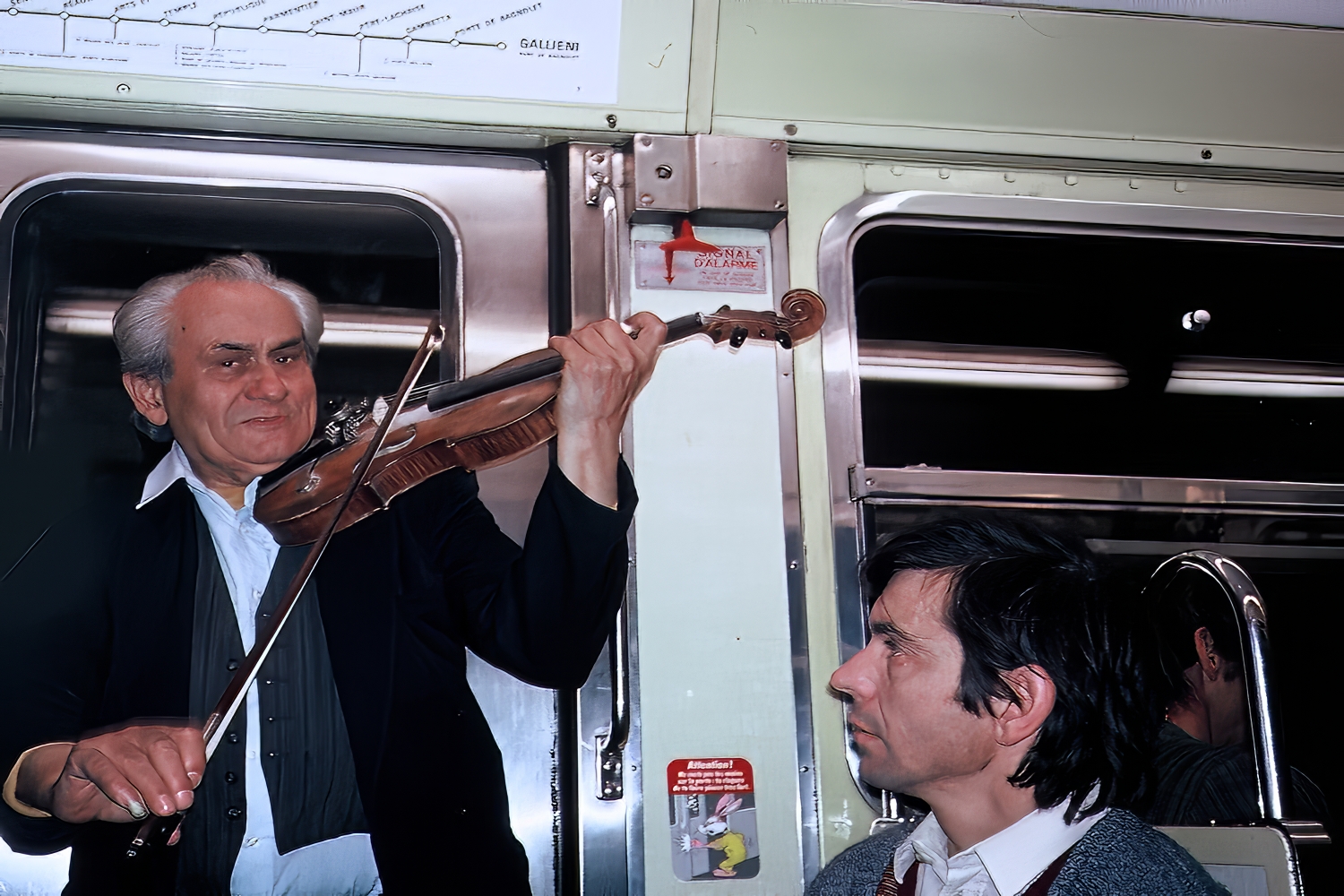
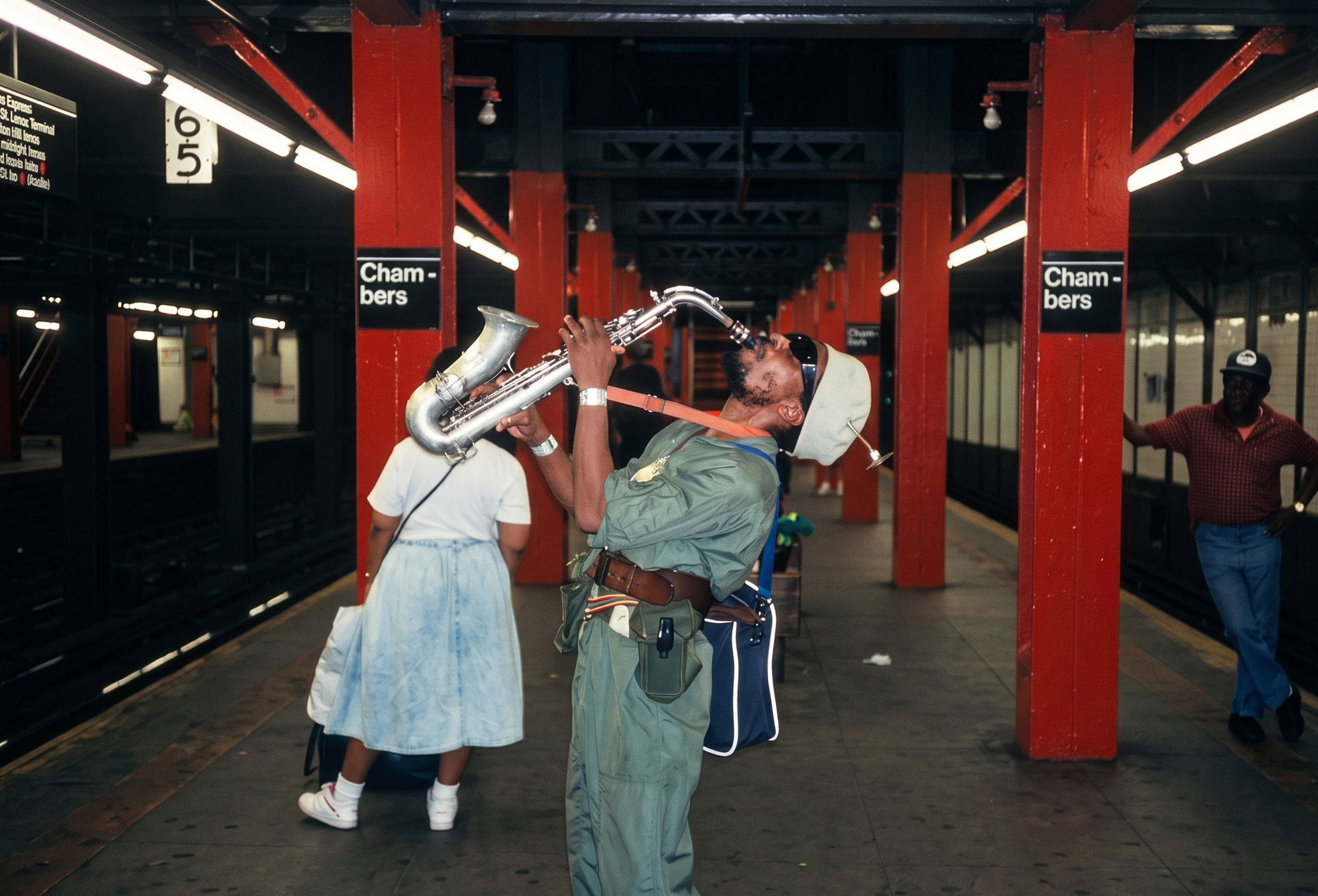
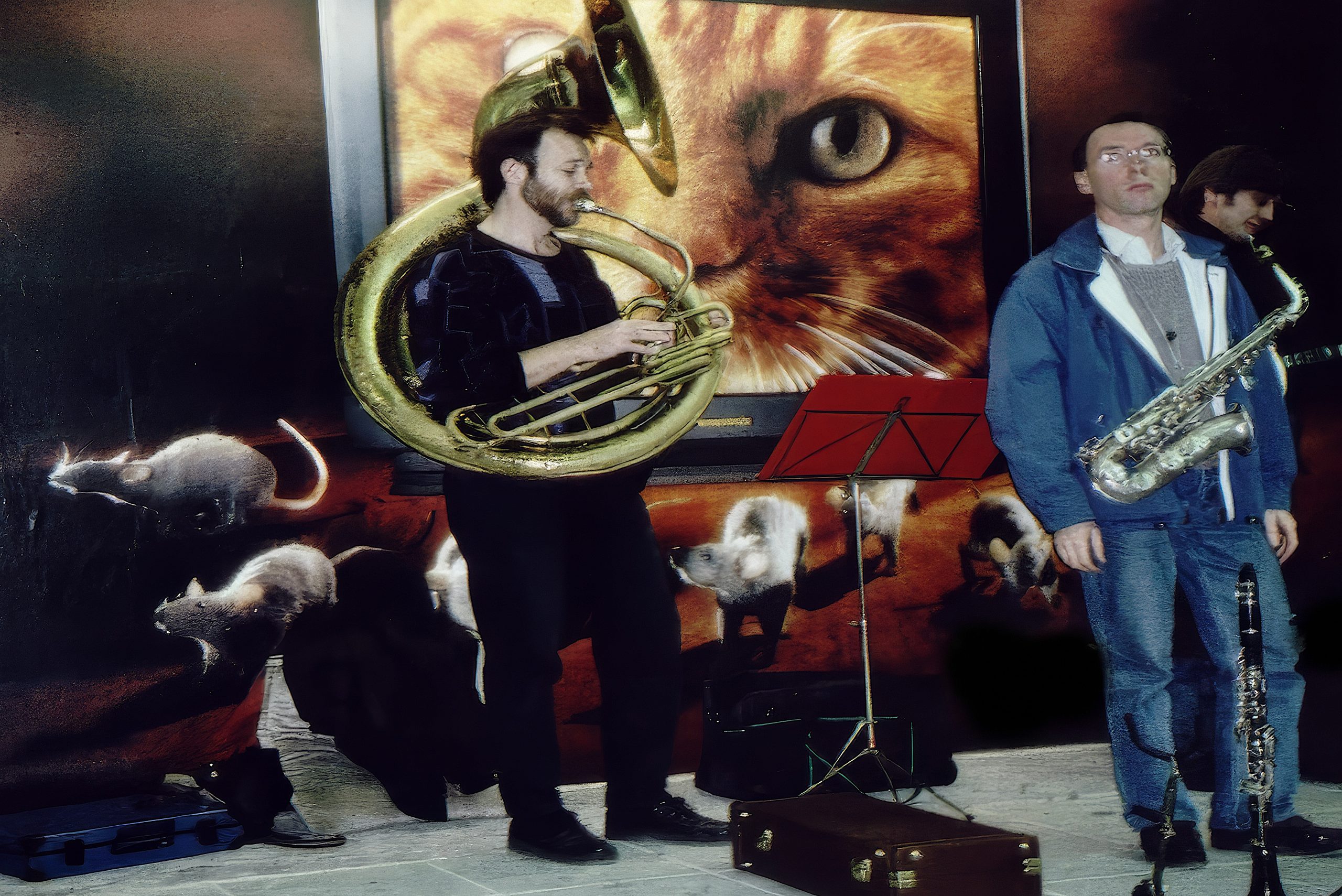
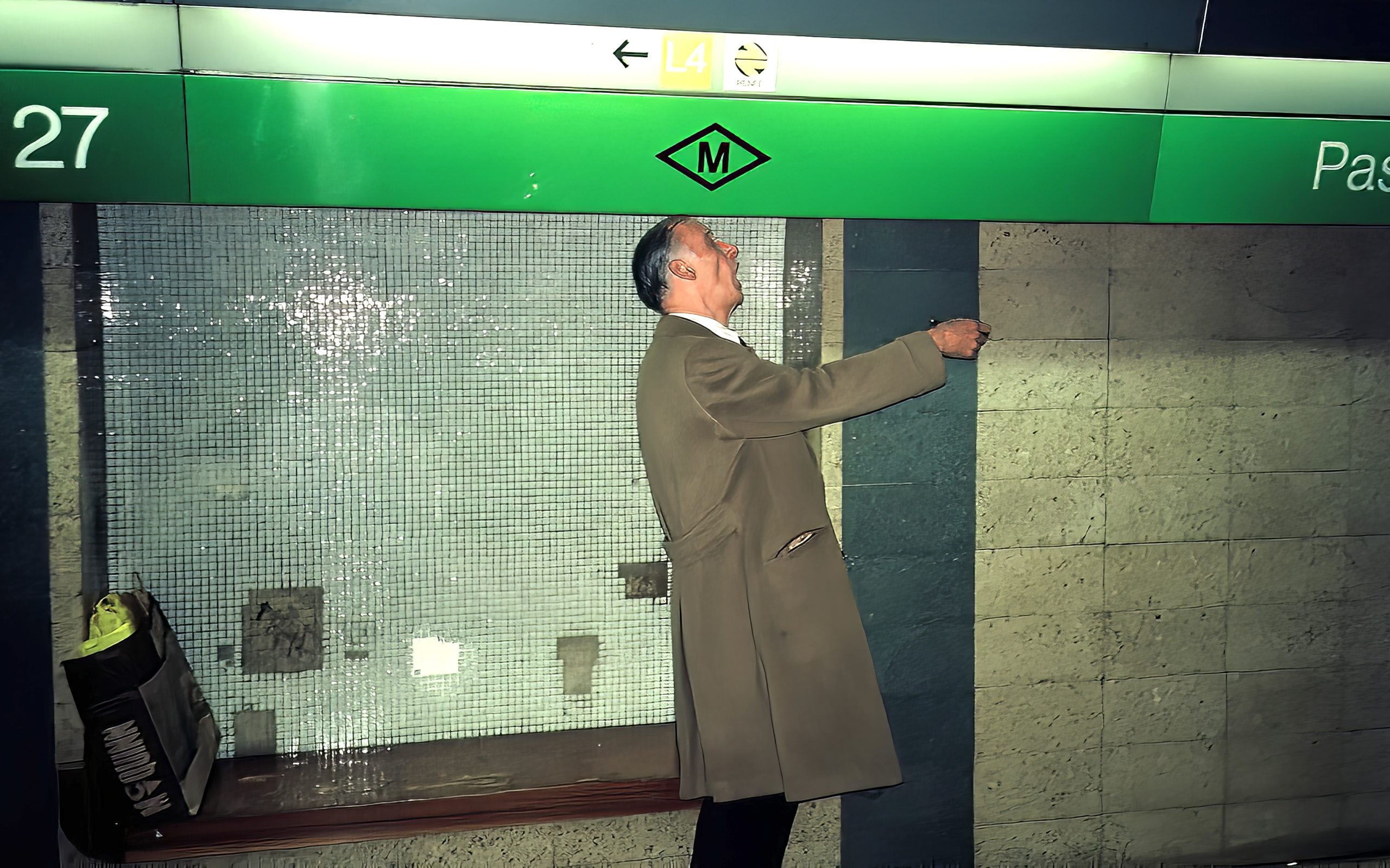
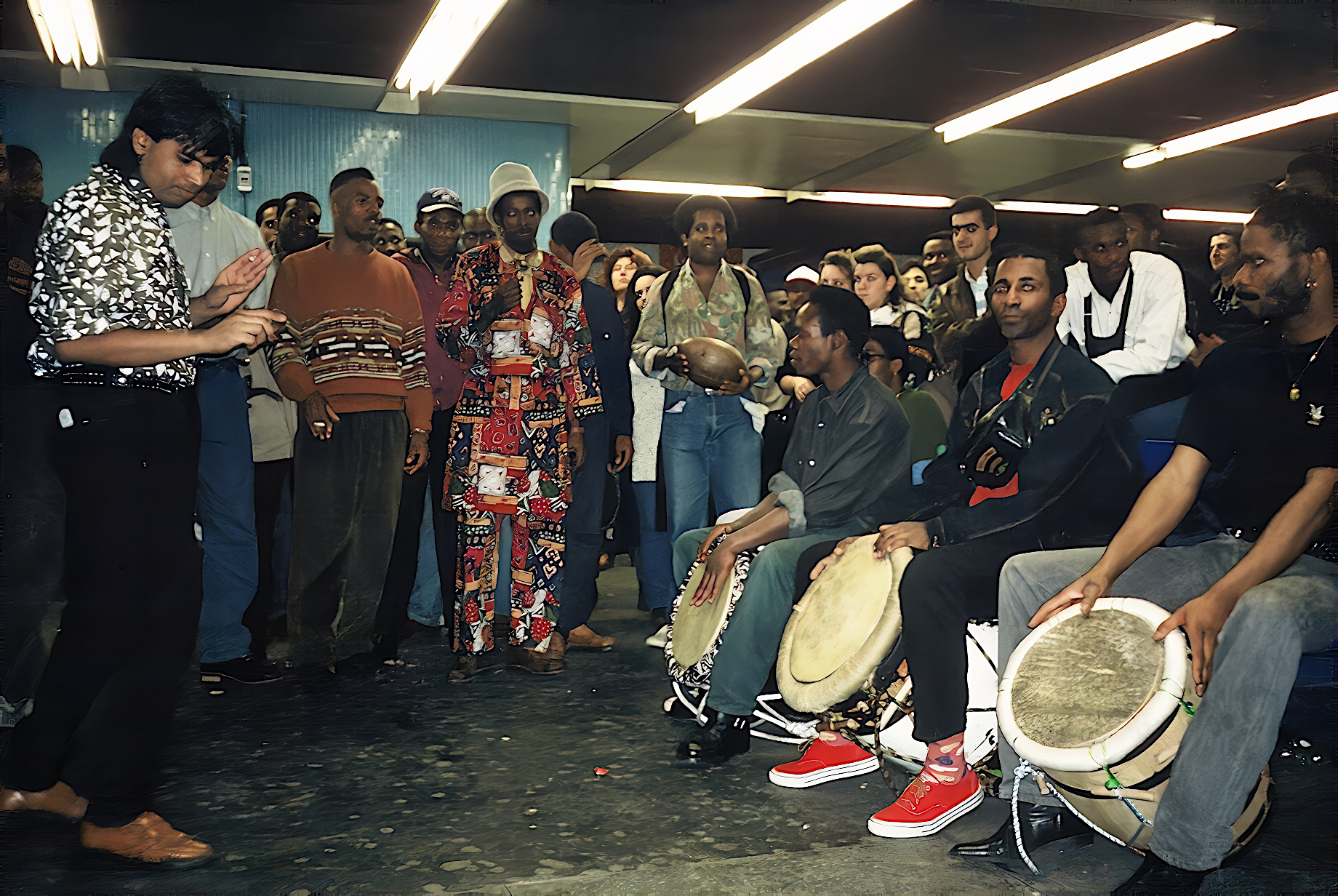
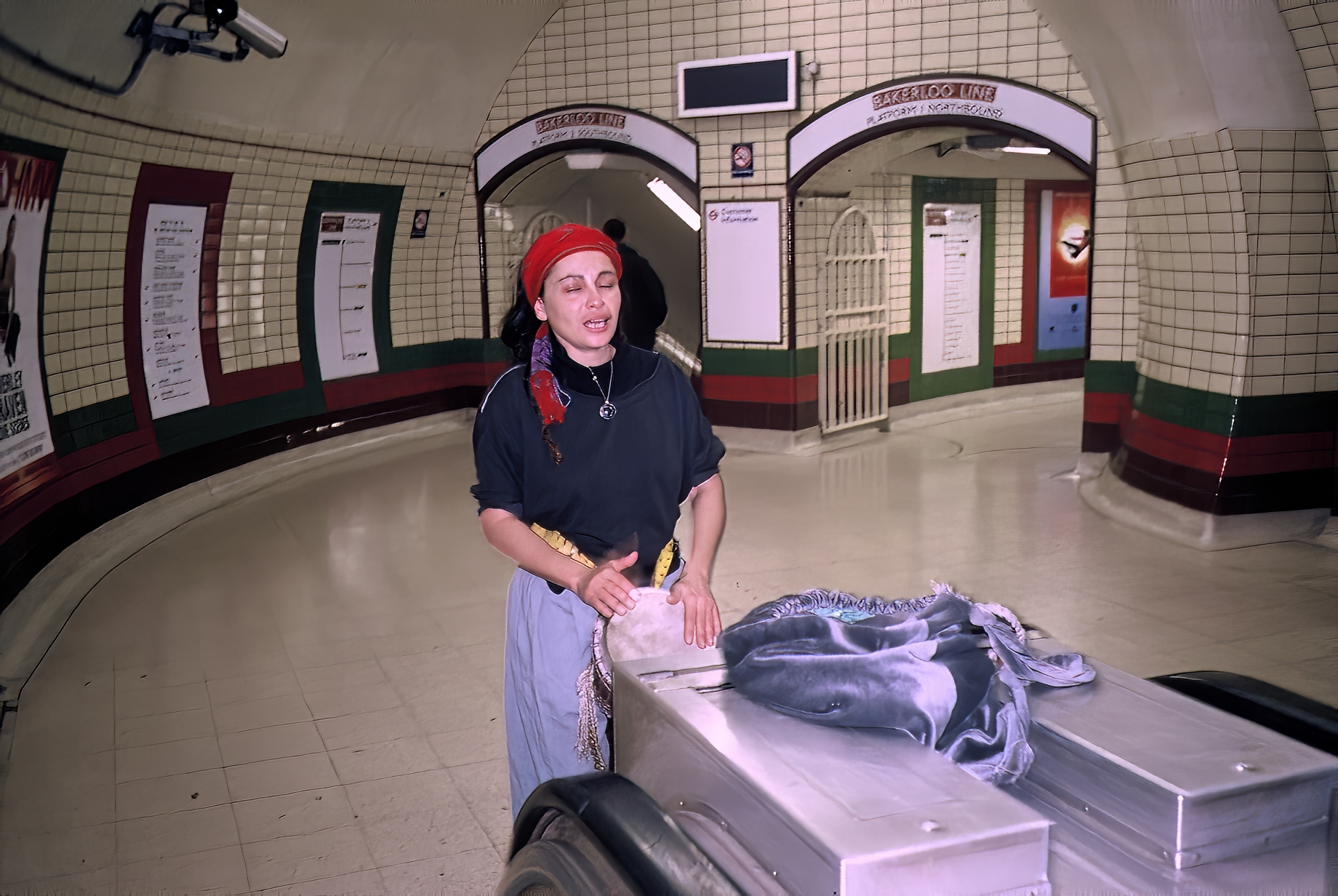
The end result was a one-hour musical film consisting of a series of compositions linked together on the basis of a theme: travel through underground metro systems that I had captured via photography, sound recording and later video shooting. The only performers seen in them were buskers playing and singing for spare change, a few who I am heard speaking to but I am never seen. Alas, this changed when in of all places, Poland, I was afforded an opportunity I could not turn down: to perform the music live, much of which I had composed and recorded with the sounds of classical instruments, my “music studio” consisting of a multitimbral synthesizer and MIDI recording software, an amazing new tool at my disposal. I performed the soundtrack live as a rhythm and lead guitarist, along with a progressive rock trio, two violinists, a cellist, oboist, flautist and pianist.
Published Articles: Debut Live Musical Performance
As in the case of the soundtrack I had recorded many years earlier, the music coexisted with sounds of the underground; However, in this case, they had been recorded during extensive travel over several years in a number of metro and subway systems, from my native home of Los Angeles to Moscow. Further, rather than be a continuous recording of travel inside of a train and superimposed musical pieces, selected sampled sounds were carefully edited and composed as components of the musical recordings, capturing the ambiance of undergrounds in all possible aspects. These clips represent but a few samples what precious little visual documentation I have of these two performances. For a list of reasons that I never completed writing a book to describe, although a documentary of the performance was broadcast on Polish TV, it has never been repeated live to this day. However, plans are in the works for its revival, hopefully soon, and in a most exciting way!
With no prior experience, no formal or even informal teaching in music or video making, the challenge I gave to myself perhaps would have never happened otherwise, for I might have thought it too crazy of a challenge. I composed the music either to be in perfect synchronization with the video, or to the contrary, edit the video to be in perfect rhythmic synchronization with the recorded compositions. On top of this, sound samples of underground systems were edited and integrated into the compositions rhythmically and thematically. The brief introduction to the film is a perfect example, for it ends with an elongated sound of a buzzer of a Paris metro train that was about to depart from a station that is in perfect pitch with the short composition’s melody and harmonic tonality with the sound of a pipe organ:
A film version was also completed, its soundtrack consisting of the studio recordings. Here are some samples from the studio recordings. A few of them demonstrate interactions I created with the live performances I captured of underground buskers:
Tentaculos:
About to Depart:
Metro Boulot Dodo:
Moving Spirit:
Paquito:
Greve:
Under Lenin’s Tomb:
The Tunnel’s End:
Samoobsługa:

After performing for the first time in my life with an ensemble of combined classical and progressive rock musicians, on top of which it had to be perfectly synchronized with a projected video, recorded sounds and musical parts, I did something experimental which required none of the above. In a Krakow, Poland student-run art gallery, I performed programmed sampled sounds recorded in undergrounds into the keys of a synthesizer, whereas other keys were programmed with sounds of musical instruments. The video was projected onto an ancient stone wall in the basement of a medieval building. With no musical composition to follow, I improvised on the keyboard, simultaneously playing both musical and sampled underground sounds, which were also distorted with a heavy echo effect. A drumbeat was played on the keyboard simultaneously. This low resolution video clip is likely the only documentation of the performance that exists.