
ENVIRONMENTAL – EXPERIMENTAL
These are examples of my architectural and environmental commissions, plus autonomous experimental stained glass artworks created from the late 1970s to late 1980s. Aside from their compositions, what distinguishes them from the traditional concept of stained glass windows or skylights is that the construction of varying textures and densities of glass create a sense of dimension and play with what is seen through their surfaces. Textured glass will logically distort whatever is seen through its surface, while some glass transmits light but blocks what is seen through its surface. Traditionally, stained glass was conceived to tell illuminated Biblical stories, then later served as illuminated decoration. Tiffany mastered this by using glass with an opalescent glass that looks akin to illuminated ice cream with streaky colors which completely blocked out any view behind a window. This type of glass also naturally became utilized in creating lampshades.
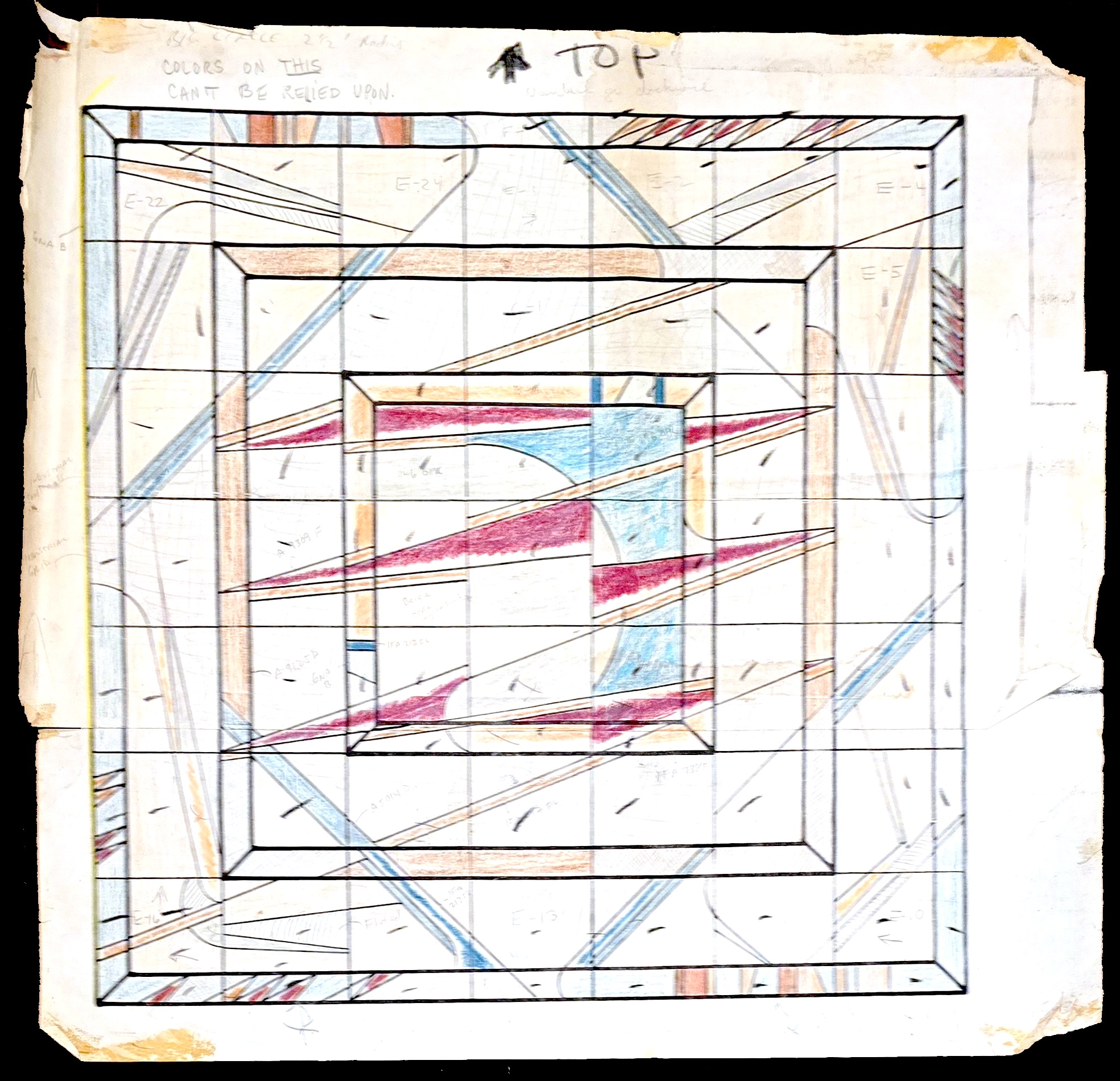
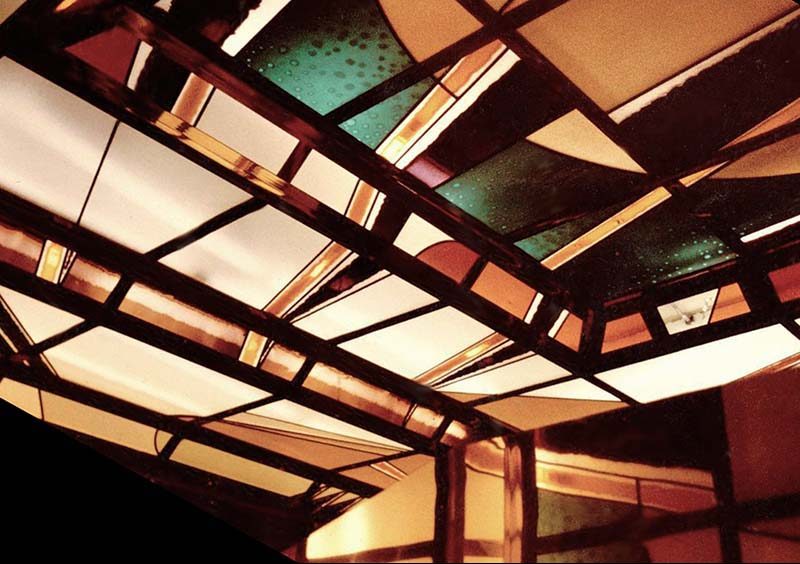
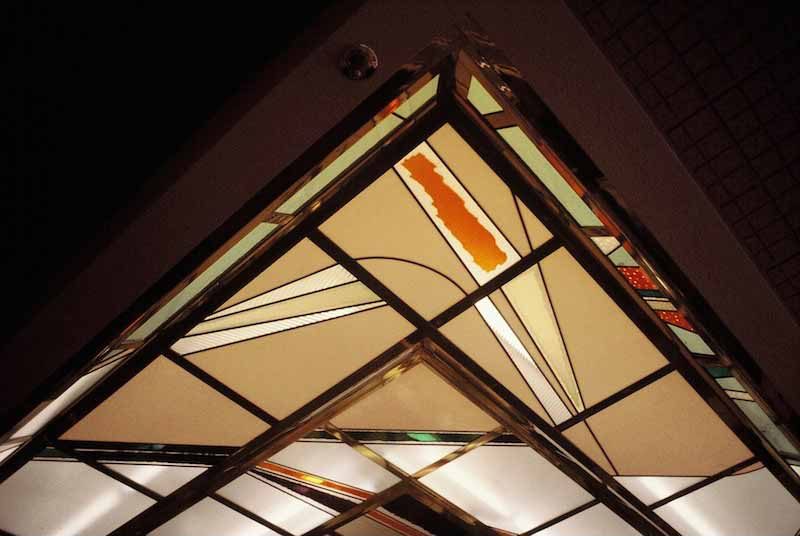
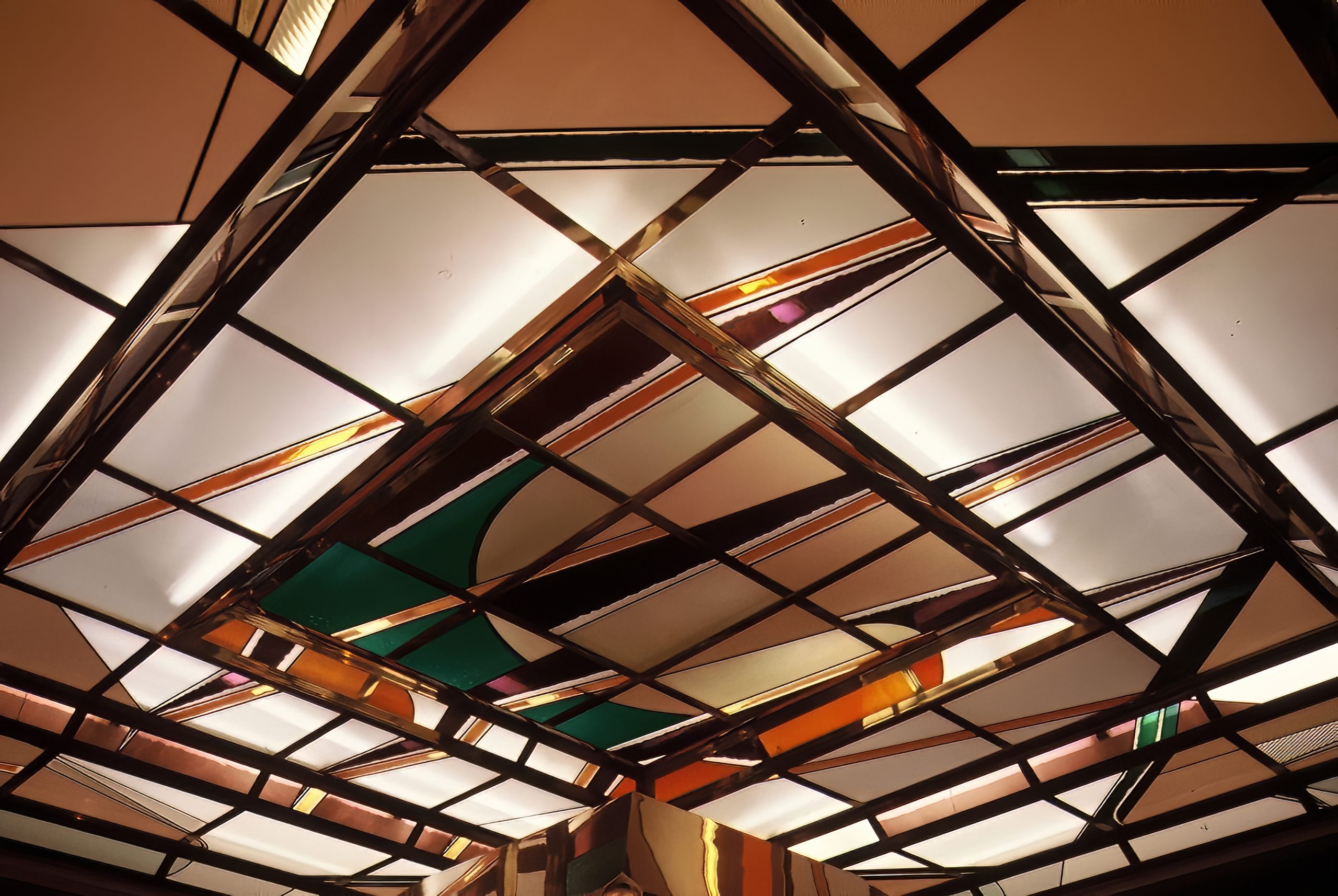
Here is an original handmade drawing, followed by photos of a 14 x 14 foot skylight that I both designed and executed in 1985, for the Embassy Suite Hotel, in Indianapolis, Indiana. It was installed in many modular pieces within a three-tiered brass frame above a 360 degree bar beside an enormous window overlooking the city.
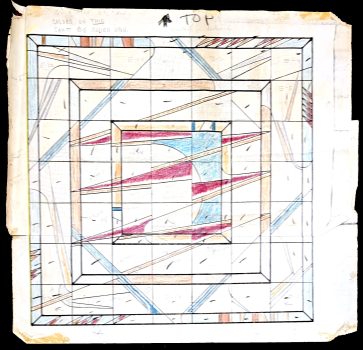

One might think of this as an enormous lampshade, since it is artificially illuminated by fluorescent lamps. Hence, one would not anticipate anything to become visible through the glass. Yet, I applied a trick to this design, which was to become intentionally interactive with the artificial light source. Very narrow pieces of glass were integrated into the composition, which were transparent. As they bisected the thin tubular fluorescent lamps, any movement of one’s own body or head upon gazing up at the skylight would create an illusion of a small light source moving along those narrow pieces of glass, where only one tiny fragment of a tube would become visible. They also interacted similarly behind larger pieces of transparent glass, which are so densely textured that the tubes became vague, abstract forms.

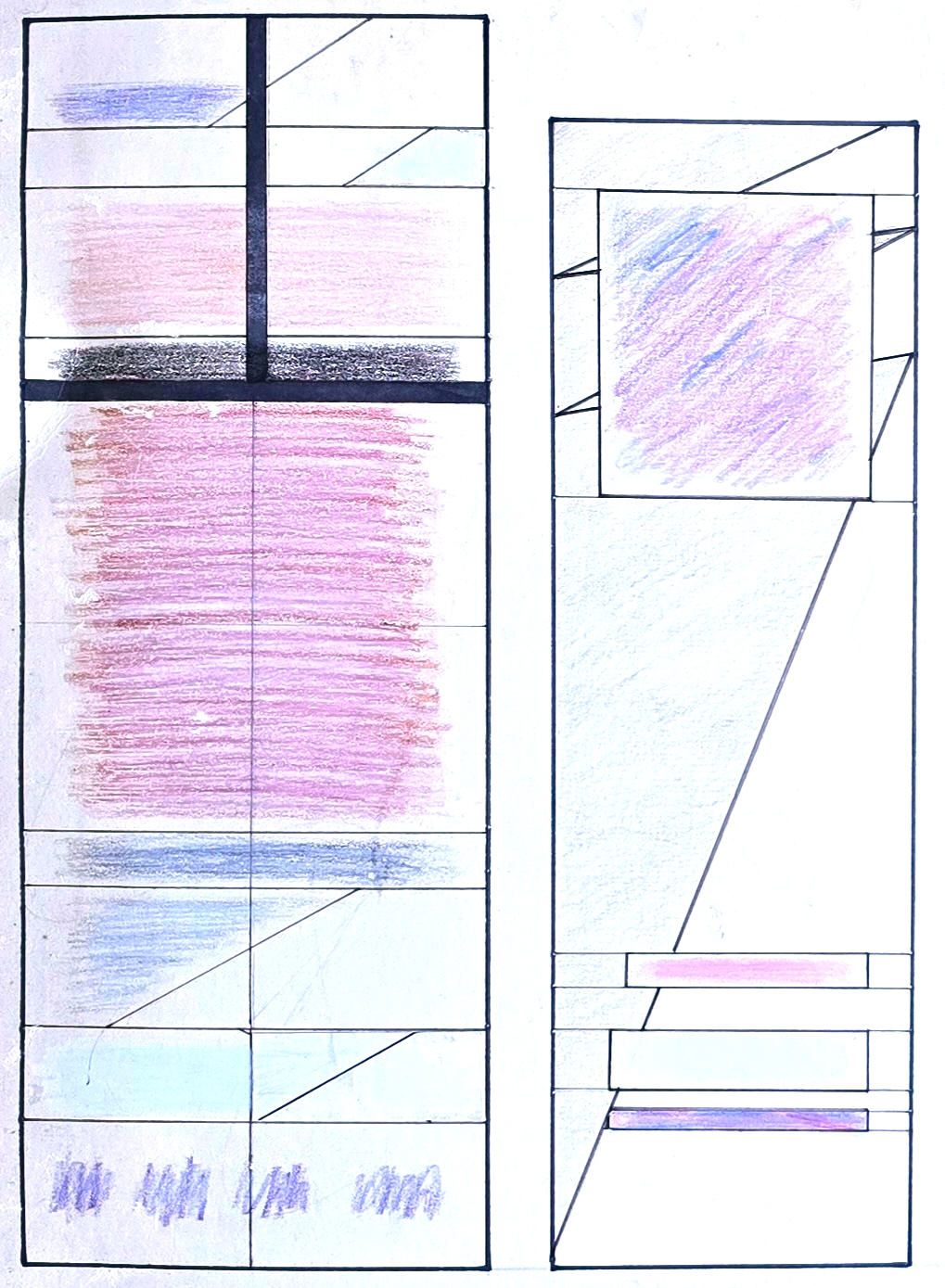
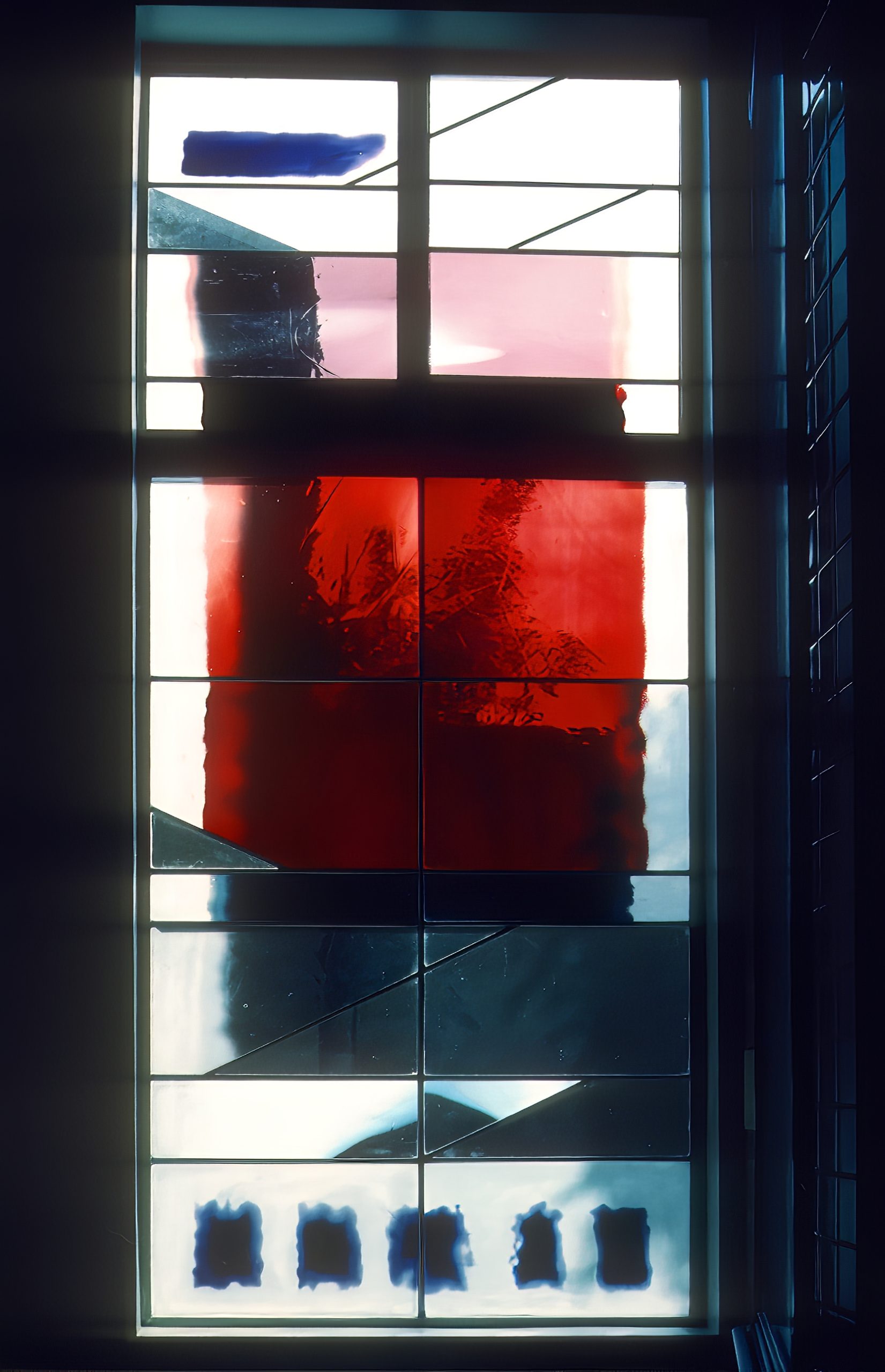
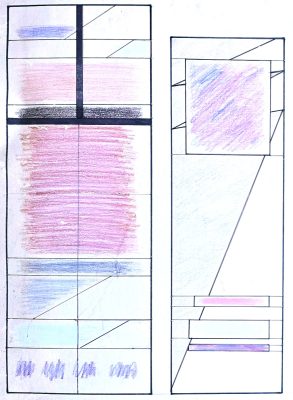
The following images are of minimalist windows that interact with exterior views. The drawing on the left was inspired by one of my favorite painters, Mark Rothko. The zigzag design of the right composition is directly inspired by Swedish minimalist Olle Baertling’s 1955 geometric painting, “HATHOR.” Alas, here are the original drawings I presented to the client:
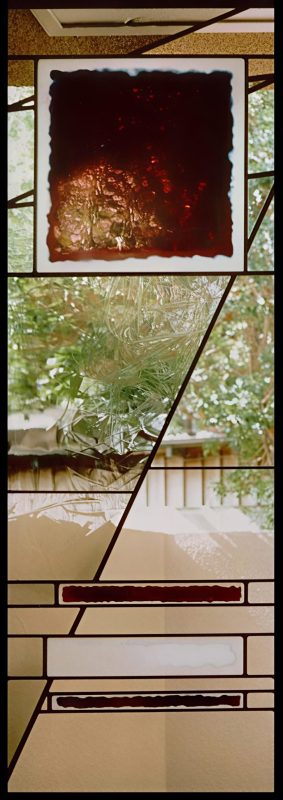
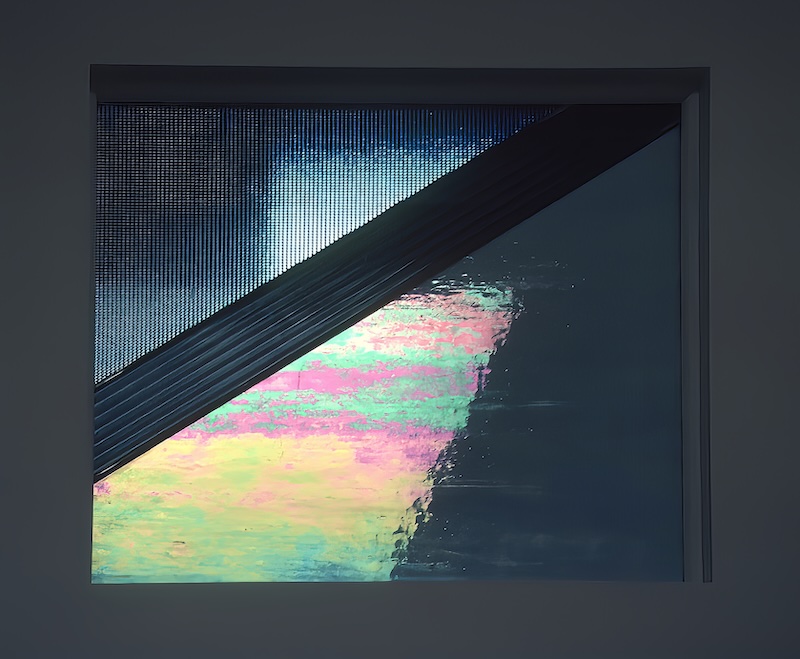
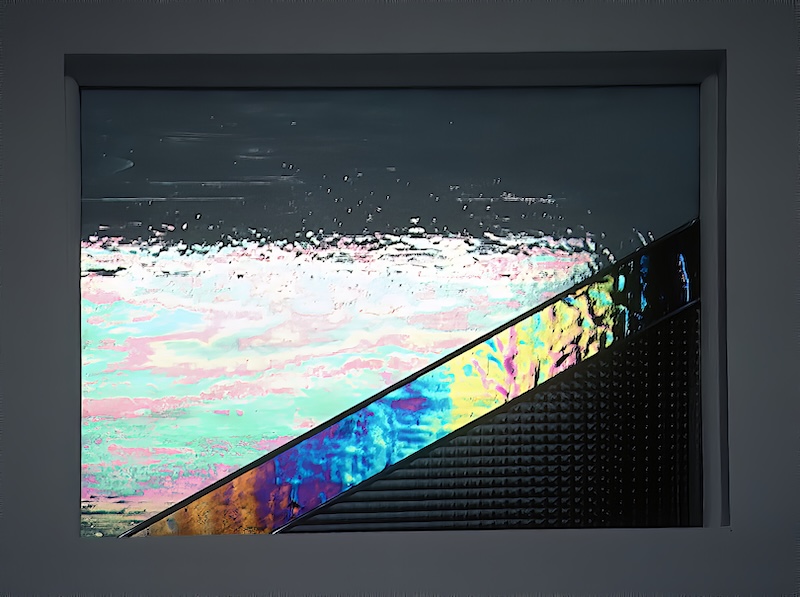
Various glass textures determined how they were perceived environmentally, in relationship to what was visible through the compositions’ surfaces. In the first two images (of the same artwork), an organically textured type of hand blown glass distorts both a wall and tree leaves. In the detailed view, there is one large deep violet piece of glass that is surrounded by a white surface that emits light but is not transparent. This is a type of glass known as “flashed glass.” It contains a thin glass surface color that covers a bottom layer of glass that is either transparent or a second color. In the case of this artwork and all others seen on this page, the white border was sandblasted, removing the surface color and exposing the transparent second layer, which became opaque white from the intense blasting of the sand.
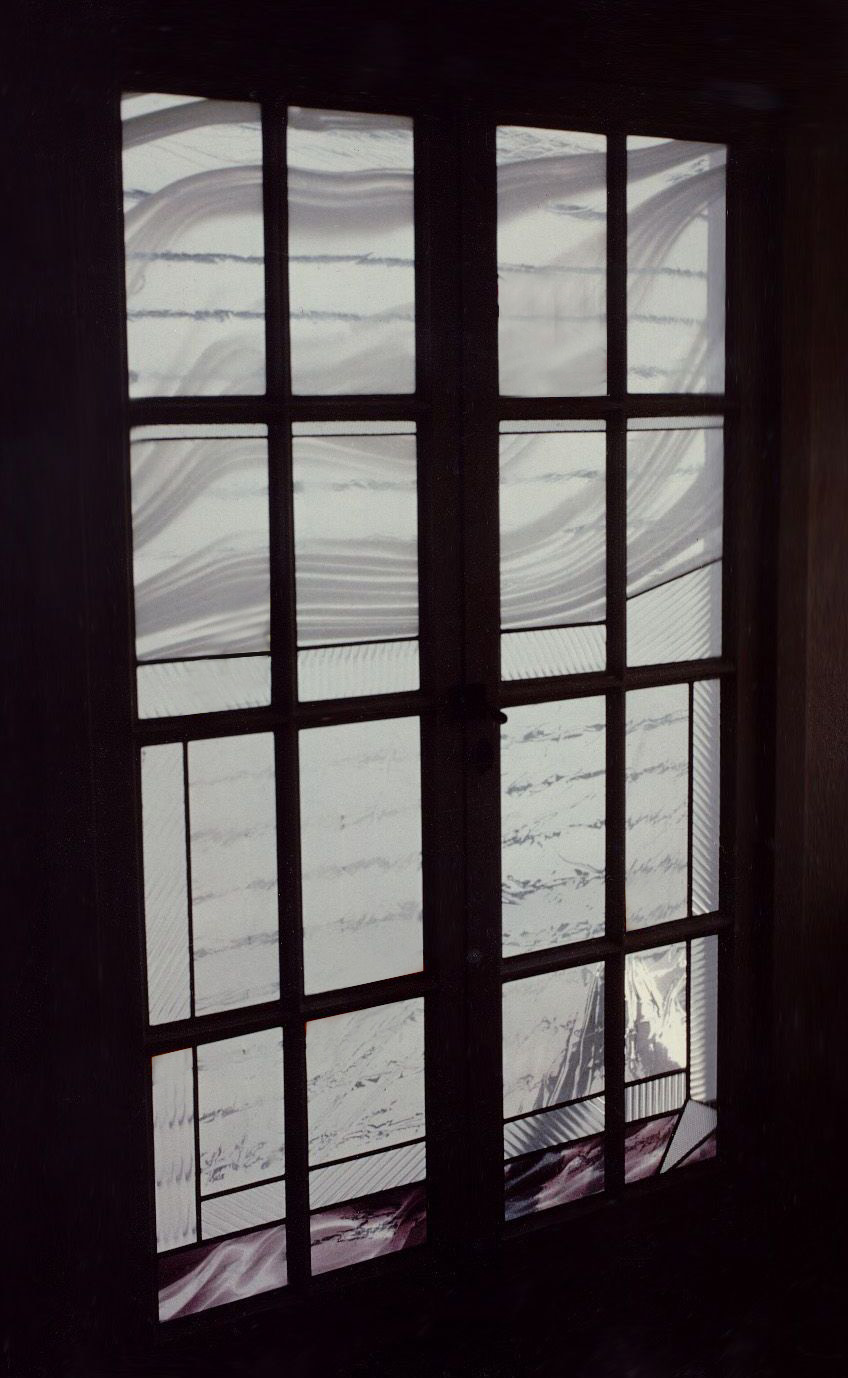
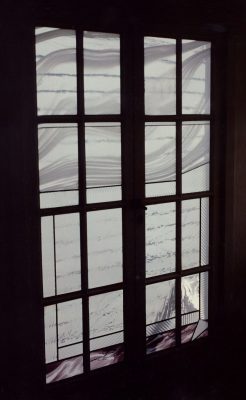
The two photos below show the same main part of a two-piece window, which at first was temporarily situation before a large window facing the Pacific Ocean. I believe that most viewers would agree that this was a more beautiful usage of the glass composition than where it ended up, installed as a bathroom door window. In both instances, the textures of glass interact with the background interestingly, although far too often clients I have worked with in the past missed a golden opportunity, for fear that the glass would be interfering, as opposed to beautifully interacting, with a spectacular window view.
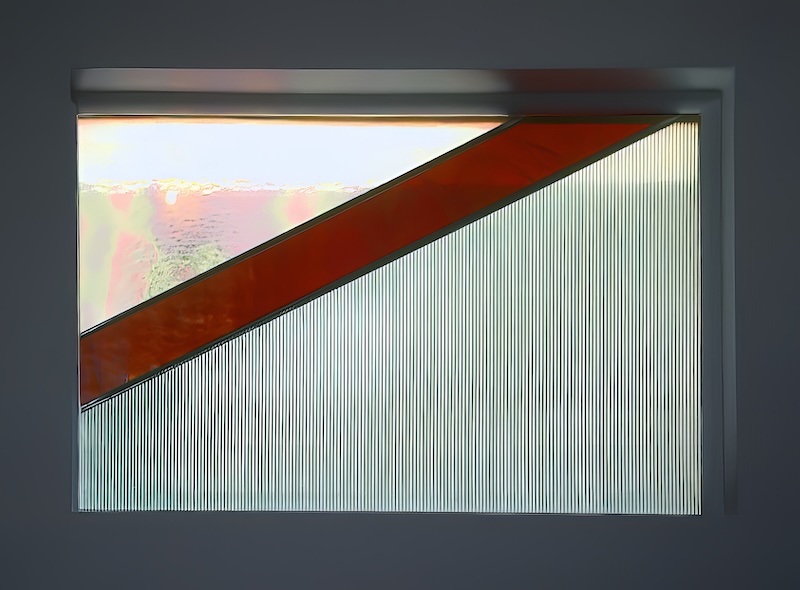
The following image was conceived similarly for another home situated on the Malibu beach with various textures of transparent glass, for a window which faced the unappealing view of a Shiplap white wall of an adjoining home. My intention was to make use of the unappealing nearby white wooden wall of the next door building that was the only view visible through the window. At the top of the stained glass composition I employed an organic swirling combination of transparent and opaque white glass. Similar glass with dark violet swirls was placed into the bottom portion of the composition. Hence, the wall of the facing structure was intended to interactively become perceived as if distorted shapes, as viewed through the surfaces of various textures of glass, always seen somewhat differently depending on one’s movement or angle of perception, as well as according to changing seasons and available sunlight. My concept in such an instance was quite opposite of a Tiffany-style window, which would intentionally block such an undesirable view, while emitting light through a painterly stained glass composition.
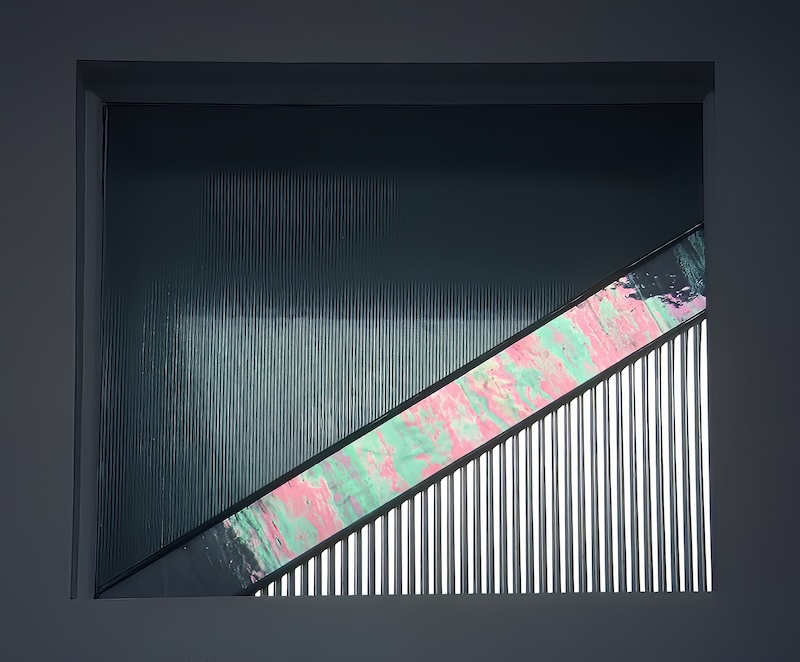
These two photos are of bathroom windows, the first one louvered, the second a sliding window, for a residence in West Los Angeles. Mostly consisting of clear transparent glass of various textures, the pieces were conceived to interact with exterior vegetation.
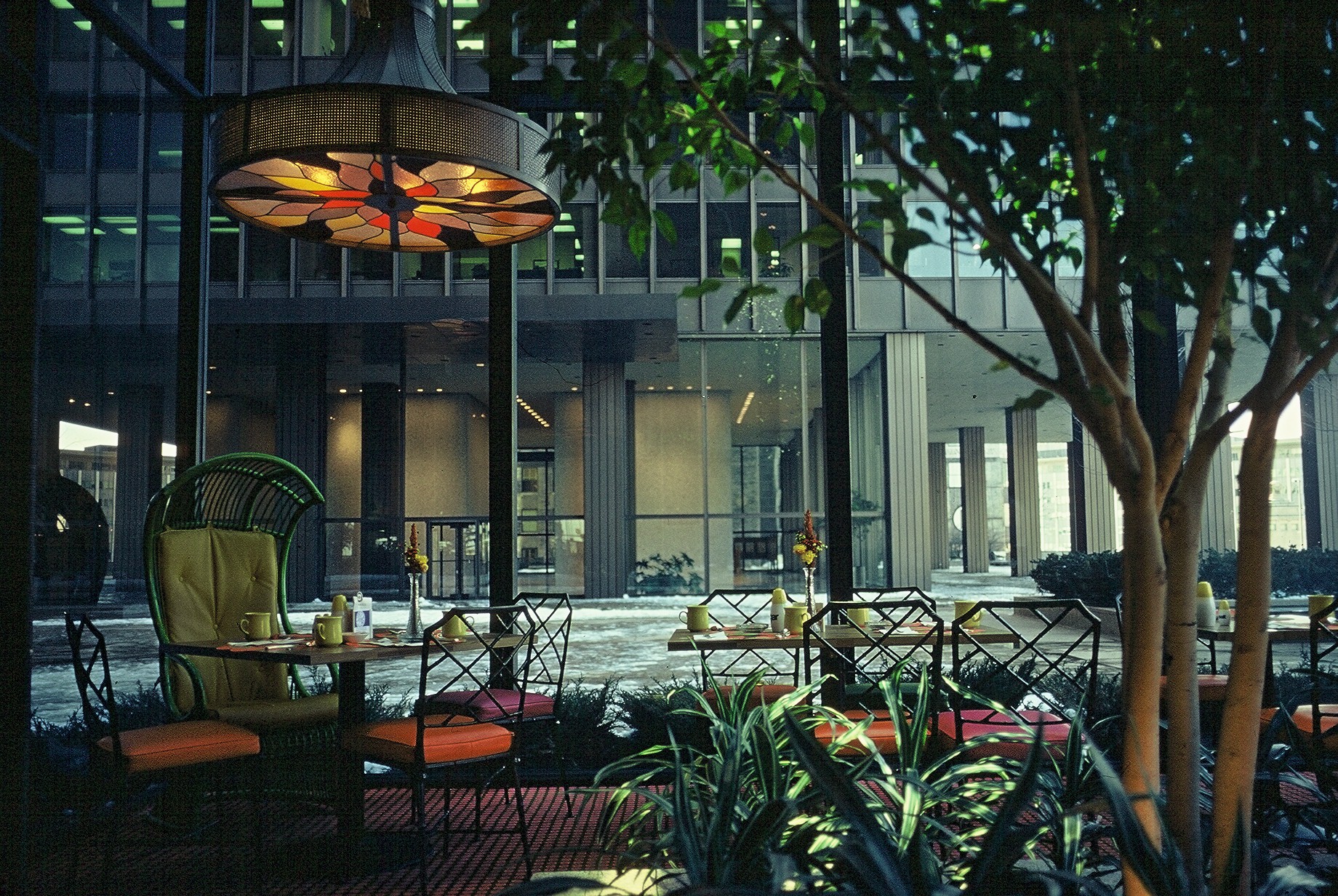
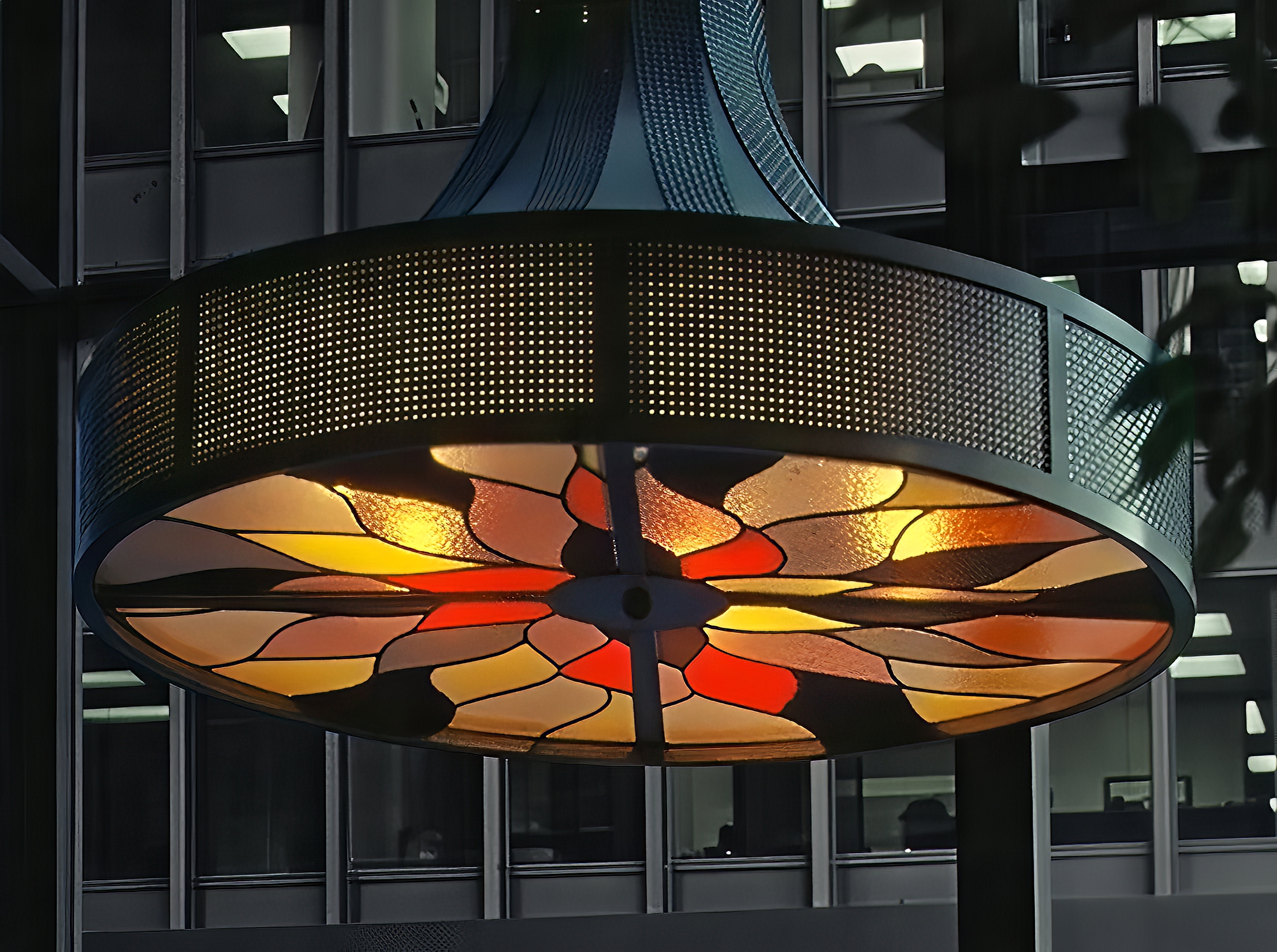
The circular overhead enormous lampshade below is one of eight created for a lounge area the Marriot Hotel at O’Hare International Airport in Chicago. In this case, the transparent textured colored glass that I chose shimmers in different ways, according to from what position a viewer perceives the illuminated artwork overhead.
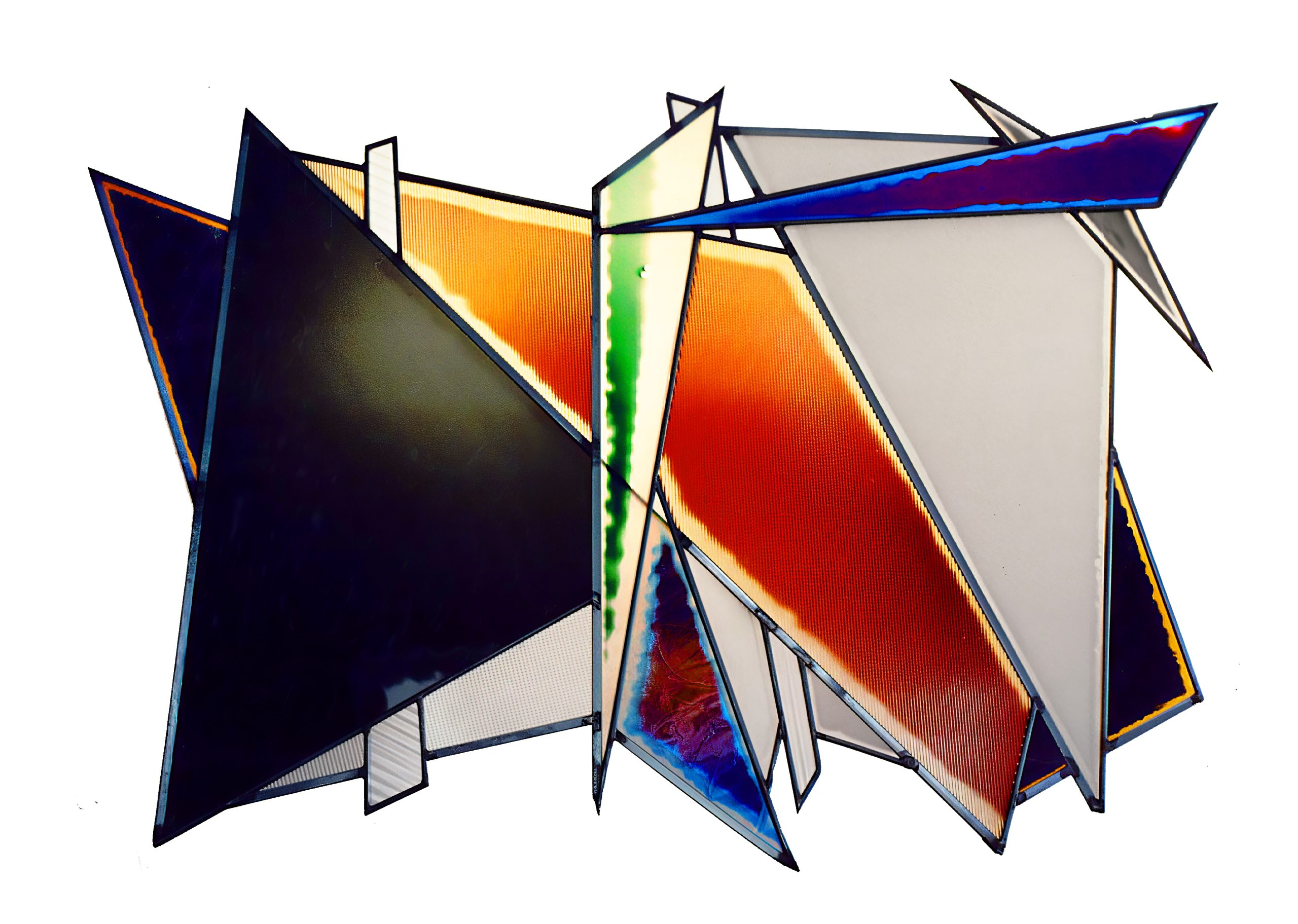
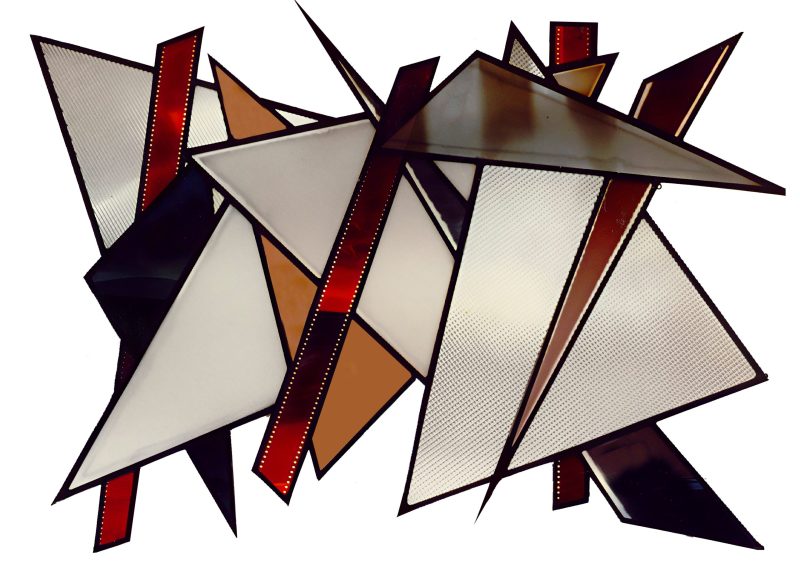
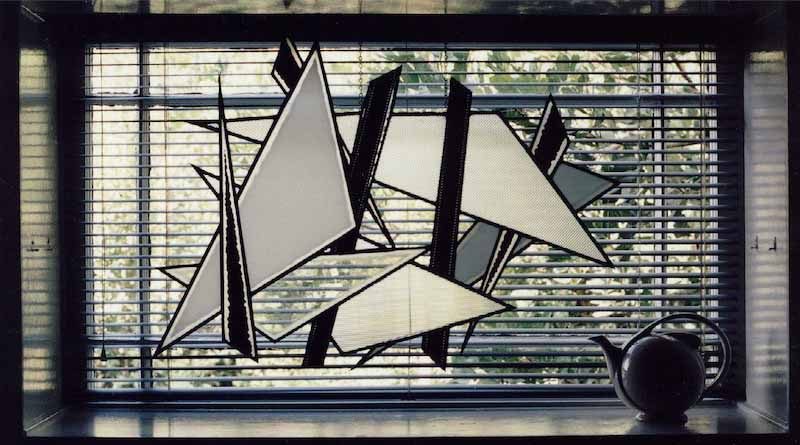
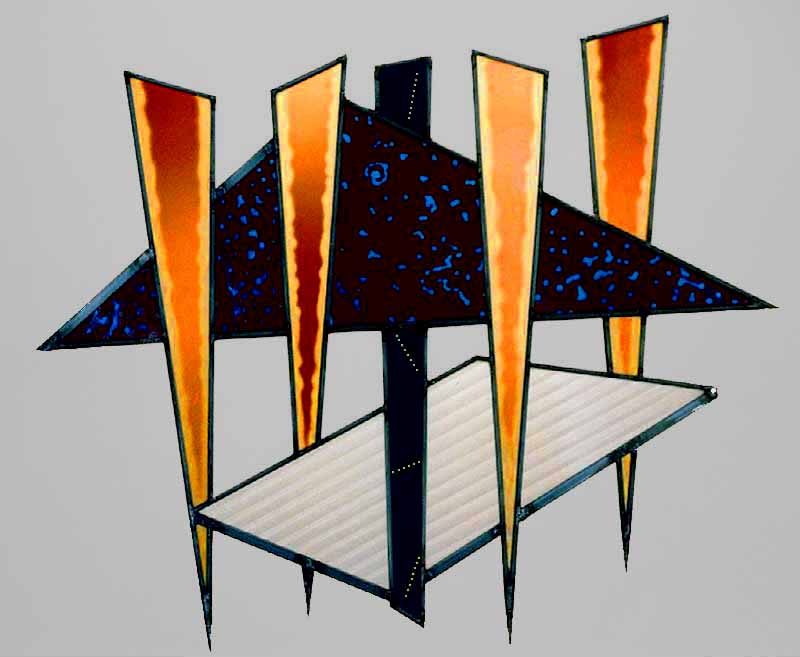
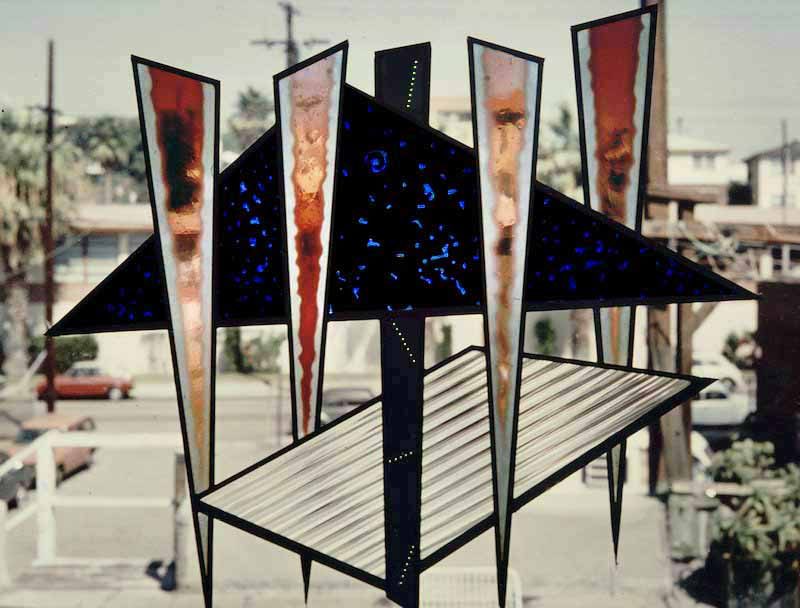
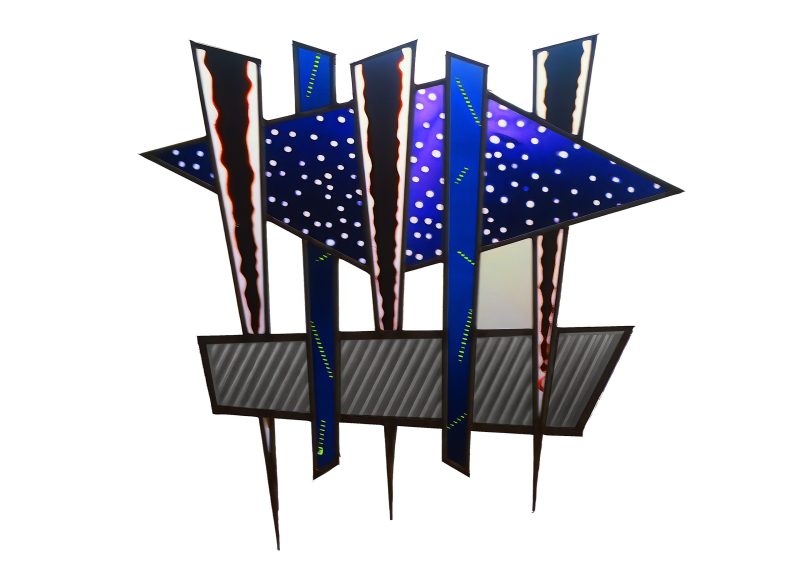
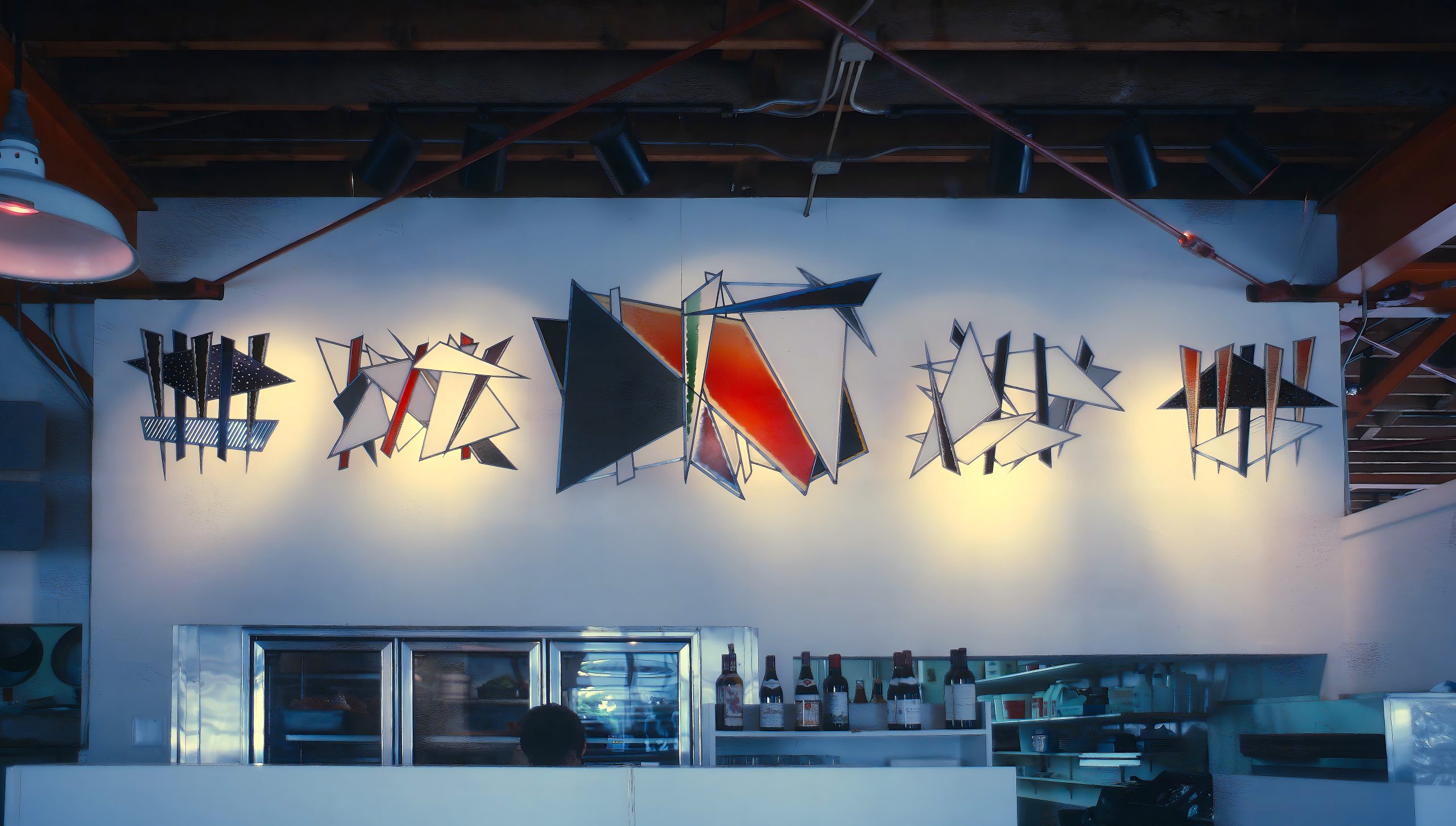
These artworks represent further major departure from the concept of a stained glass window, skylight or lampshade. Not only are they not defined by a rectangular, square or rounded frame but they have no formal border or frame. Further, what appears to be a 3D sculpture is, in fact, an illusion. Hence, what these artworks do have in common with usual stained glass compositions and applications is that they are flat and that they were constructed in the traditional way with strips of bendable channeled lead that is called lead “came,” even though they are intended to appear to be sculptural objects.
The first image below is the first of an experimental series, which create the illusion of floating 3D constructivist objects. In fact, the only 3rd dimension is in the various textures of glass I constructed together, as well as the rounded surface of the lead came which holds the pieces together. The following four, entitled, “The Glass Celluloid Series,” represent a continuation of this concept, each construction also incorporating the illusion of 35mm strips of film. The deception is so realistic, in fact, that the owner of one of them, who worked for many years in the film industry, did not know until recently that what he believed to be 35mm film is glass.
In 1988, the last stained glass artworks that I executed with my own hands, as were all others until this time, were four simple minimalist compositions for a home on the west side of Los Angeles:
With each project, whether created autonomously on my own or by commission, whereby there were aesthetic requirements that I was obligated to follow, I treated each as a lesson and an opportunity to try something different, either visually or technically or both. What this and the other autonomous experiments that I show on this page: “First Conceptual Experiments” ultimately led to were the first key components of “The Underground Cathedral.” This same process of exploration and experimentation musically which led to becoming incorporated into the same life-long multimdedia project is described here:”The Wedding of Visual Art and Music.”