
Click on the toggle button above for full screen animation
Early Stained Glass Artworks
After quickly mastering the fundamentals of the craft of stained glass, not just its physical execution but in terms of its traditional functions and purpose, I sought my own direction but without any notion of where my instincts and investigations would take me. That direction quickly entailed not just making pretty pictures but telling stories, as was the case of the medium’s narrative biblical origins. One of my first efforts was a statement of breaking from such traditions. In this artwork, the traditional motifs of a colorful border and decorative embellishment were deconstructed from my first ever architectural commissioned work, a skylight for a mansion in Beverly Hills. Images of it are at the top of this page on the same site: “Classic Stained Glass in Beverly Hills.”
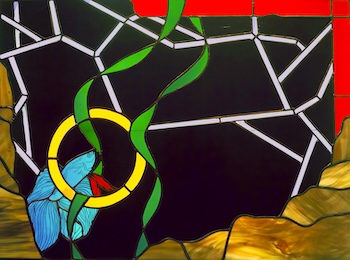

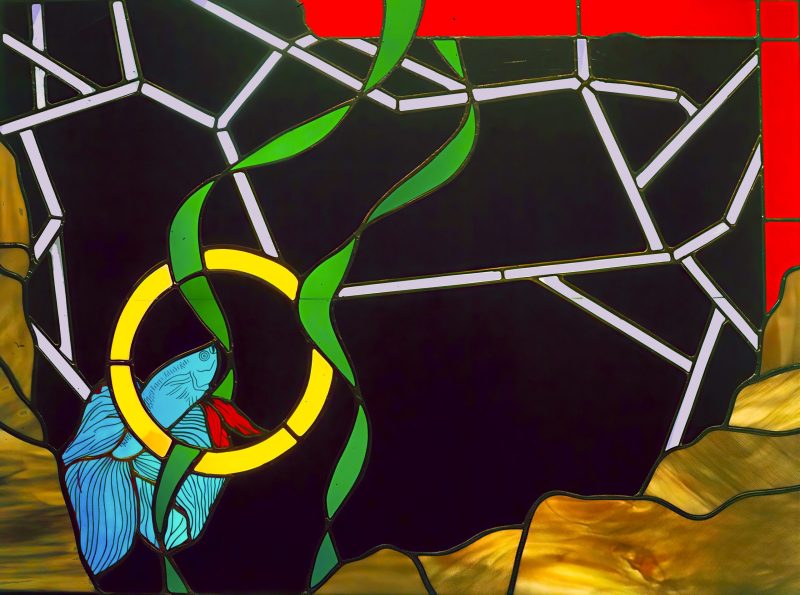
The Siamese Fighting Fish, one of the most beautiful creatures on earth, became my substitute for swallow-like birds that I hand-painted and inserted in the aforementioned stained glass skylight. This breed of tropical fish are curious creatures, given that their beauty betrays their malicious natures, for when males are confronted with another of the same gender, they will fight until the death of one of them. Curiously, females possess no such beautifully floral-like fins, their sole purpose being to reproduce. Trying to recall what motivated me to create this first experimental artwork, I presume the yellow ring represents a hoop that they would have to jump through, a symbol of being unable to overcome their inherently self-destructive predetermined flaws of nature. In the background appears to be straight grey lines of a map of streets from at nighttime aerial view. My memory is short of why, which is also curious given that later on my several decades long project of The Underground Cathedral came to be, which was born in a progressively developed obsession with subway maps and the transportation systems that they represent. I named this piece, “The Hobby,” for at that time I was teaching privately to individuals for whom learning the craft was nothing more.
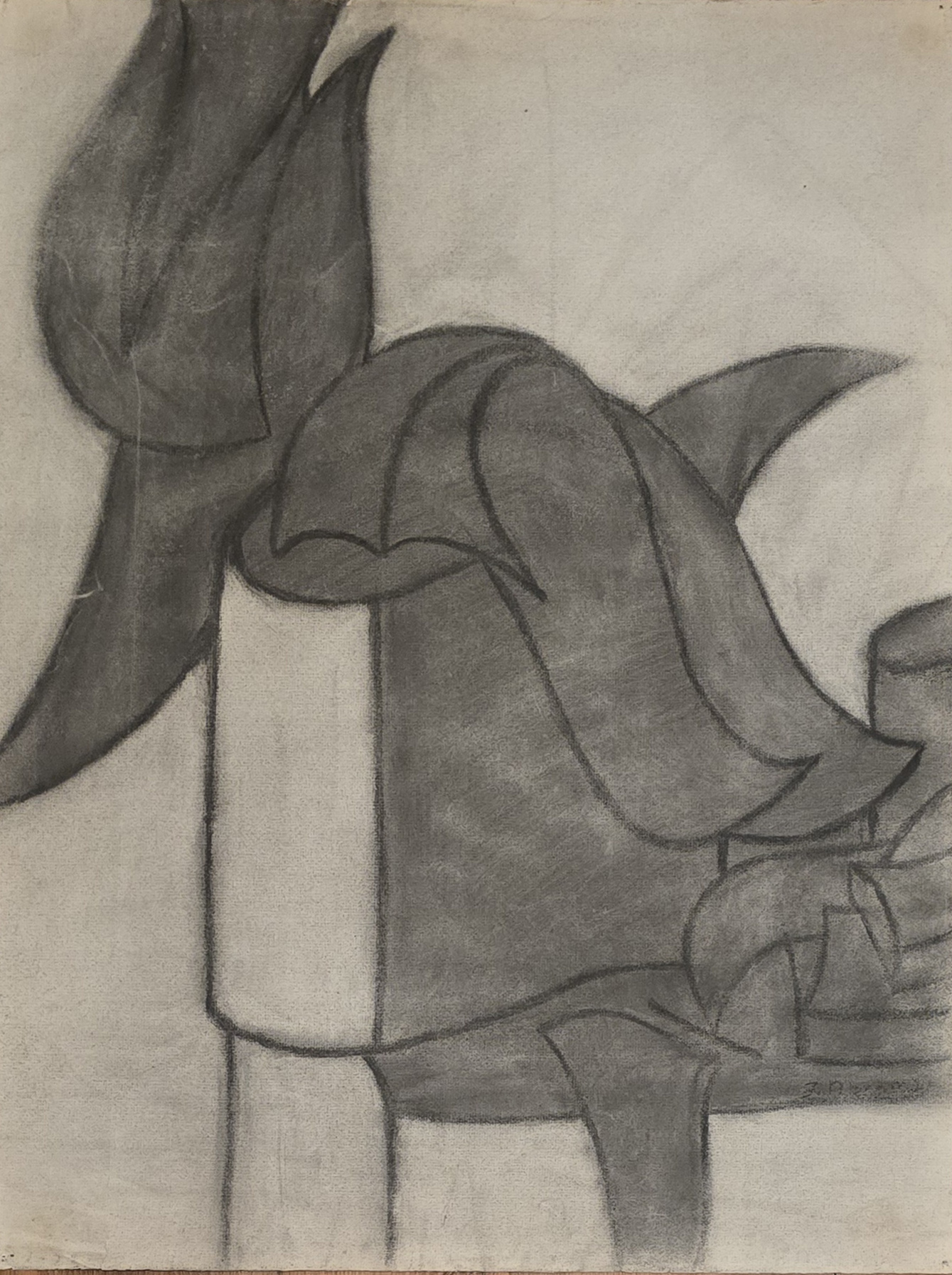
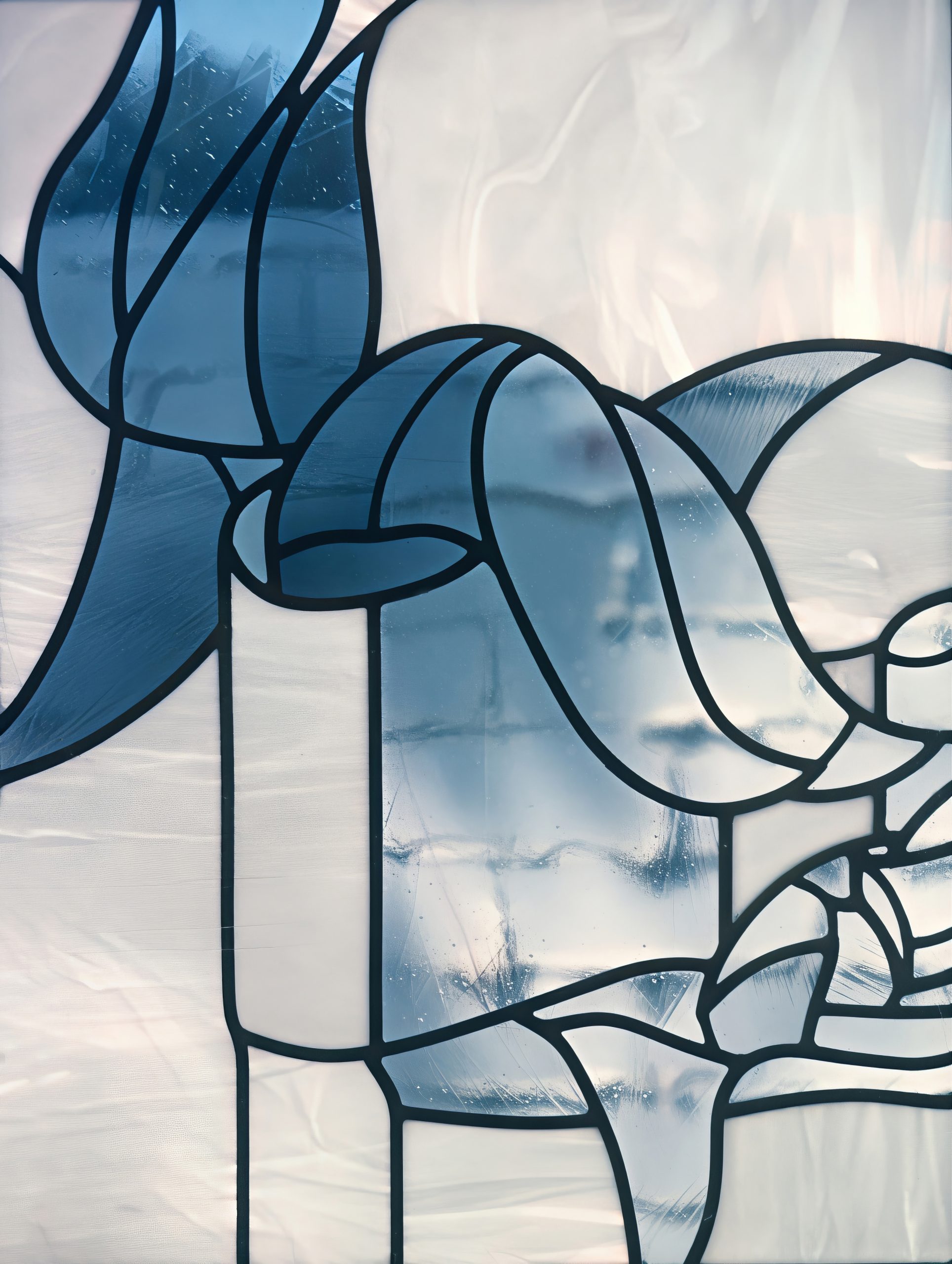
A charcoal drawing I made for an art class when I was a student at UC Berkeley then came to mind. Bored with traditional assignments to draw nudes and still lifes, for I had learned to draw as a boy, I made an abstract drawing of one of them and it was so favored by the class instructor that he posted it on the wall outside of the classroom door. Here is the original drawing and its transformation into one of my first autonomous stained glass artworks:

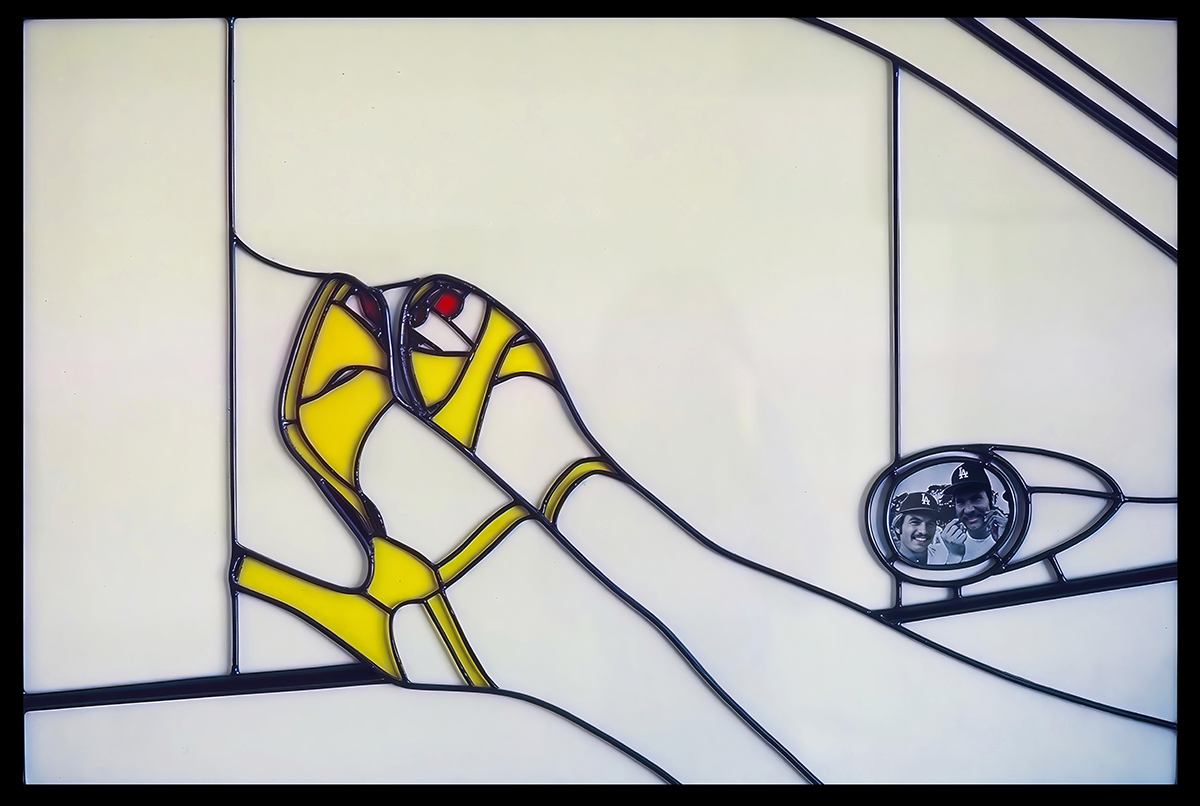
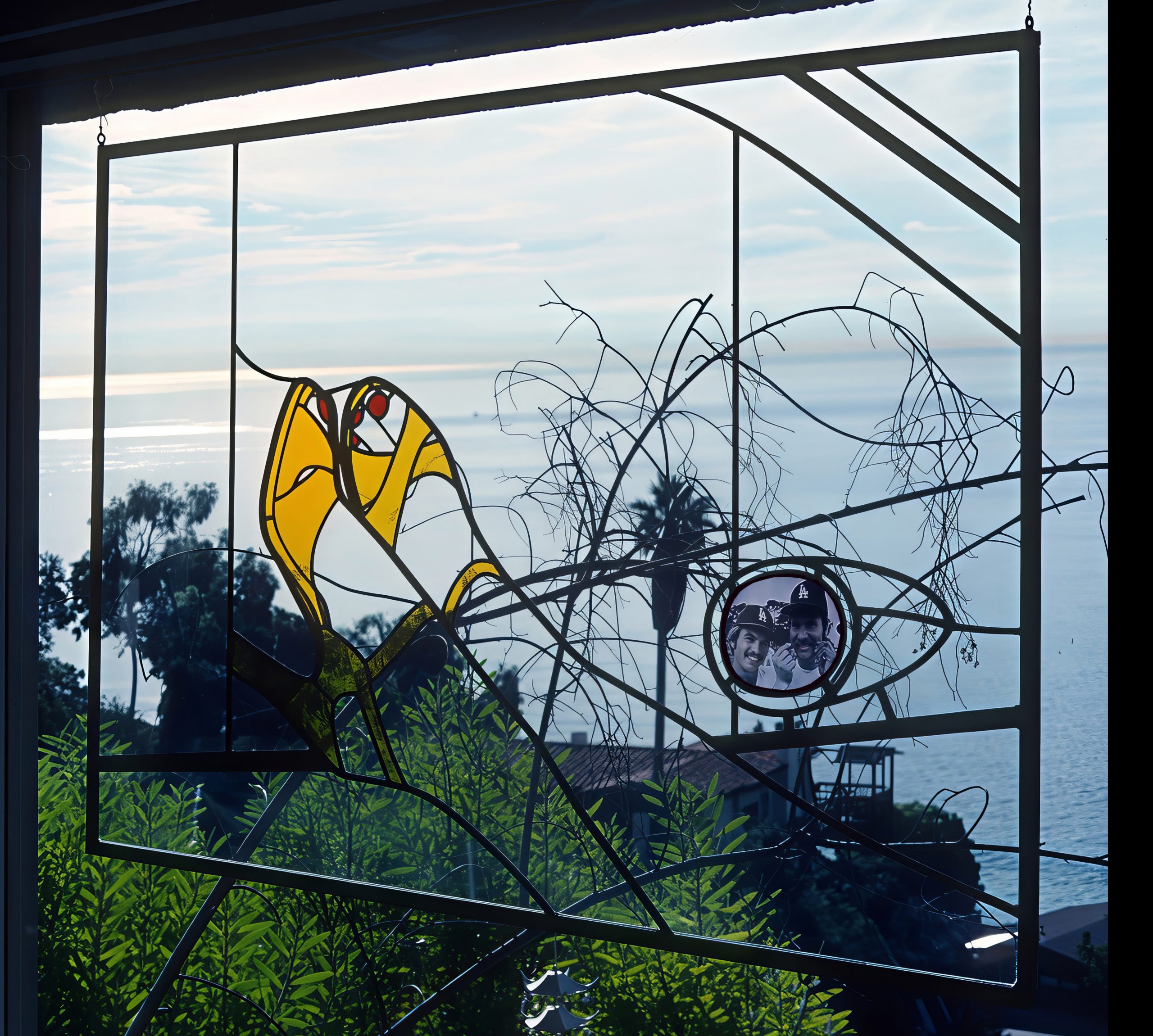
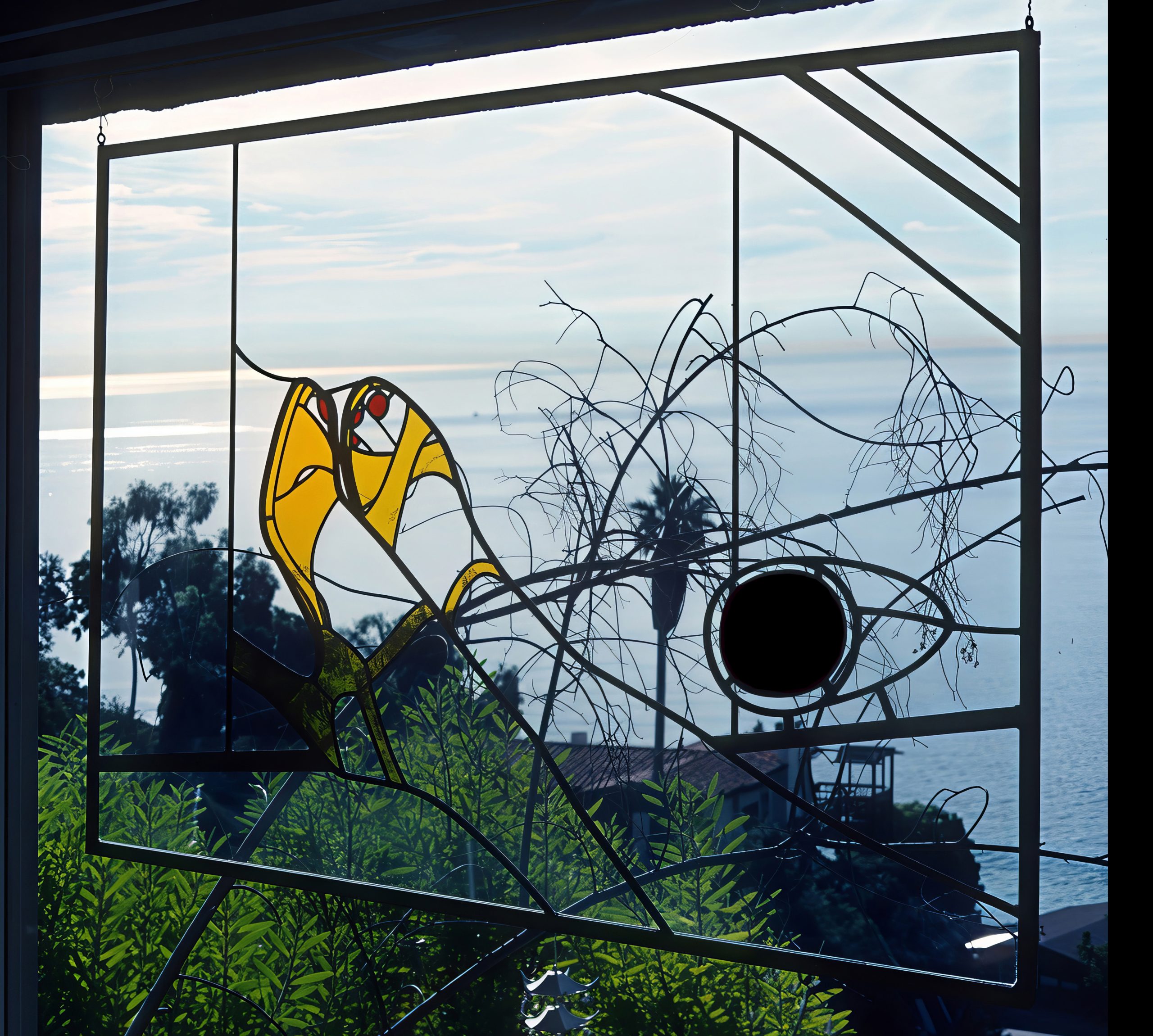
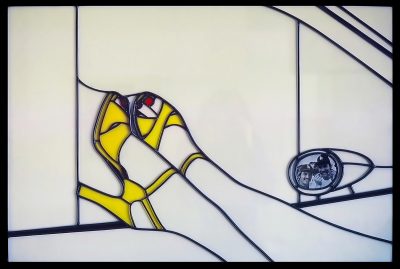
Another was a different sort of experiment, whereby almost all of the glass is normal transparent window glass, the composition determined by the lead lines, which traditionally serve strictly as a technical necessity to hold a mosaic of glass pieces together. In this instance the lead serves both purposes: 1) as a line drawing of a woman’s legs, feet and shoes leaning out of the driver’s side of an open car window beside a rear view mirror, 2) functionally as two vertical lines, a curved line linking one of them to one of the vertical lines and other short arced lines behind the rear view mirror. As can be seen, only a woman’s shoes and toenails consist of colored glass and there is a laminated photo sandwiched between thin sheets of glass.
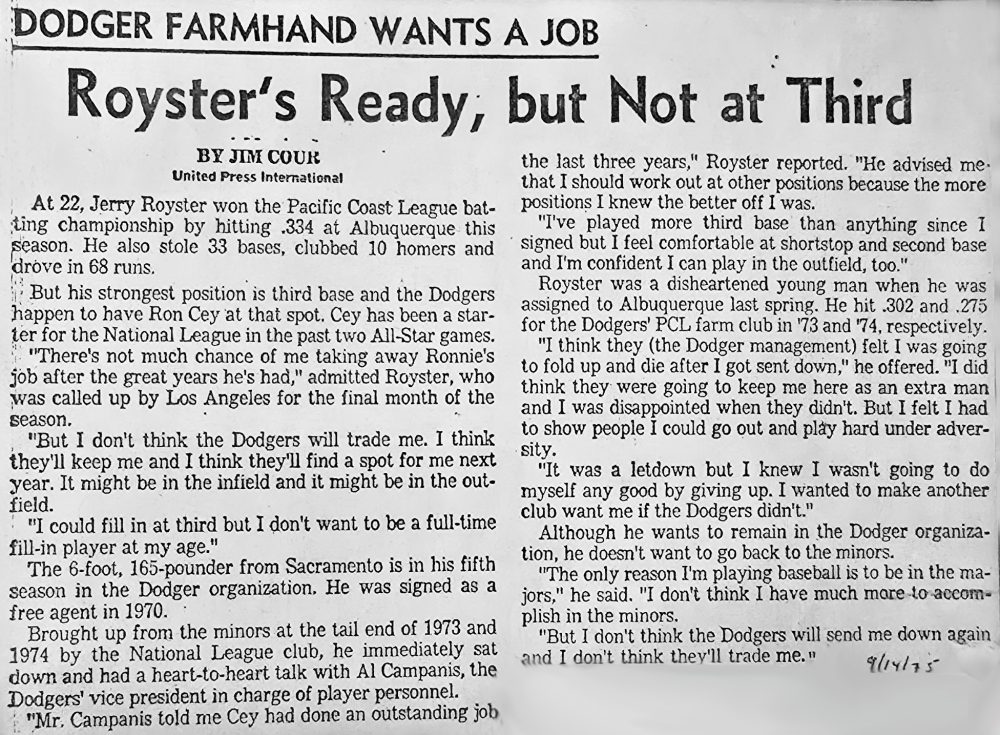
There is a story behind the black and white photo, which was inspired by a classic skit, “Who’s On First?” that was first aired on radio in 1938, by the comedy duo, Abbott and Costello. The two figures in the photo are of the then two third basemen of the Los Angeles Dodgers baseball team.
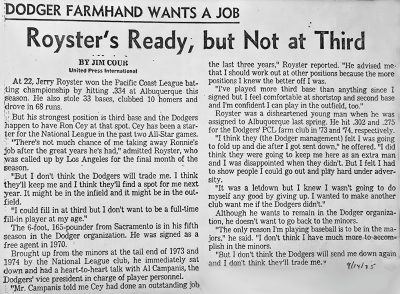
This artwork represented, in my mind, the competition of men to win over the attention of a woman, who is casually leaning back in a sports car with her stylish shoes and painted toenails. This theme and the fact that the artwork mainly consists of transparent window glass is reminescent of Marcel Duchamp’s “The Bride Stripped Bare By Her Bachelors, Even (The Large Glass).” Duchamp said of the artwork, which he painted on large panes of transparent window glass, that is is “anti-retinal” art. The theme concerned an abstract depiction of men together driving a chocolate grinder, who were vying for the affection of a woman. The news clipping I saved at that time was about a young third baseman hoping to join the Los Angeles baseball team, but two other talented players, seen in the mirror, in competition with each other, already had a lock on the position. The famous hilarious comedy routine was about confusion caused by lack of comprehension that a first baseman’s name was “Who.” Here is the original filmed skit, from 1945:
Abbott and Costello, “Who’s On First?”
This for me was a transitional early artwork, which opened the door to convey whatever I so desired, including humor, irony and satire, in the context of both historical and current iconography.
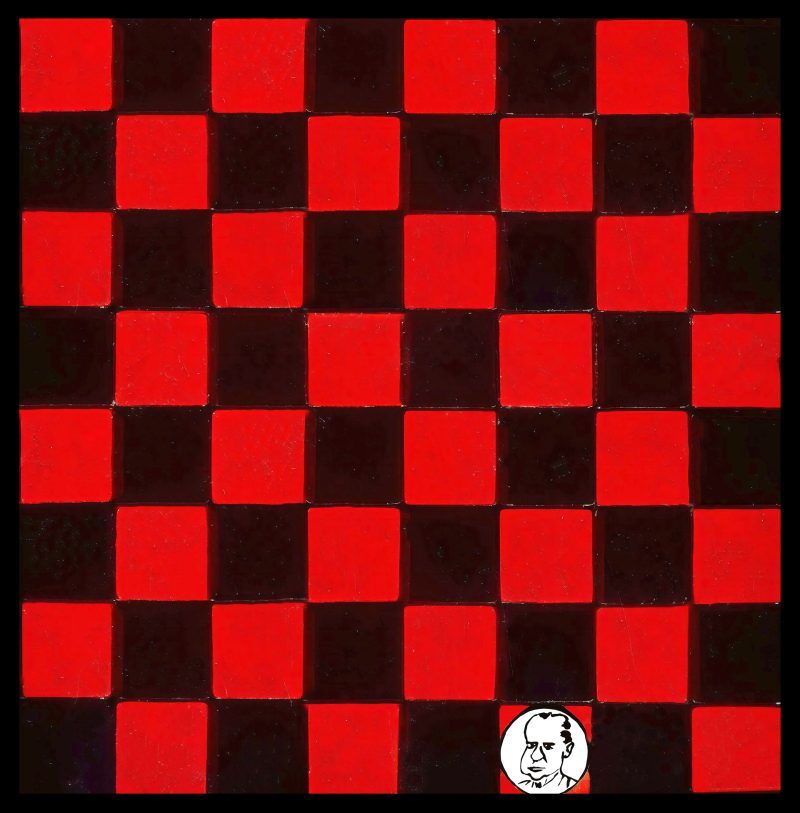
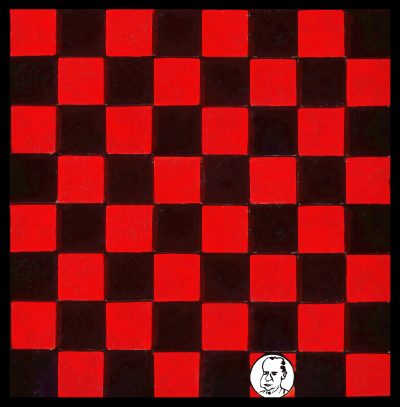
Another such example came shortly after, when I made a piece that was political satire around the time that US President Nixon resigned in disgrace. Its simple symbolism concerns a famous speech he had made on TV many years earlier, in 1952, which was one of the first times that TV was exploited for such political purposes. Then the nominee for Vice President, Nixon was accused of improper campaign spending, so he went on national television to state his case and at its end admitted to receiving just one gift: his dog, named “Checkers.” It became known as the “Checkers Speech.“
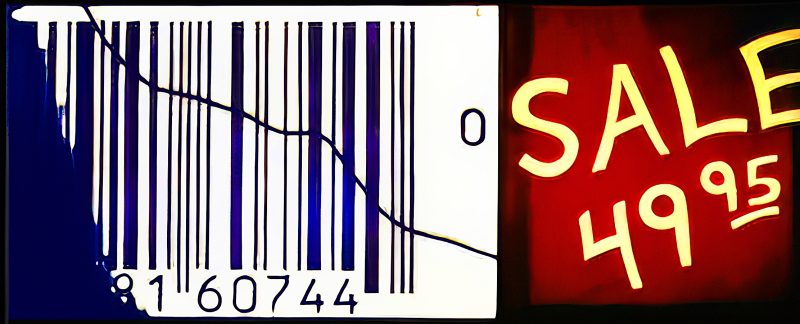
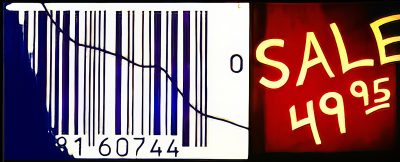
Around the same time, one of the very first signs of the hi-tech, artificial intelligence era became ubiquitous, in the form of digitized price codes, which were slapped onto consumer items. I etched two of these codes onto single pieces of two-color flashed glass:

The second such artwork broke into two large shards during sandblasting of its surface. So, I pieced them back together and slapped on a discount price tag, also made with sandblasted flashed glass.
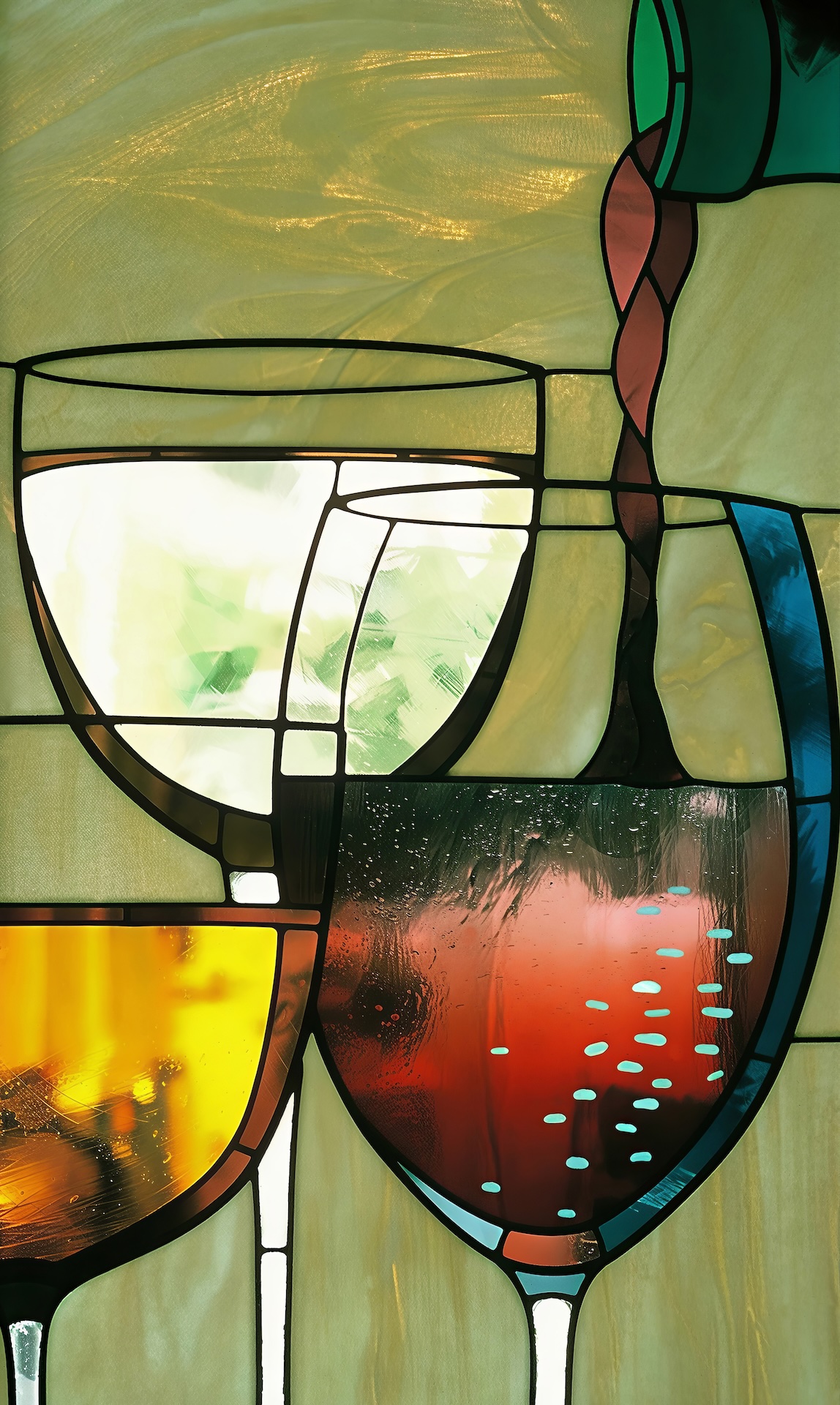
The story here is that for the first time I was commissioned by a customer to create something that wasn’t a commonplace decorative, historical cliche:
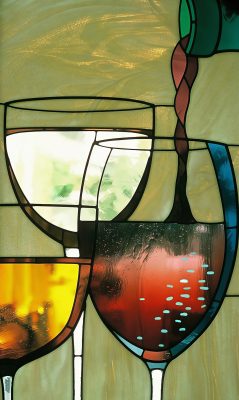
The request to conceive a reflection of their passion for wine perhaps influenced me in another way, for many years later when living abroad I owned and operated a wine bar alongside a restaurant and arts venue that is thoroughly documented elsewhere on this site. At that time, I also became immersed in finding creative ways to photograph wine bottles, the light source always natural sunlight:
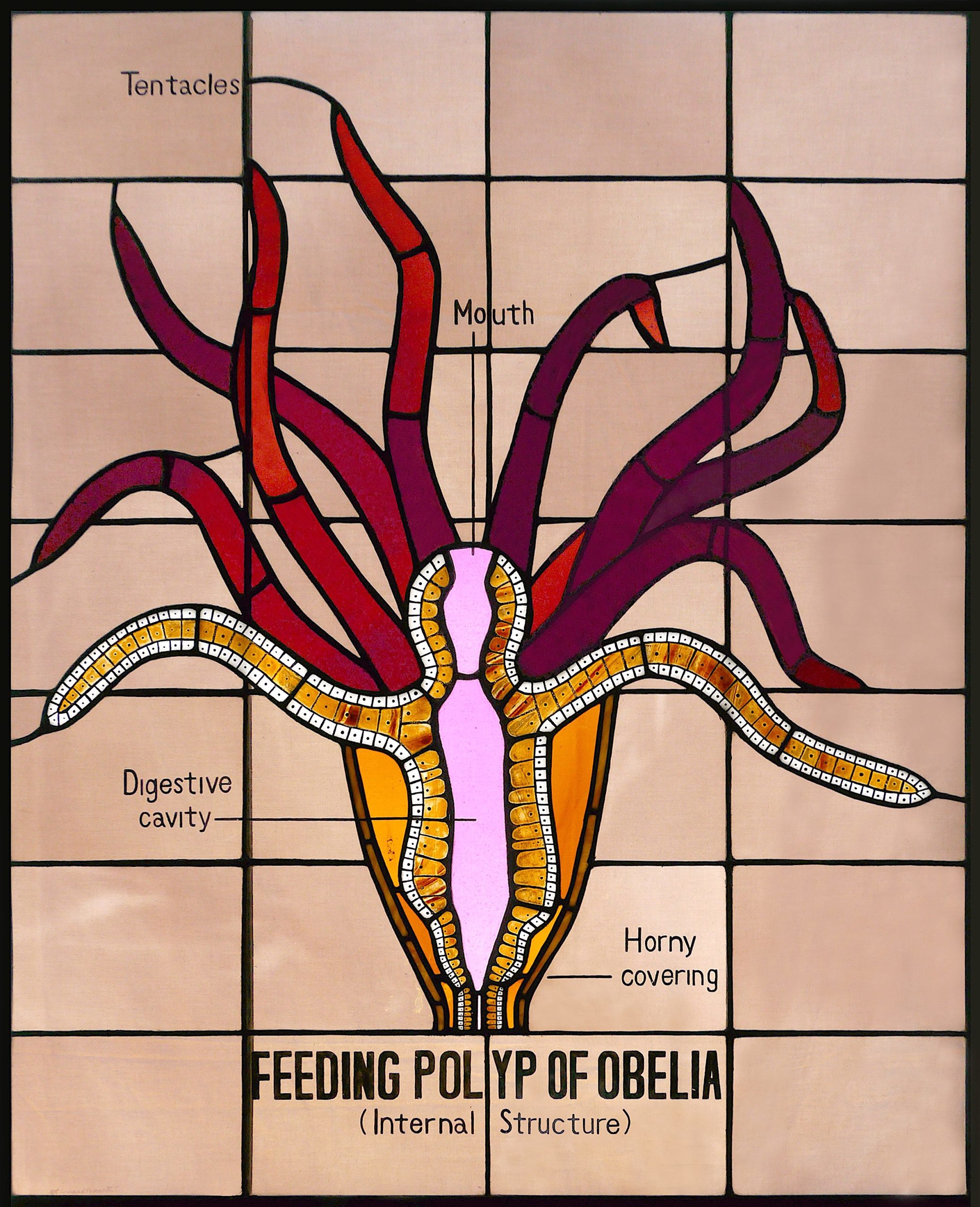
The transformative work, which paved the path to a never-ending multimedia exploration of the evolutionary routes of life itself is described and discussed here: