
Click on the toggle button above for full screen slideshow
Where Reality Meets Fantasy
These are among my most recent artworks, created in 2024, without any reliance on AI. All of them combine photos I took between 1992 and 2022, prior digital artworks created as far back as 1989, a far more recent evolutionary transformation of those artworks and historical maps dating back to 1931. In so doing, the iconography of these maps become juxtaposed with those of my aesthetic interpretations.
As in most of my work, there is a story behind each composition pertaining to what inspired its creation. In each instance I concentrated on a photo and what it represents, followed by a series of decisions and processes that I have explored, by incorporating into it both new and old symbolic visual elements.
The background slide show demonstrates an essential part of this process, for it contains close up details of each of these fourteen artworks. One can see that they entail various textural effects, including the illusion of materials such as fabric, canvas, metal and stone. Likewise some of the pieces demonstrate the impression of actual paint on a surface. Further, what appears to be picture frames is but a component of most of these artworks. The intent is to make it appear as if they are three-dimensional, incorporating fragments of real metro maps, in some cases as if engraved into a faux frame’s surface.
There are written descriptions of each artwork below, in order, as they have been numbered.


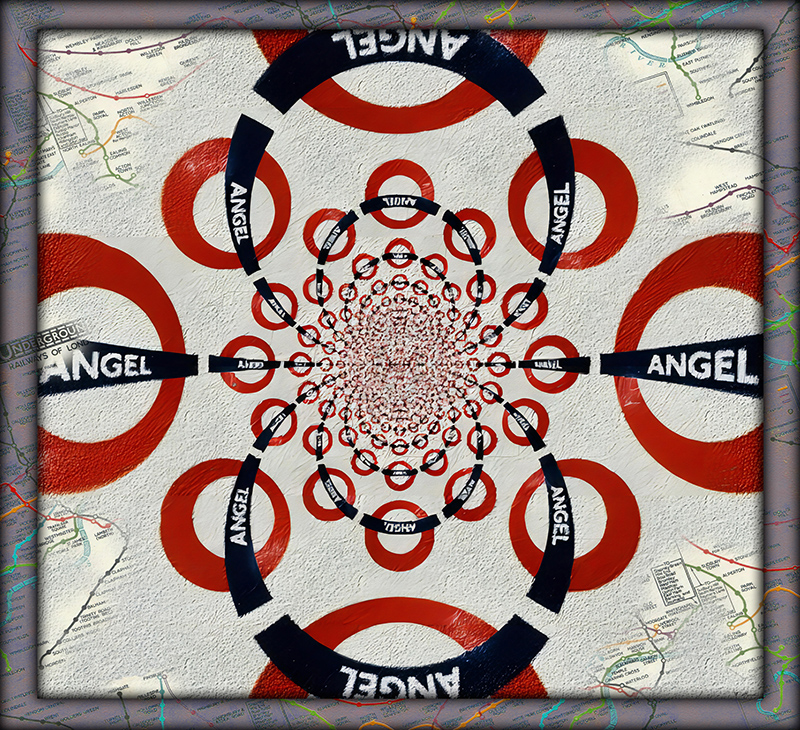
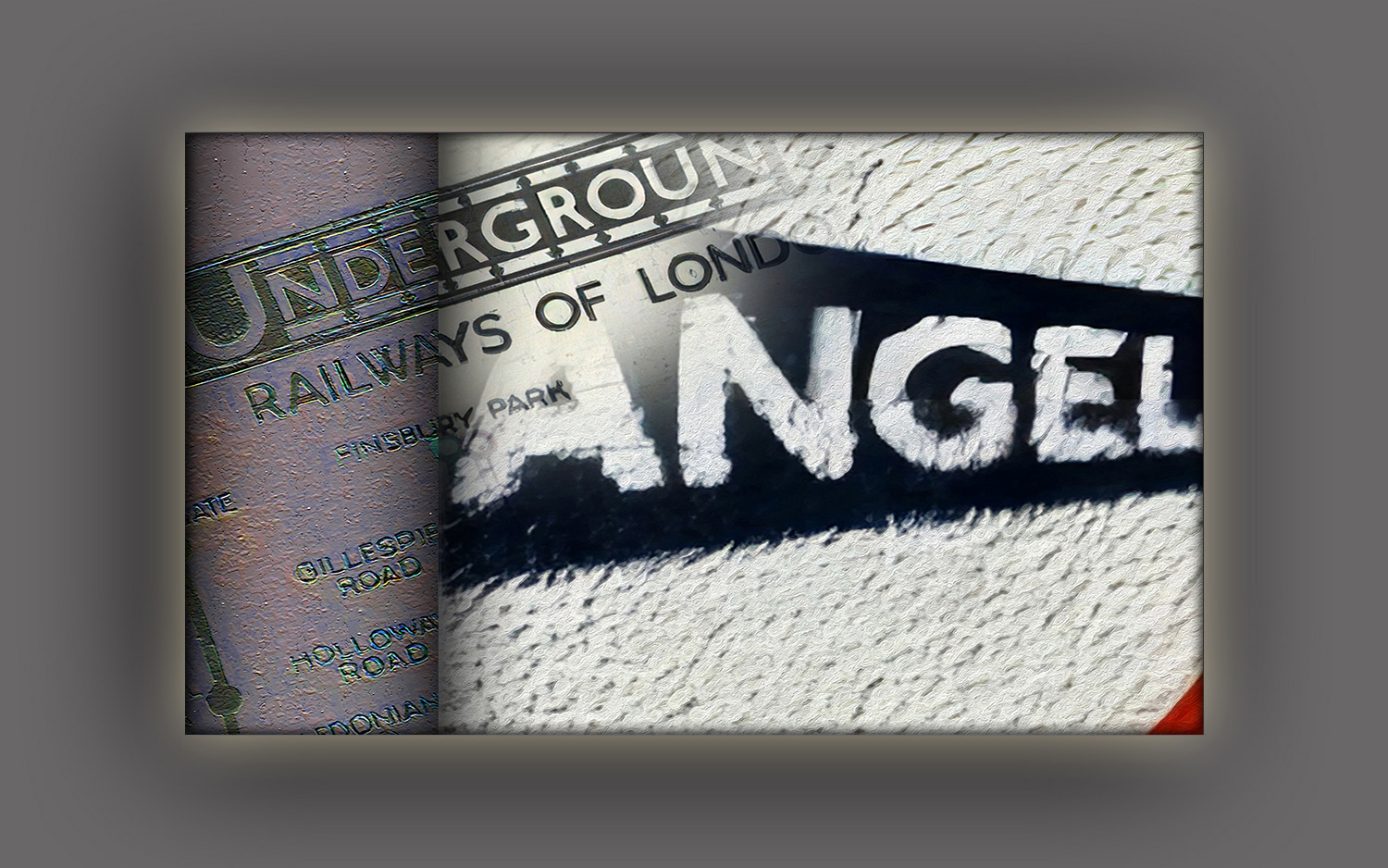
1. London. “Angel” is the name of a London Tube station. The fragments of a Tube map are from one of its oldest versions. The London Tube being the first underground railway system in the world, it had not been figured out yet that it was unnecessary to plot the lines as actual geographic patterns, which when combined appear to be something akin to a plate of multicolored spaghetti noodles. Later on an out-of-work engineer came up with the brilliant idea to plot the lines on horizontal, vertical and 45 degree angles, which made for much easier reading. The irony of this for my personal artistic sake is that my abstract reinterpretations of these maps has usually returned them to more organic-like shapes and forms. Though, of course, they exist for no functionally useful purpose. My theory about the entire subject is that the universal concept of subway systems and their maps is the human version of what some species, such as ants, gophers and squirrels have intuitively created and that are at the heart of biological networks, consisting of arteries, brains and neurons.
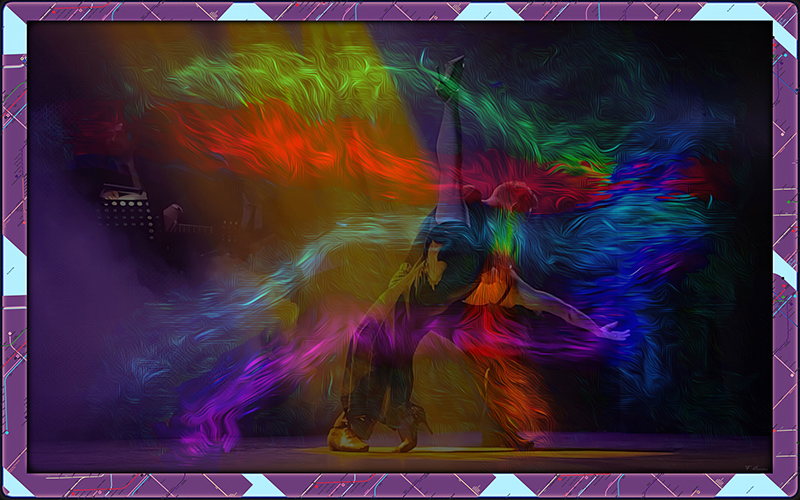
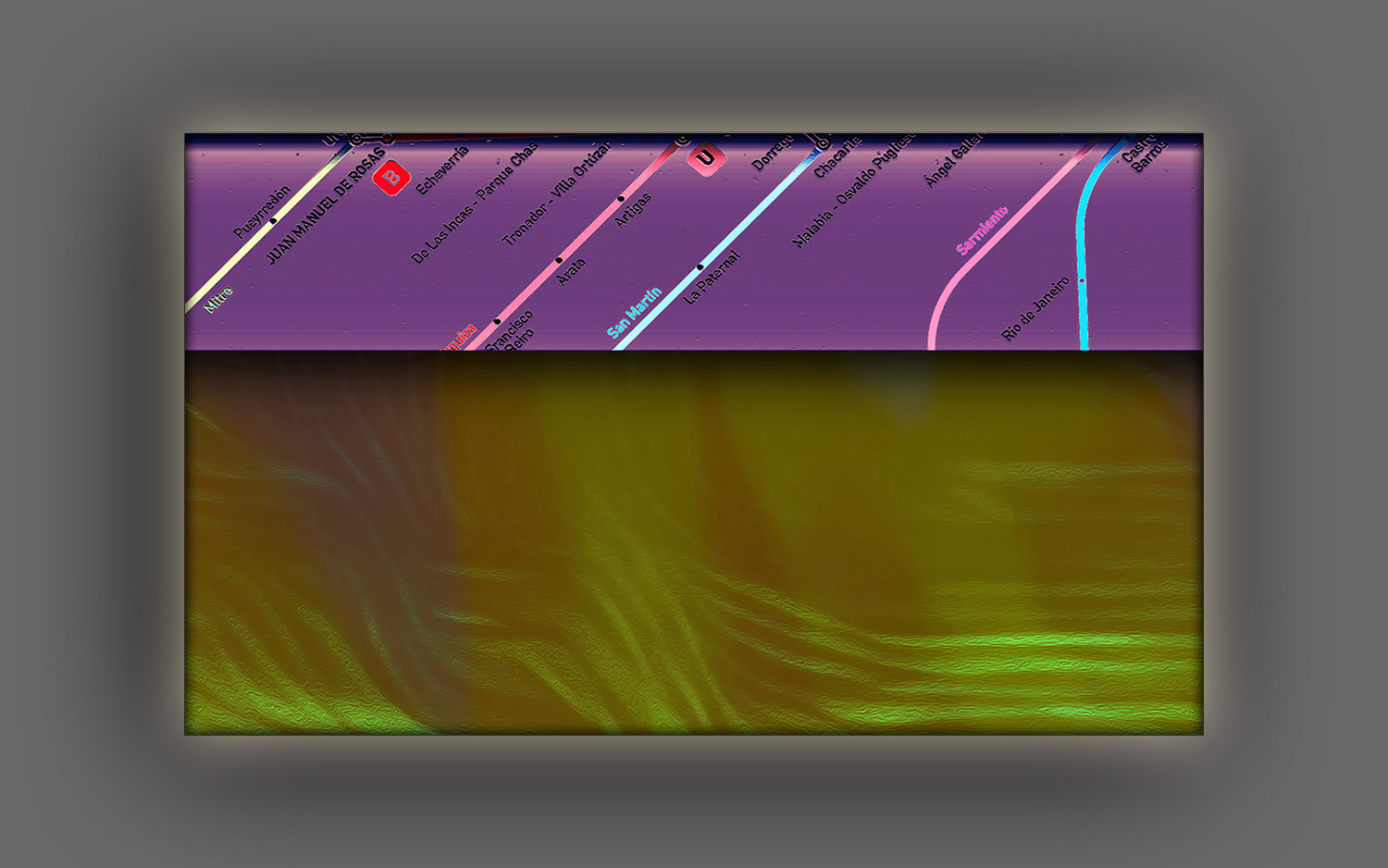
2. Buenos Aires. The broad colorful floating shapes, which appear to be like dancing light forms, represent the train lines of the Buenos Aires Metro. Subtly visible behind them is a photo I took in Buenos Aires at a live stage performance of tango dancers. The male’s legs are crossed as he bends over his female partner, whose torso he holds in the air, one of her arms stretching out horizontally and one of her legs reaching straight up vertically. Also barely noticeable to the left is a musician dressed in a suit, who is holding a guitar horizontally and beside him what appears to be a sound mixing board. The faux frame contains fragments of an actual map of the city’s metro system, though I took liberties by adding its overall violet background color.
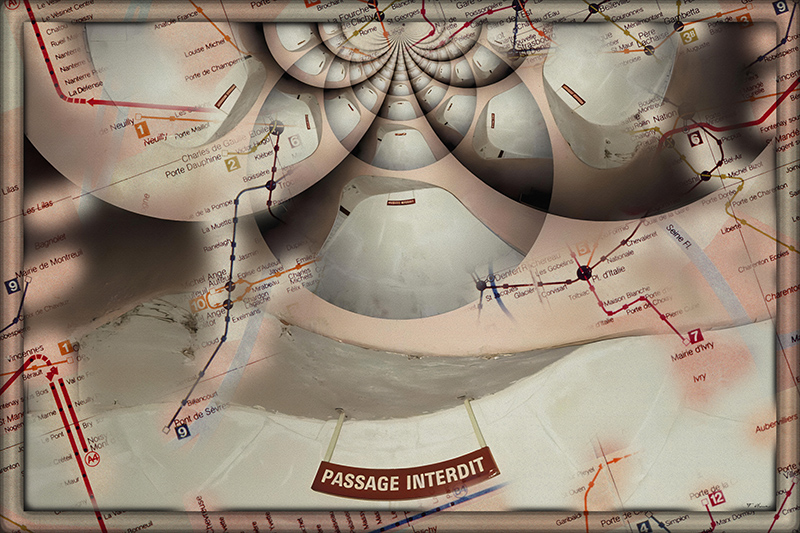
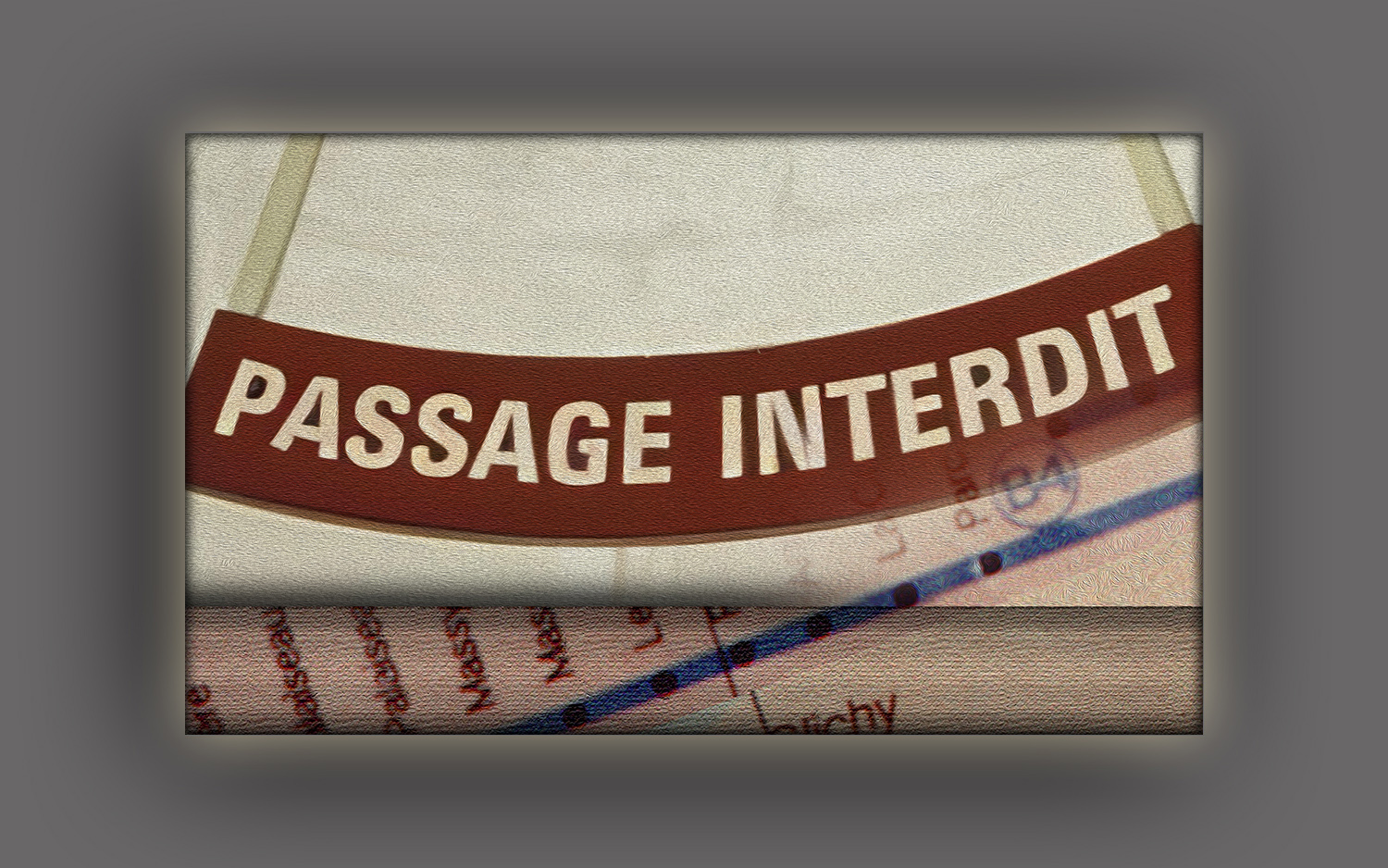
3. Paris.One of the most odd symbolic discoveries I came upon during my underground journeys was a passage inside the Paris Metro that had been cemented shut. Yet, a sign remained above, “Passage Interdit” (Forbidden Passage), which obviously had been posted when the passage had remained open. For whatever senseless reason, the sign had still not been removed. Personal experiences with making presentations of my art at the time in Paris led me to conclude that this somehow reflected French logic. I have written an unfinished book about why this is so. Surrounding the composition I created by visually recreating this photo with an infinite mirror-like effect are segments of the actual metro map that I used to create the massive stained glass artwork, “Les routes de La Grande Odalisque (The Large Brain),” which led me down a deep French-logic rabbit hole.
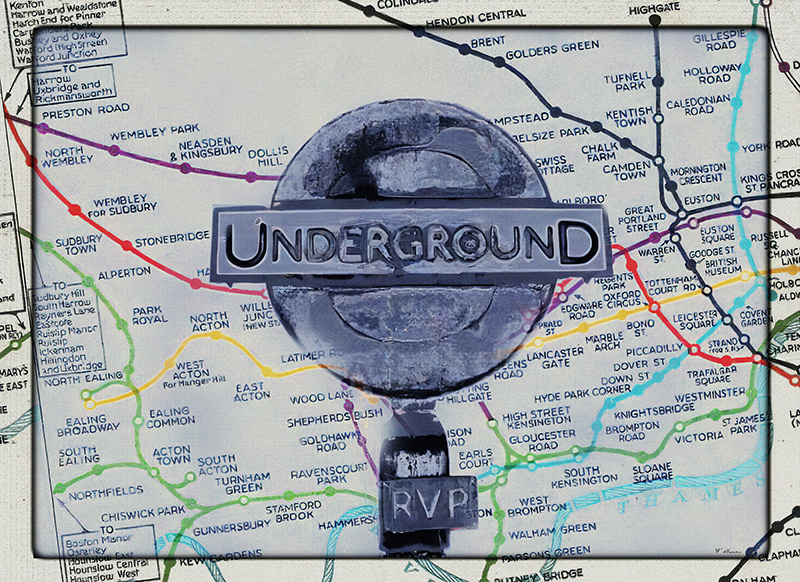
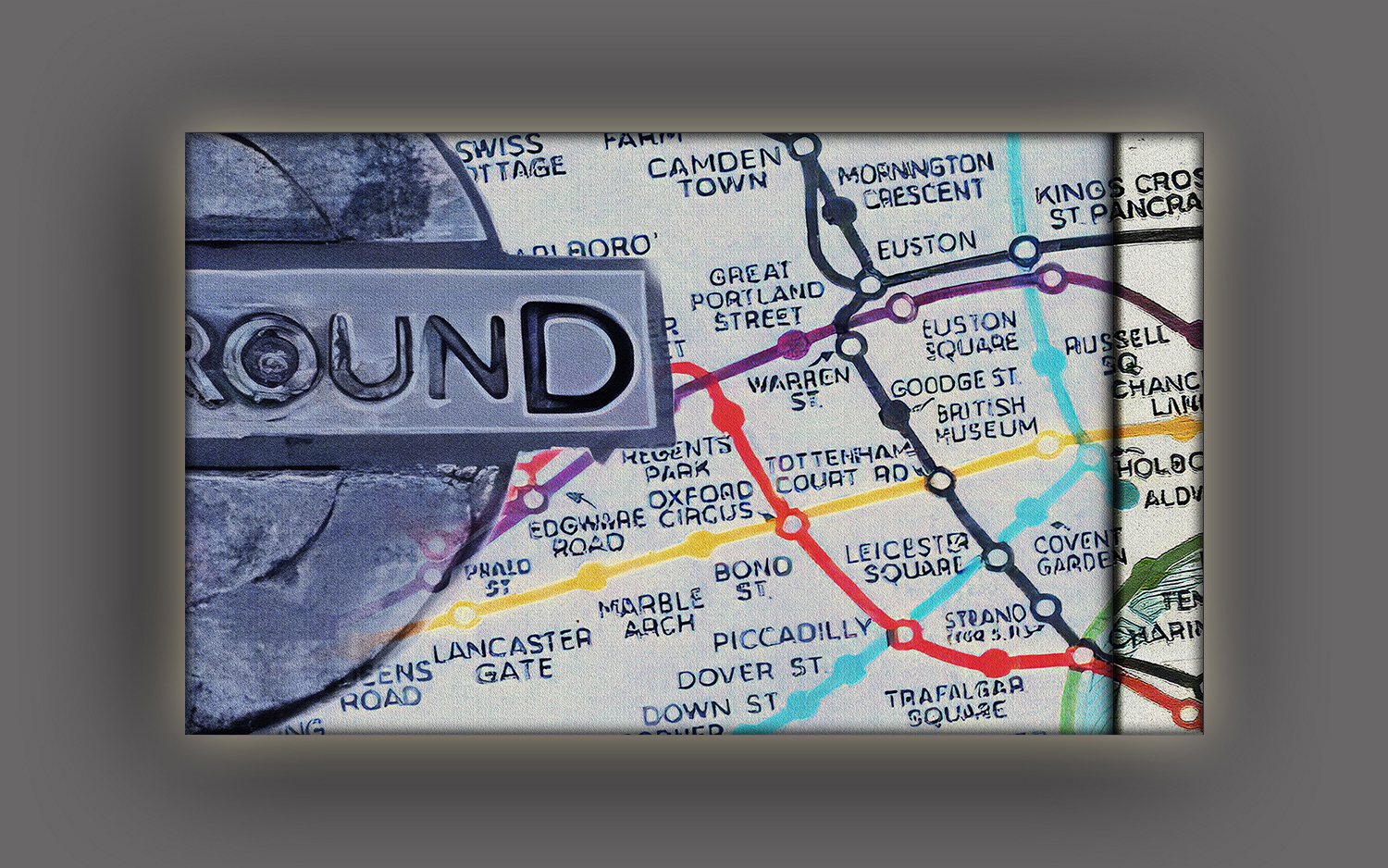
4. London. This stone-like depiction of a photo of an above ground sign of the London Tube is surrounded by many details of the original London Tube map.
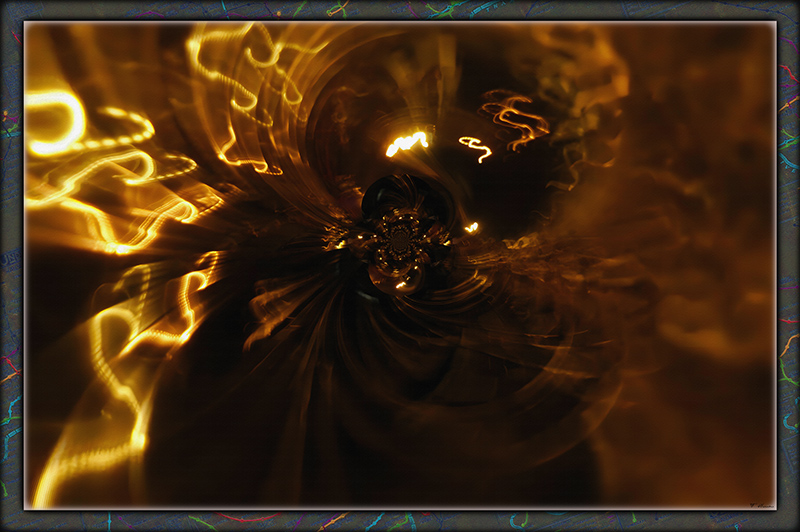
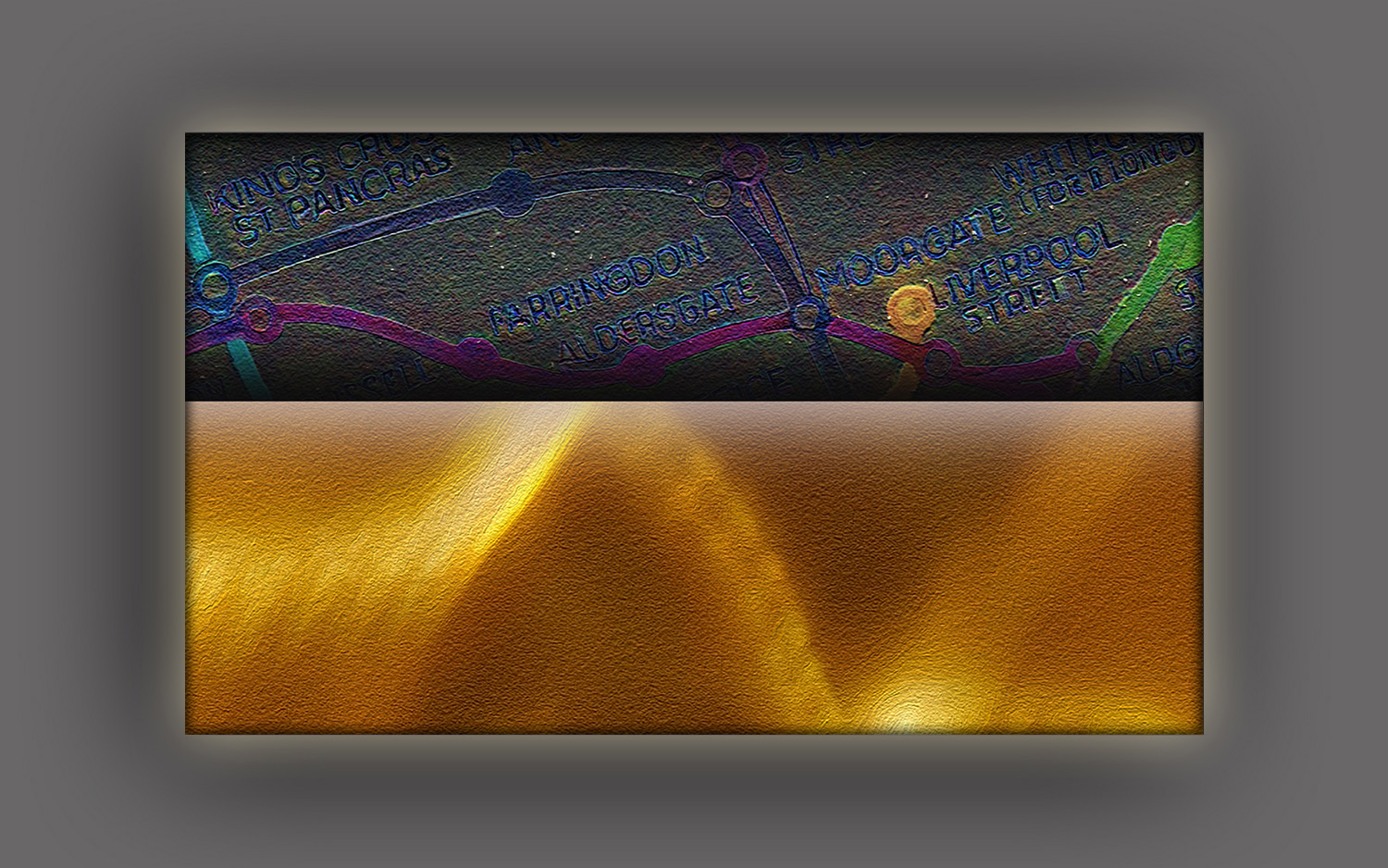
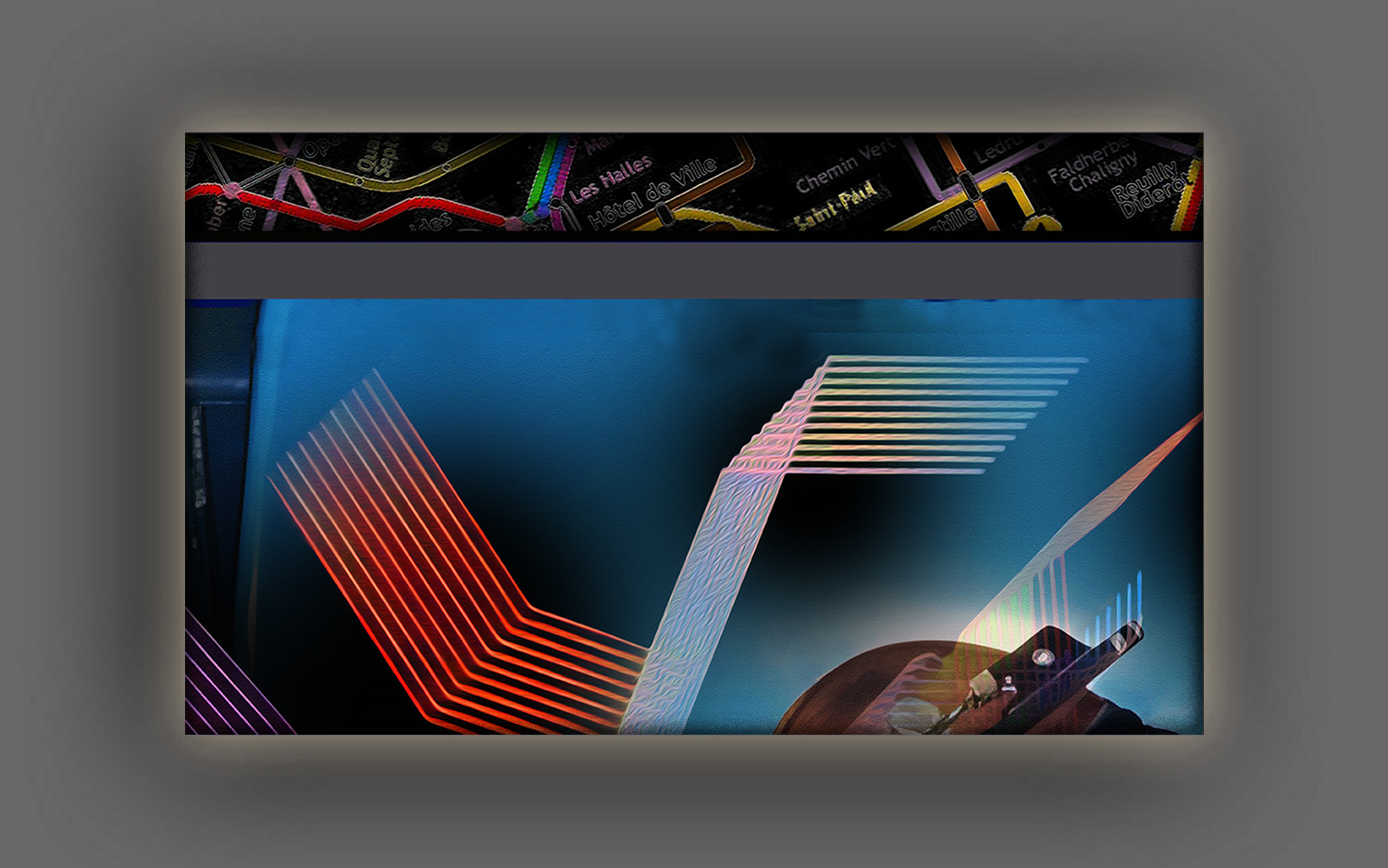
5. London.The brilliantly electric wavy light is of the lamps on trains inside a tunnel of the London Tube. My camera was handheld and the photo was taken with a slow shutter speed. This effect was further enhanced by using a kaleidoscope digital effect. An old original map of the underground rail network appears to be engraved in a concrete-like surface.
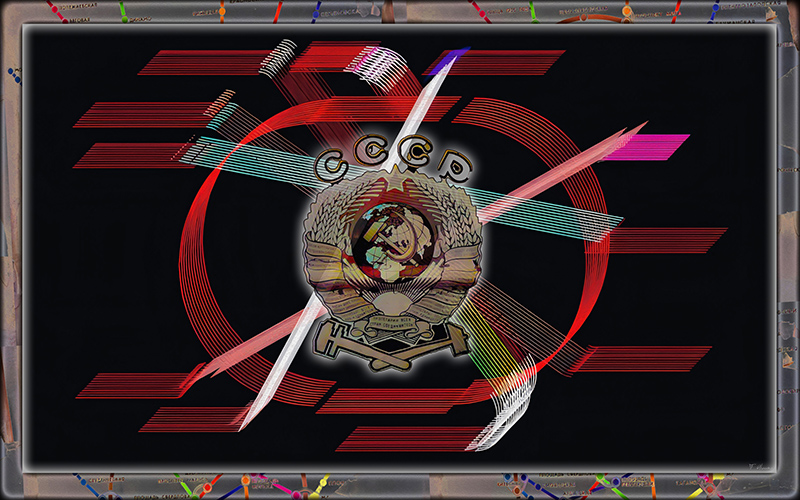
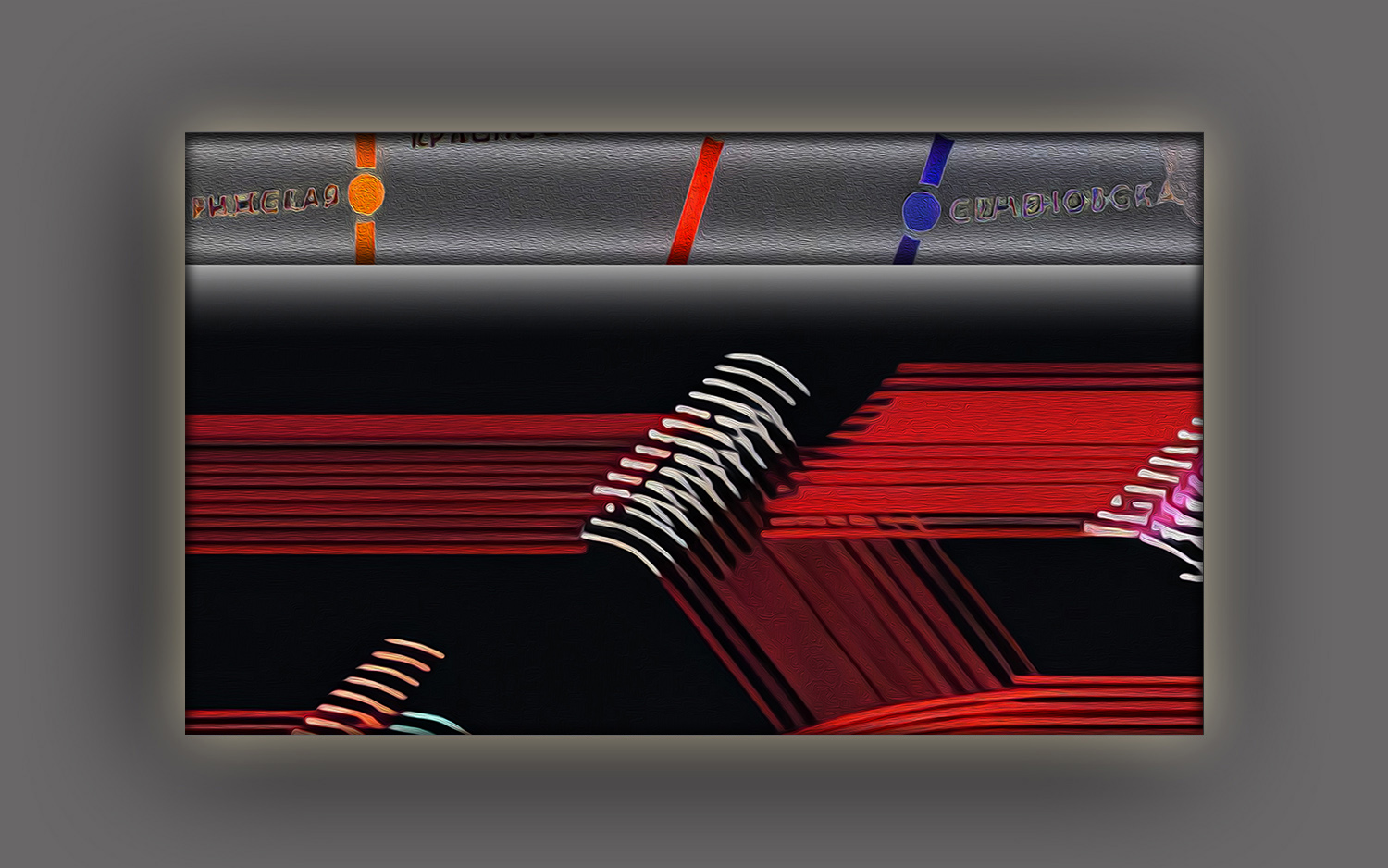
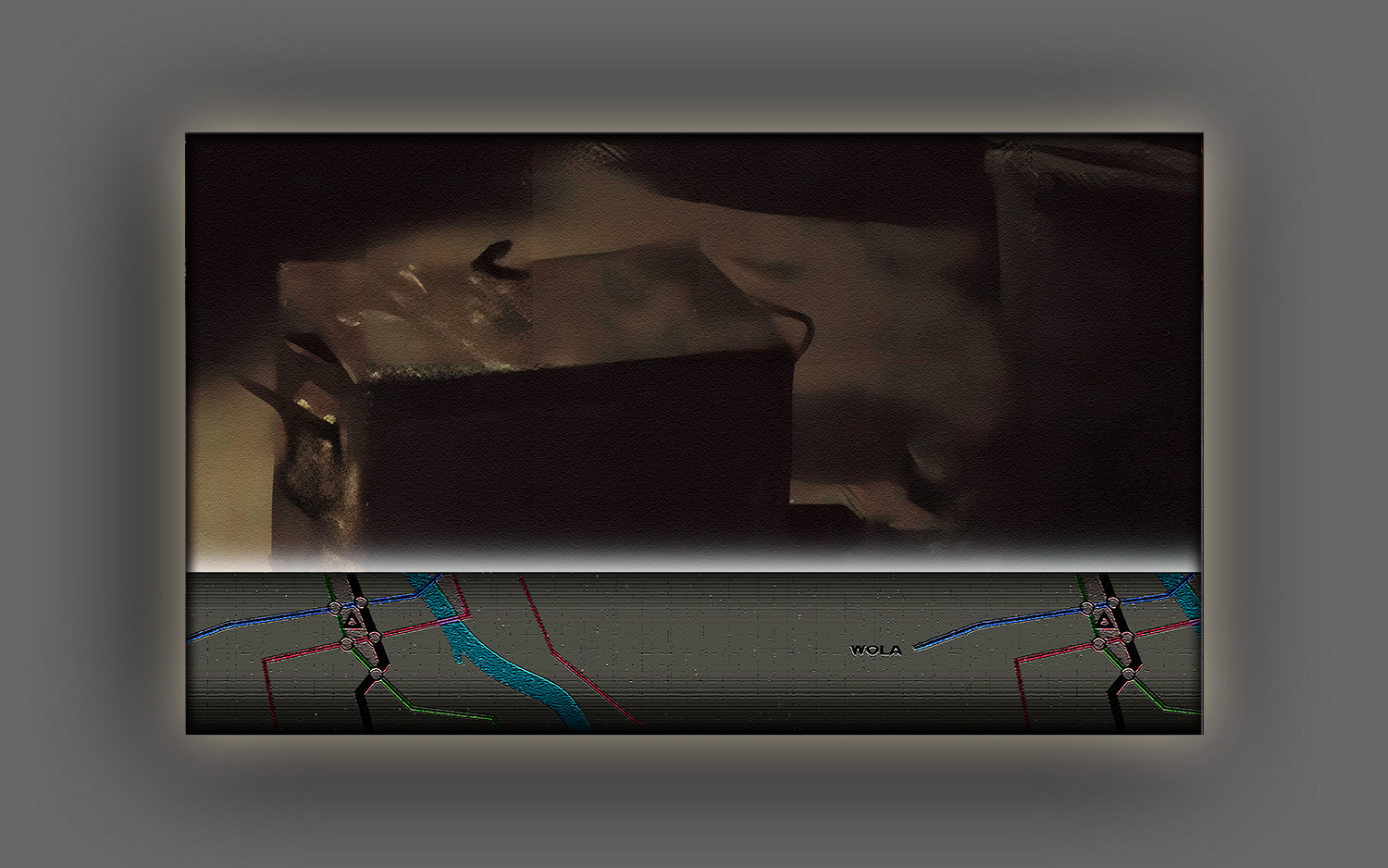
6. Moscow. I visited Moscow precisely at the moment that the USSR officially disbanded, in December of 1991, and photographed the CCCP insignia on the side of a metro car, which I have artificially colorized. The faux picture frame consists of elements of a torn wall map of the underground system that I also photographed inside one of the station’s tunnels. Finally, the background red 3D-like background of the main body of the composition was designed in 1989, on the first CAD architectural computer assist system on the market, and it is based on repetitive copies a simple line drawing of a different version of the map than the one that I had photographed on a wall of the Metro system.
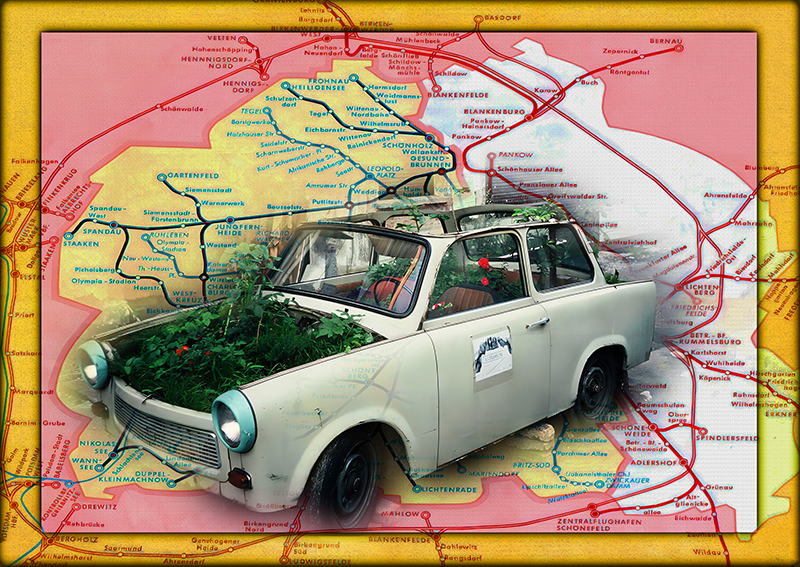
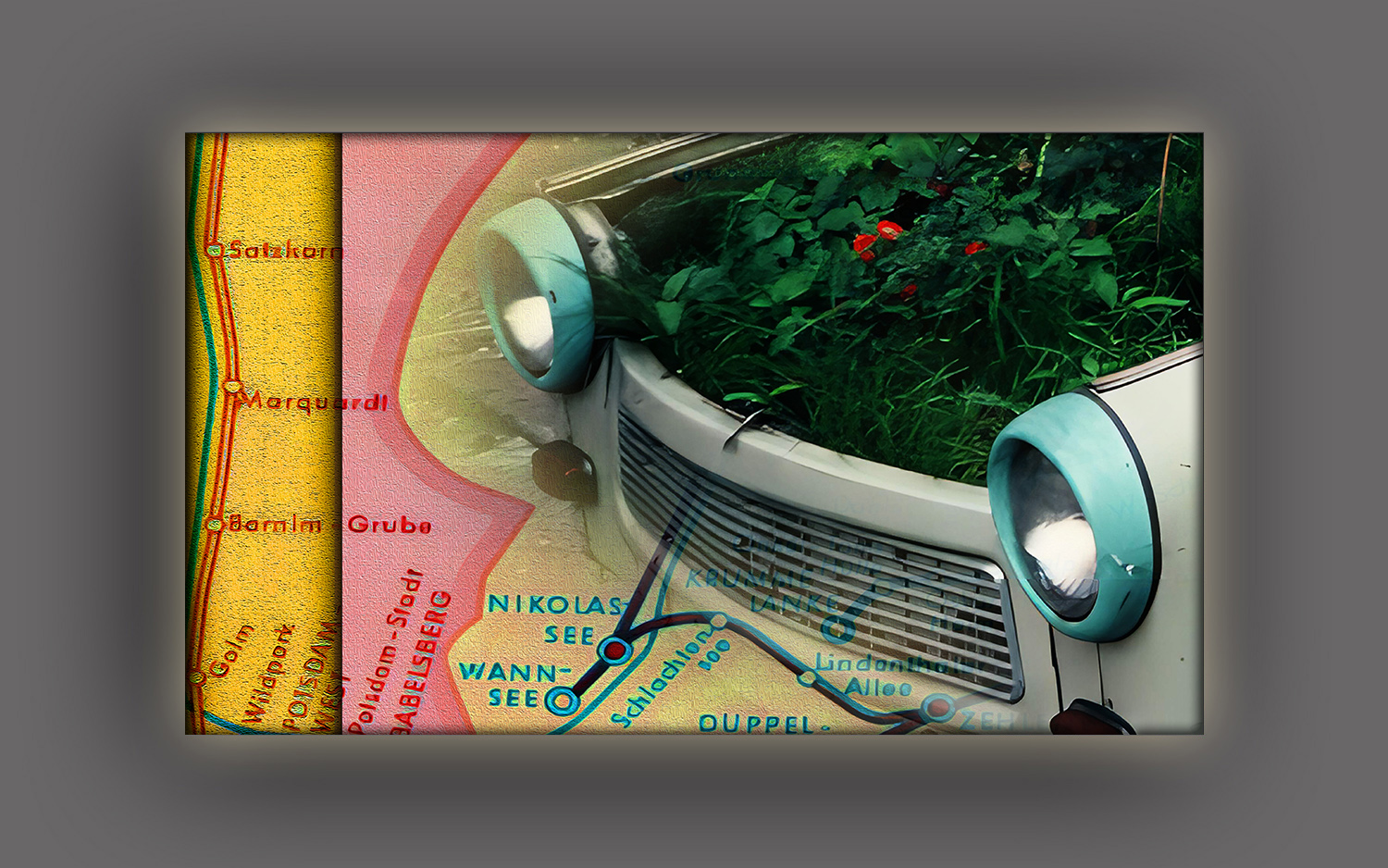
7. Berlin. I photographed the car in the center of this artwork, which became a large planter for flowers, upon visiting the dire conditions of East Berlin about a year and a half after the Berlin Wall had been torn down. The facades of many buildings remained riddled with bullet holes from WWII. The small car, known as a “Tribant,” which is widely considered to be the worst car ever made, was produced in Germany from 1957 until 1991. Thus, its last production was the same year that this photo was taken. The car, which was made from recycled materials, remained essentially the same for all of those years. It became synonymous with life in Eastern Germany, during the essentially same period that those who had been entrapped behind the Wall had been cut off from the West. Surrounding this photo are elements of a now historical Berlin U-Bahn underground map, depicting the former divide between East and West.
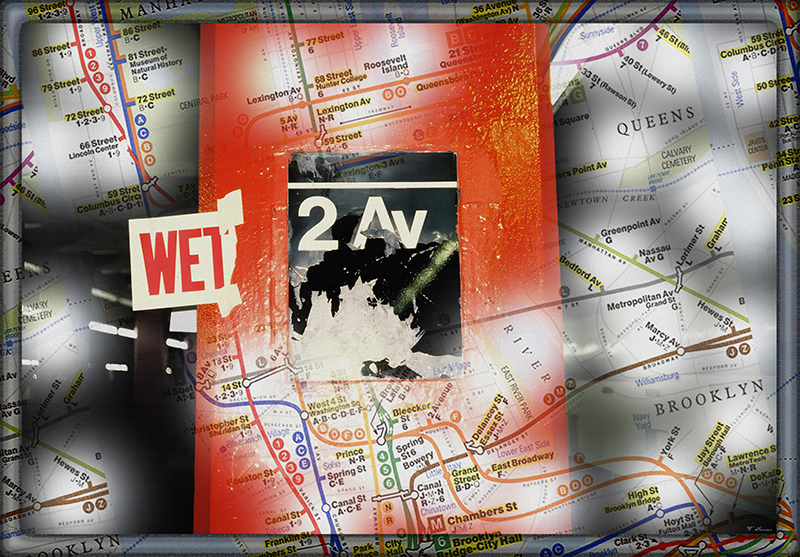
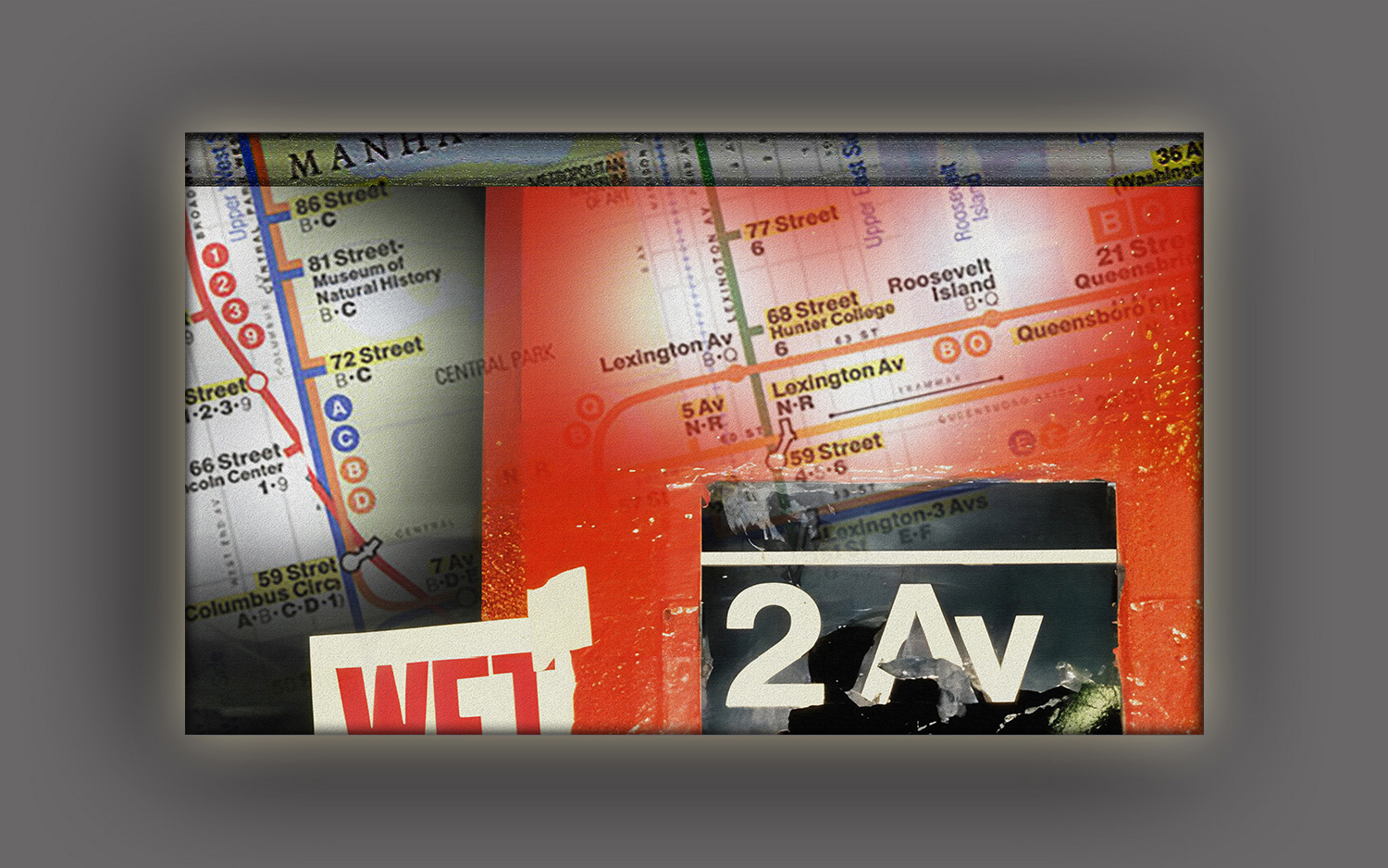
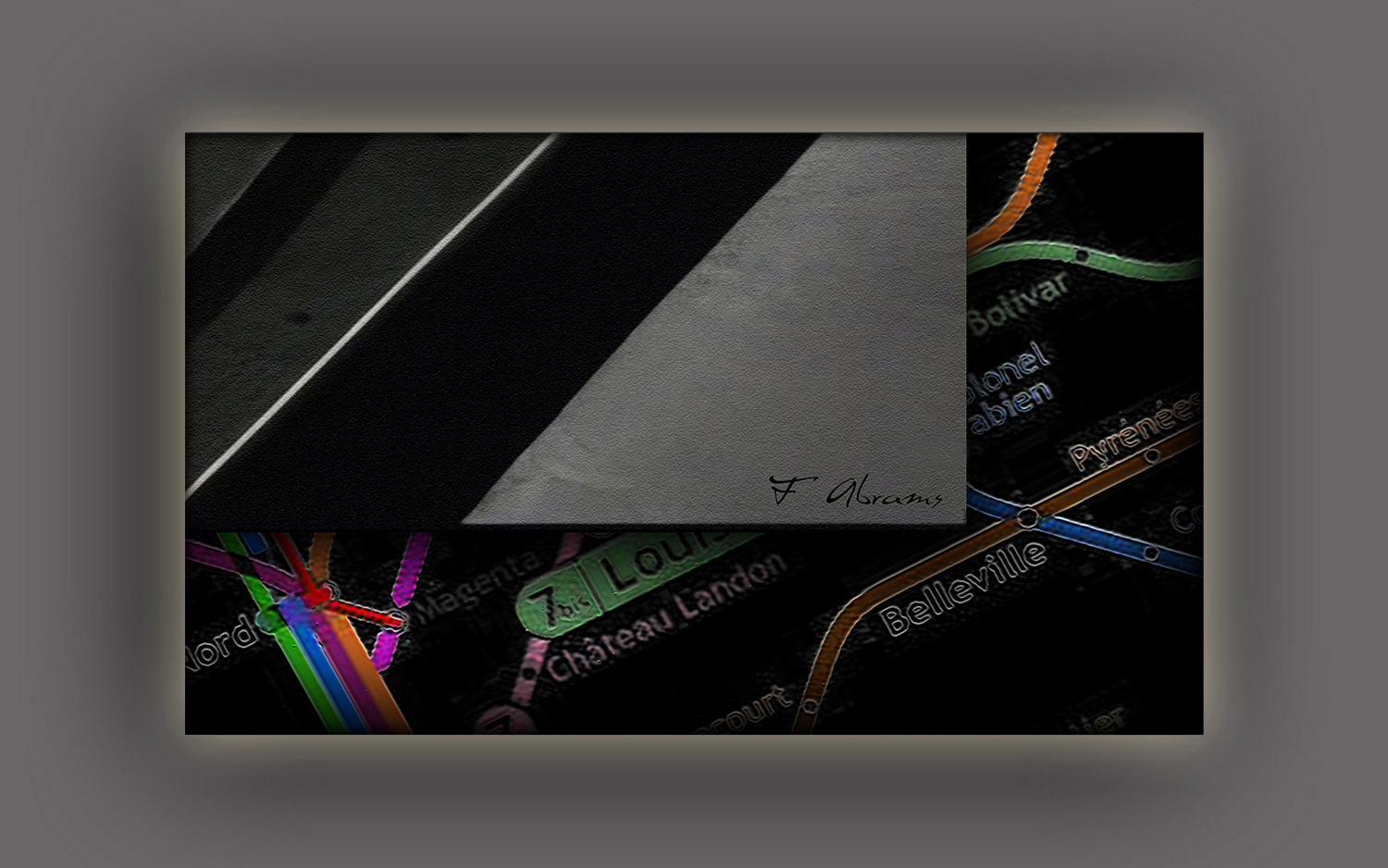
8. New York. I entered the 2nd Avenue train platform of the New York Subway when the station’s concrete columns were being newly painted. Like other examples seen here, I intermingled the photograph with a map of the New York subway that back then, in 1992, was of a more organic-like form, reminiscent of the original London Tube map. Most public transportation maps today all over the world rely on the concept of straight horizontal, vertical and 45-degree lines. They are functional, though aesthetically they are not particularly interesting. Like fingerprints, they all look similar, yet the distinct differences of each city may be found in the formal names given to underground stations.
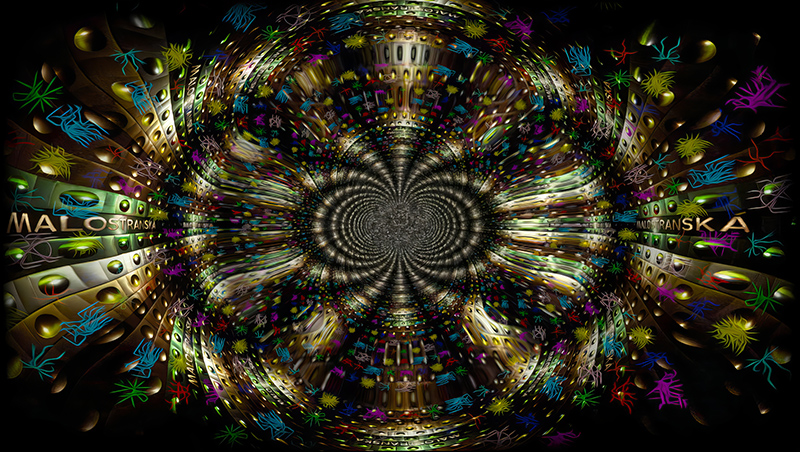
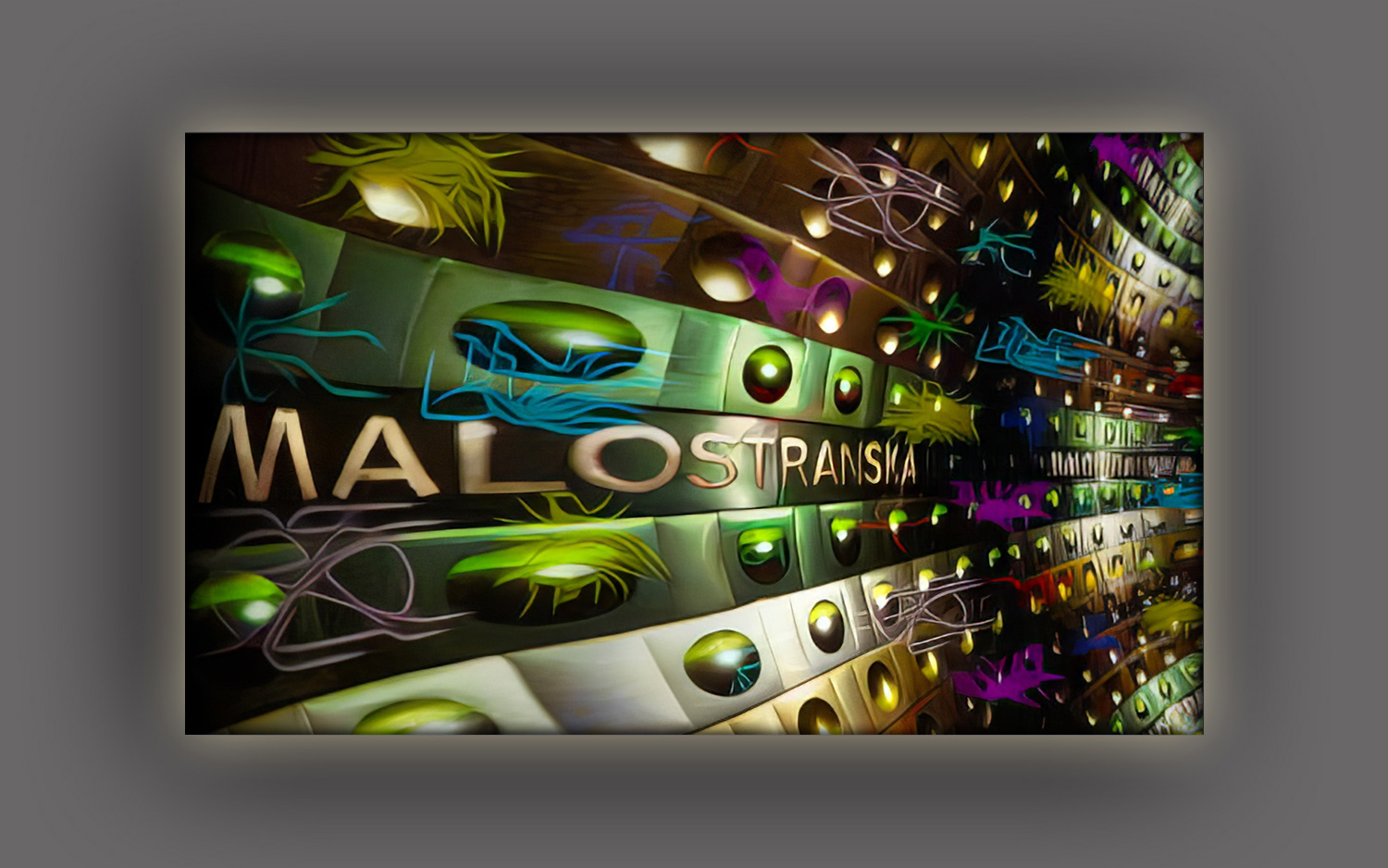
9. Prague. “Malostranska” is the name of a station of the Prague Metro. I took the photo in 1991 of the shiny sci-fi bubble-like pattern that is a typical modernist motif of the system’s metro platforms. The photo was altered with a kaleidoscope effect and overlaid is a digital artwork that I first created on a CAD computer in 1989, consisting of repetitive line drawings of metro maps representing nine different cities, from Mexico City to Paris and Tokyo.
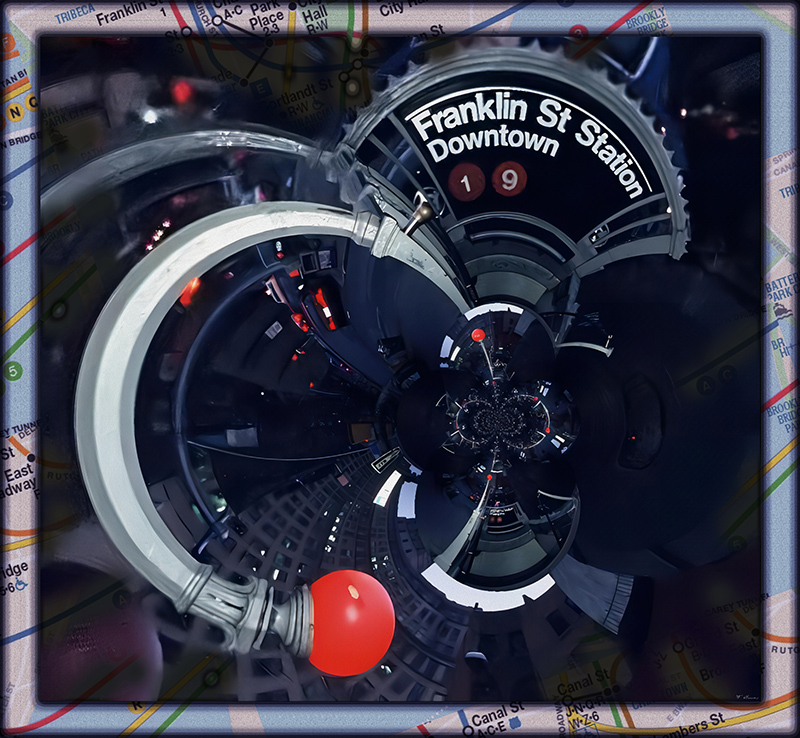
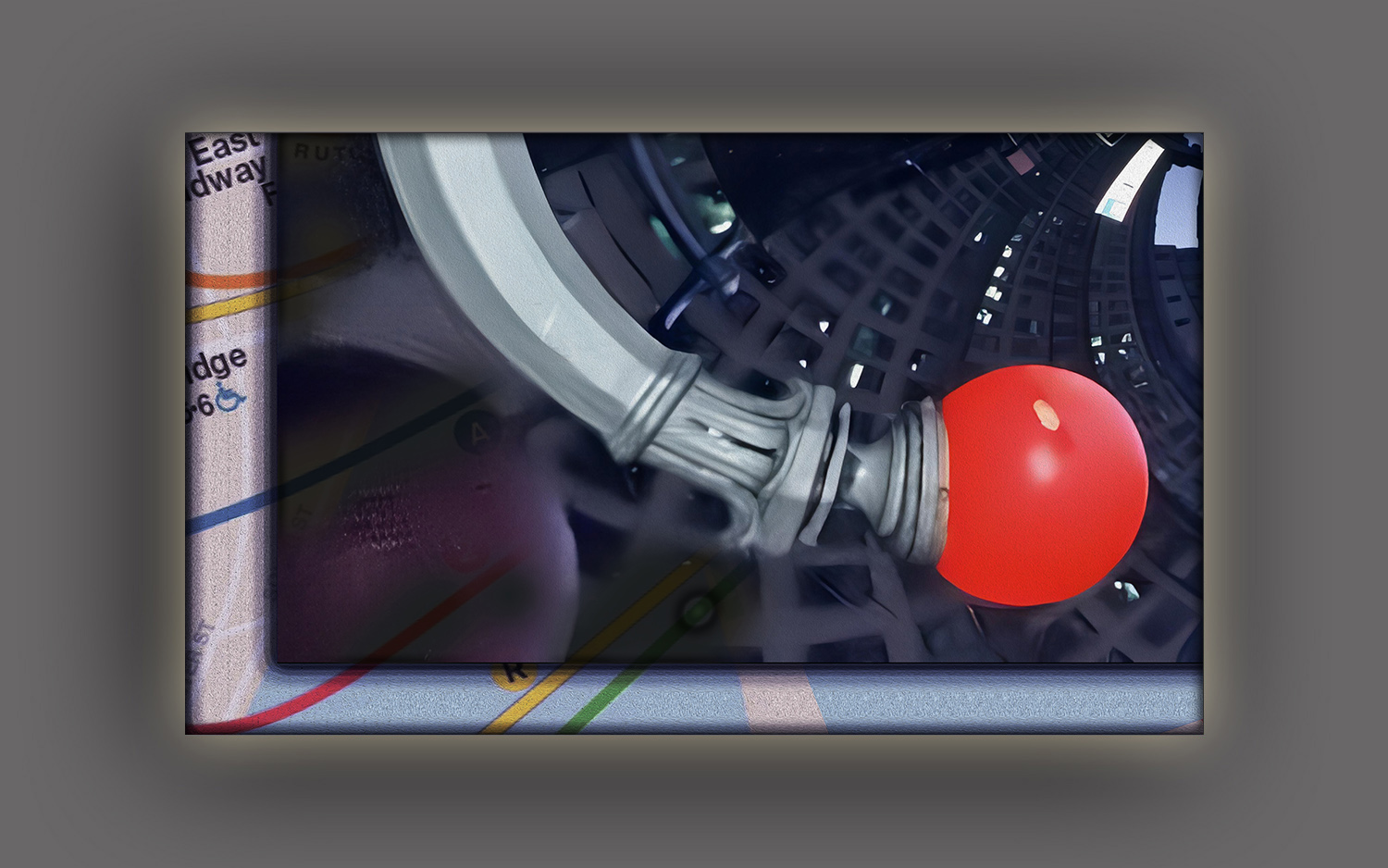
10. New York. Seen here is an obviously visually distorted photograph of an entrance of the New York Subway. The colored illuminated globe is typical of such above ground entrances throughout the city, its color coinciding with the color of the train line as depicted on the map in the artwork’s surrounding border.
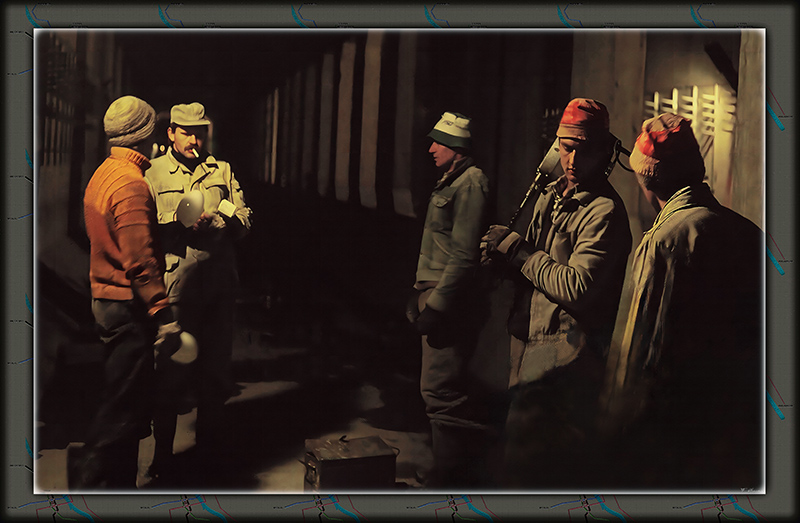
11. Warsaw. The first photographs for the sake of this ever-evolving multimedia art project were taken, in 1989, inside of an unfinished station of the Warsaw Metro. I had been introduced to a foreman of the project and his daughter, who spoke fluent English, took me on a tour into the underground, where I found workers standing around conversing while smoking cigarettes. The Berlin Wall had just been torn down during my visit to Poland and at that time there were only two unfinished stations, no tracks yet laid. From what I had been told, the Warsaw Metro was a gift offered by Stalin decades earlier but water was found beneath the earth’s surface that impeded on the system’s construction. Its development was abandoned and Poles were left to continue on their own, with hardly any funds to work with. This first line of the metro opened exactly six years after the day that I had been invited by the leader of an underground of artists who fought against the totalitarian communist system. He invited me during a visit to the US on April 5, 1989, for the sake of cultural exchange, on the exact day that the decision was made to hold the first free elections in Poland since 1945. Surrounding this photograph is a faux frame, which includes what appears to be an engraved map of the system with lines yet to be constructed.
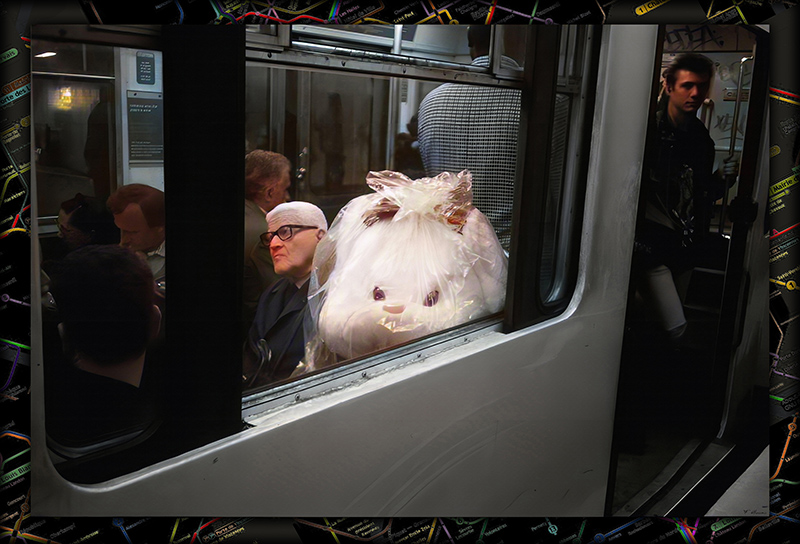
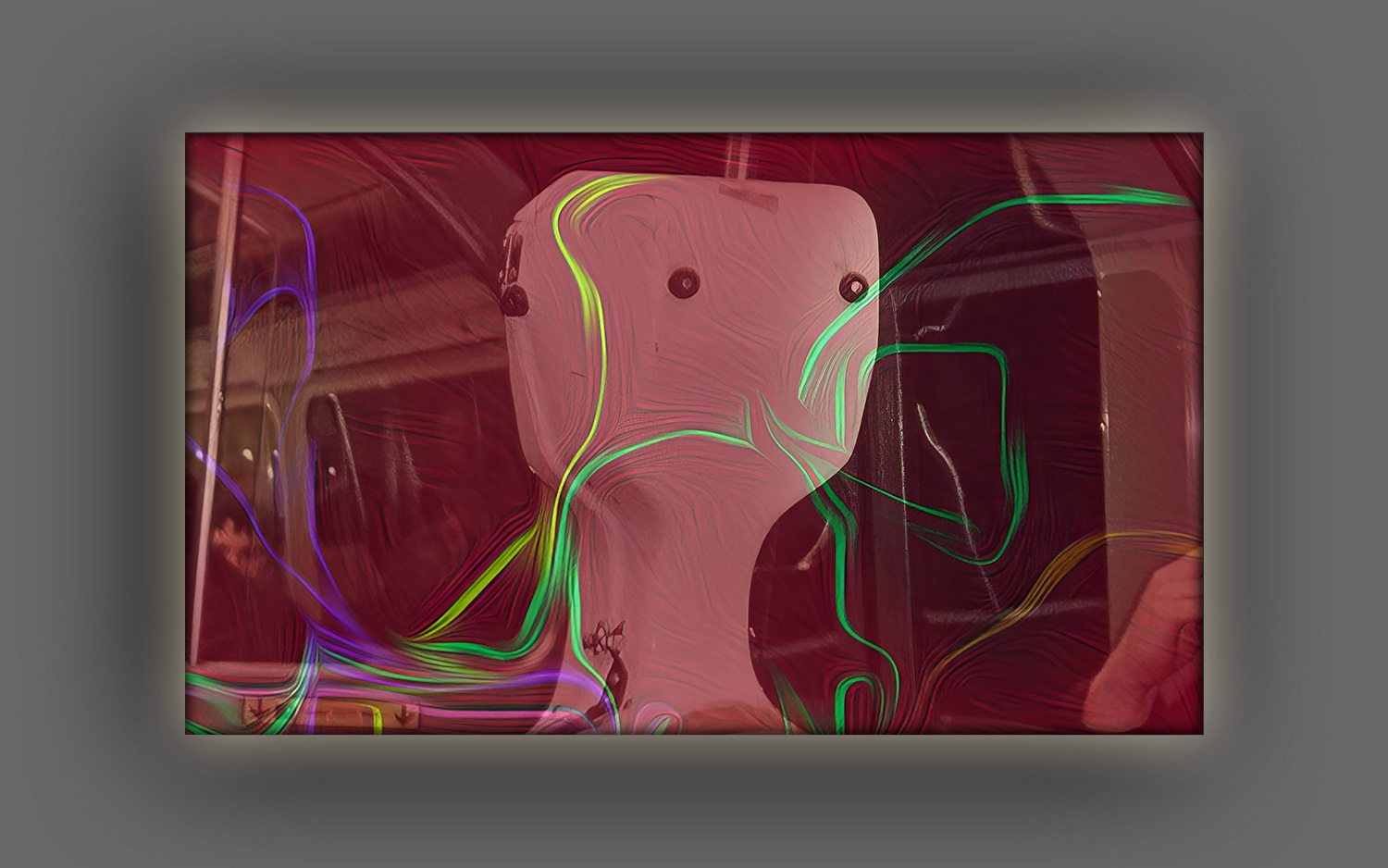
12. Paris. Aside from the subject of the metro systems themselves and their histories are the people who make use of them. I became equally preoccupied with capturing photos and video clips of interesting and unusual characters, often musicians performing every sort of music imaginable, while busking for spare change. The multiculturalism of such travel became ever apparent but one passenger in particular stood out, who I captured in this photograph. As in the case of other artworks seen on this page, the photo is framed by fragments of an actual metro map.
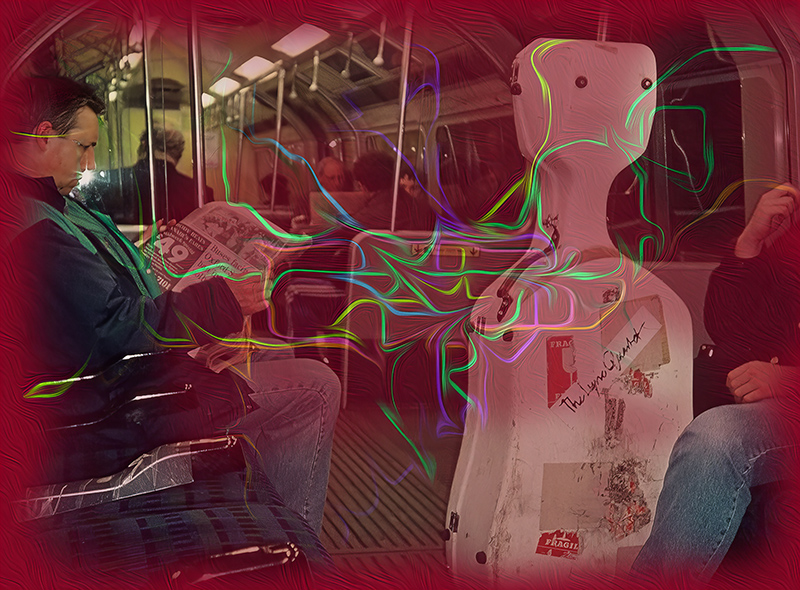
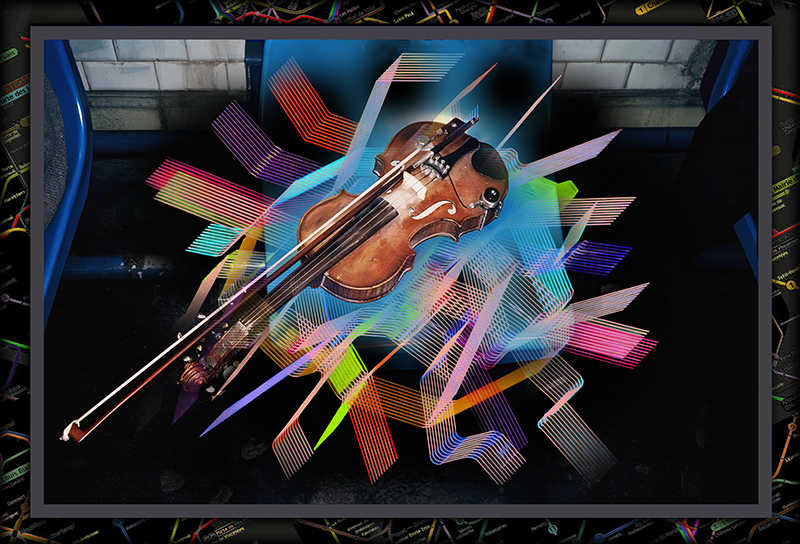
13 and 14. London and Paris. Among other odd “passengers” I encountered were a cello riding on the London Tube and a violin making colorful music, while waiting alone on a seat inside a platform of a Paris Metro station.