
Click on the toggle button above for full screen slideshow
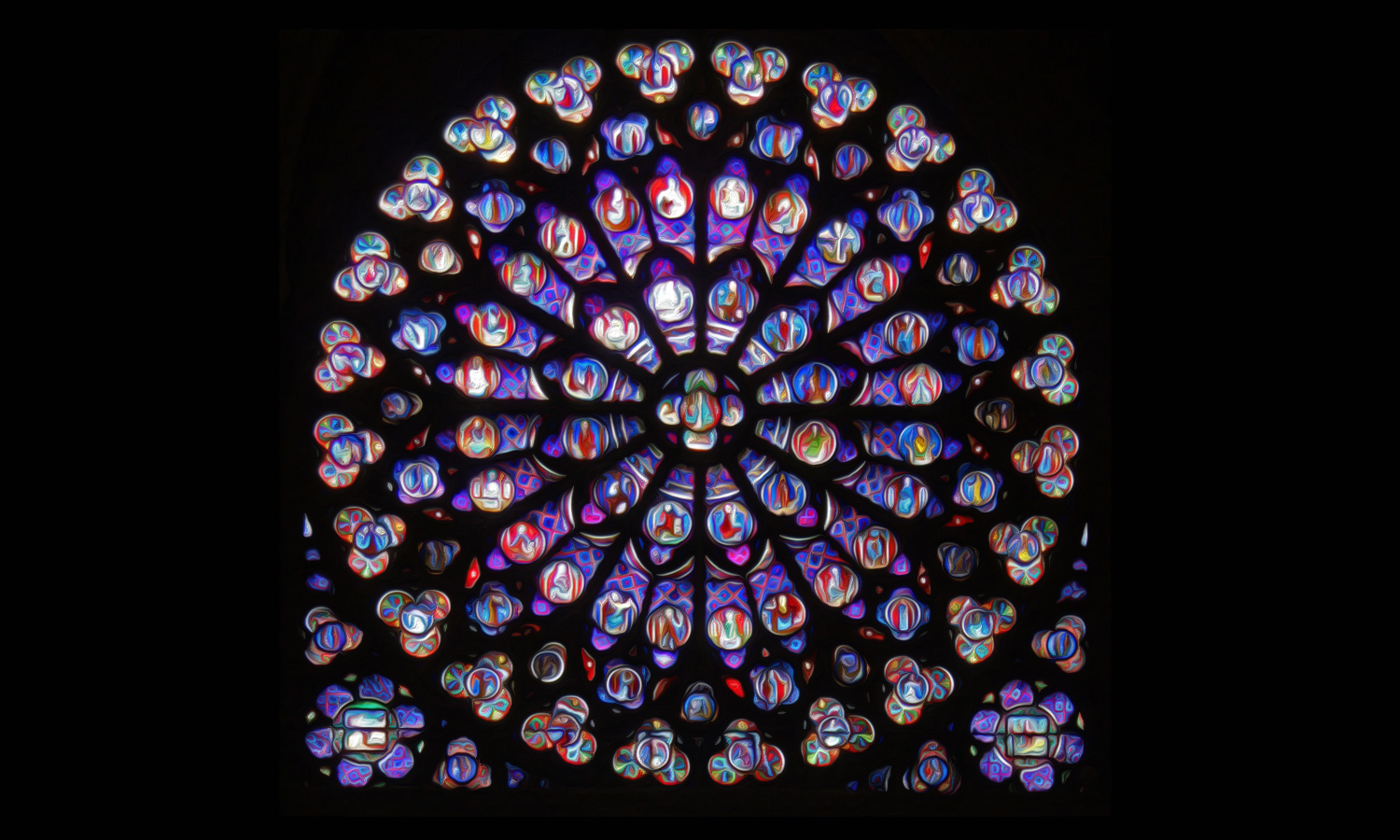
The tragic fire of Notre Dame, that thankfully has been restored, brought home to me the fact that my multimedia art project of The Underground Cathedral might never have happened, or certainly not in the form it has taken, had I not been so inspired by that magnificent feat of architecture and its mesmerizing beautiful mandala-like stained glass Rose Windows.
In 1979, the first time that I had the opportunity to see what Marlon Brando once called the greatest work of art of humanity, was five years after I had been begun exploring new contemporary concepts applied to the medieval craft of stained glass and became the editor of a magazine about contemporary glass art. When I saw the Rose Windows for the first time, I told myself that upon returning home to Los Angeles I must conceive something big, bold and dramatic! It was one thing to create a beautiful stained glass window, another to attempt emulating the sense of being engulfed by the magnificent rays of light emanating from a mosaic of colored glass, on a monumental scale.
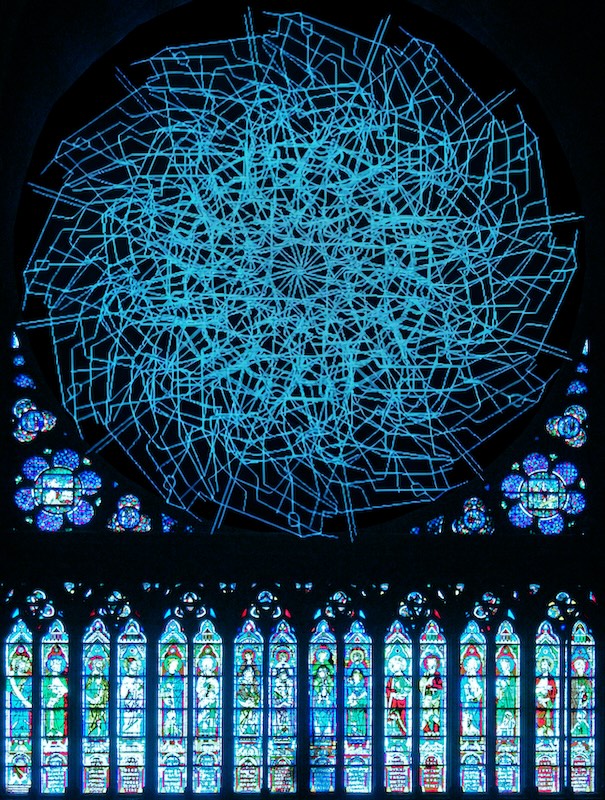
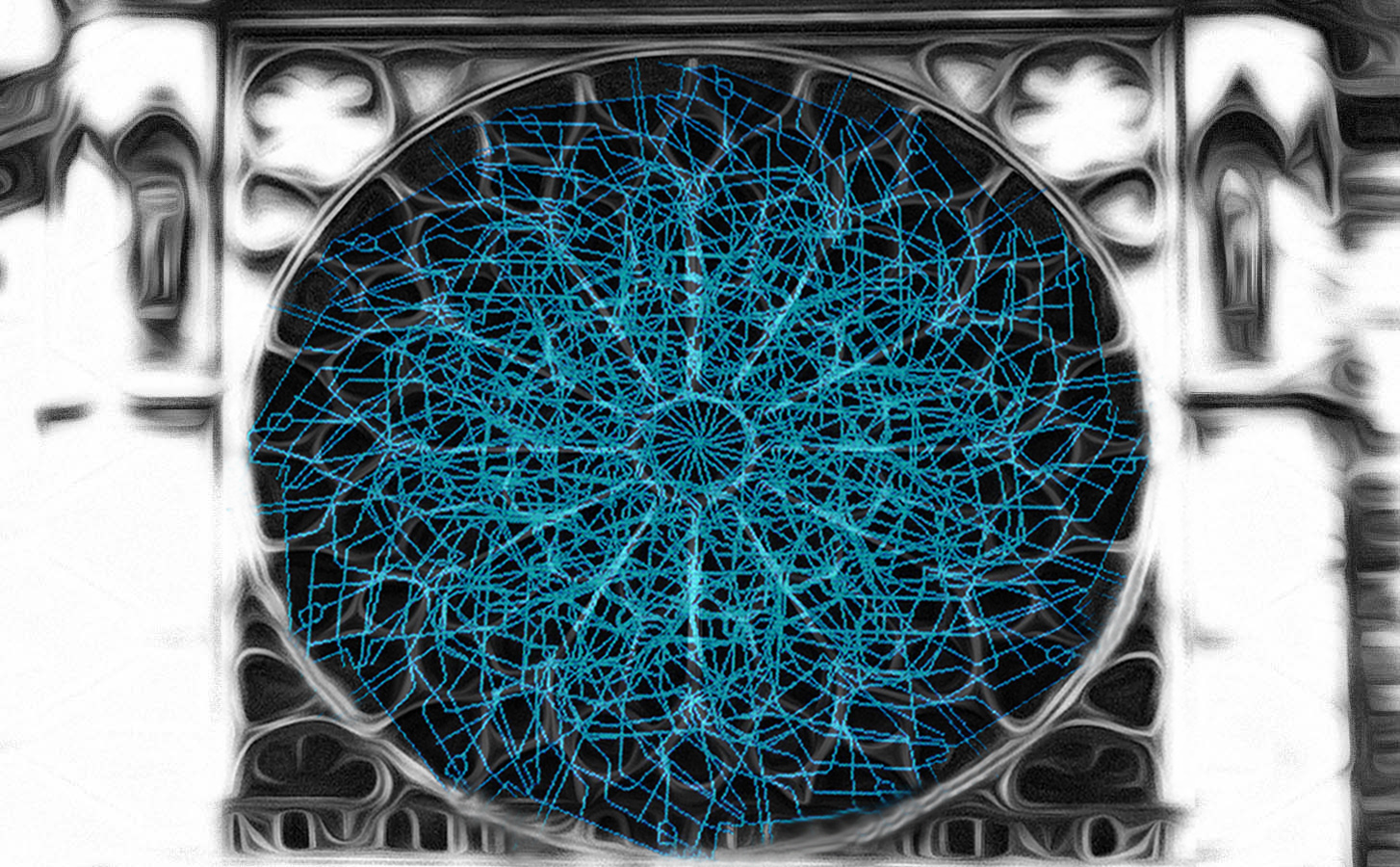
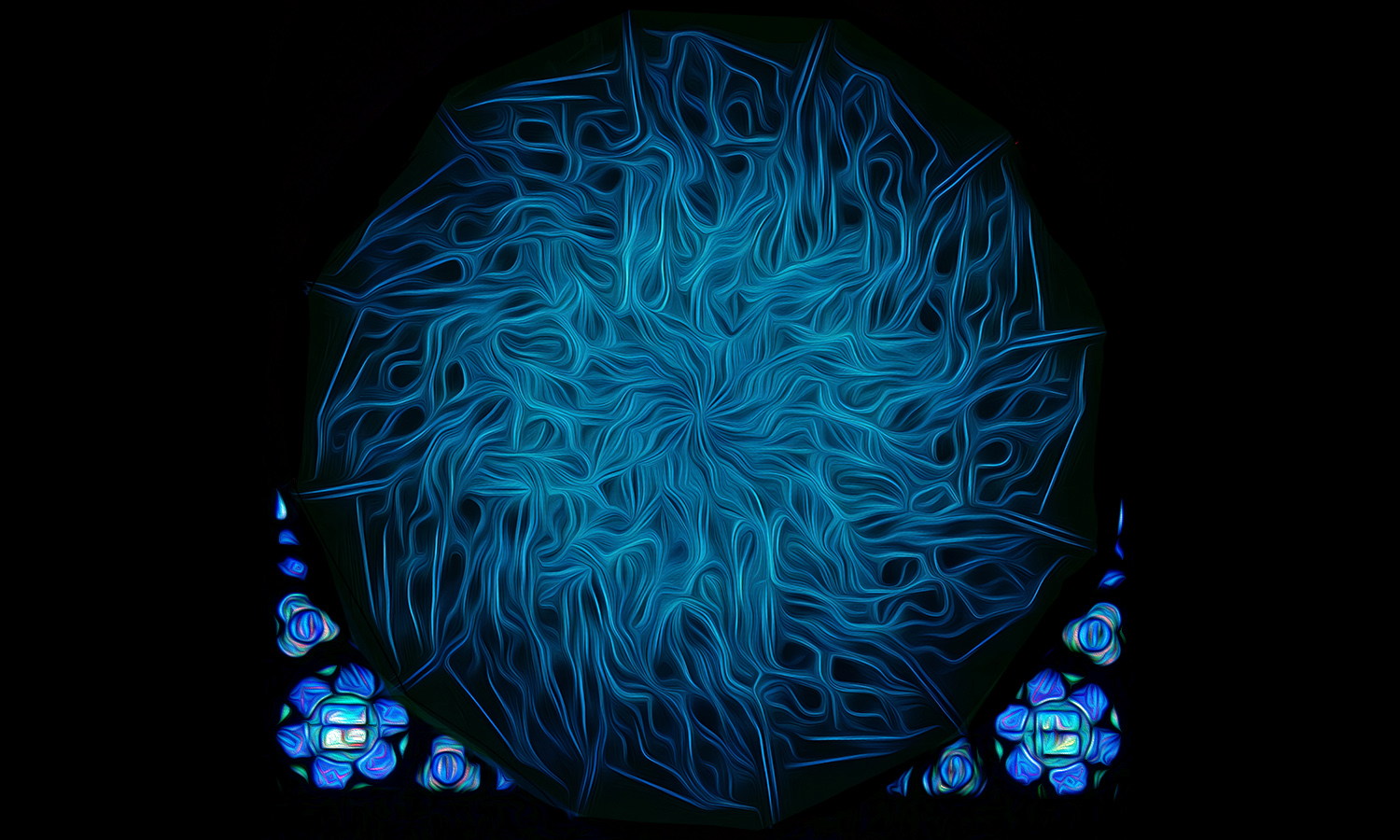
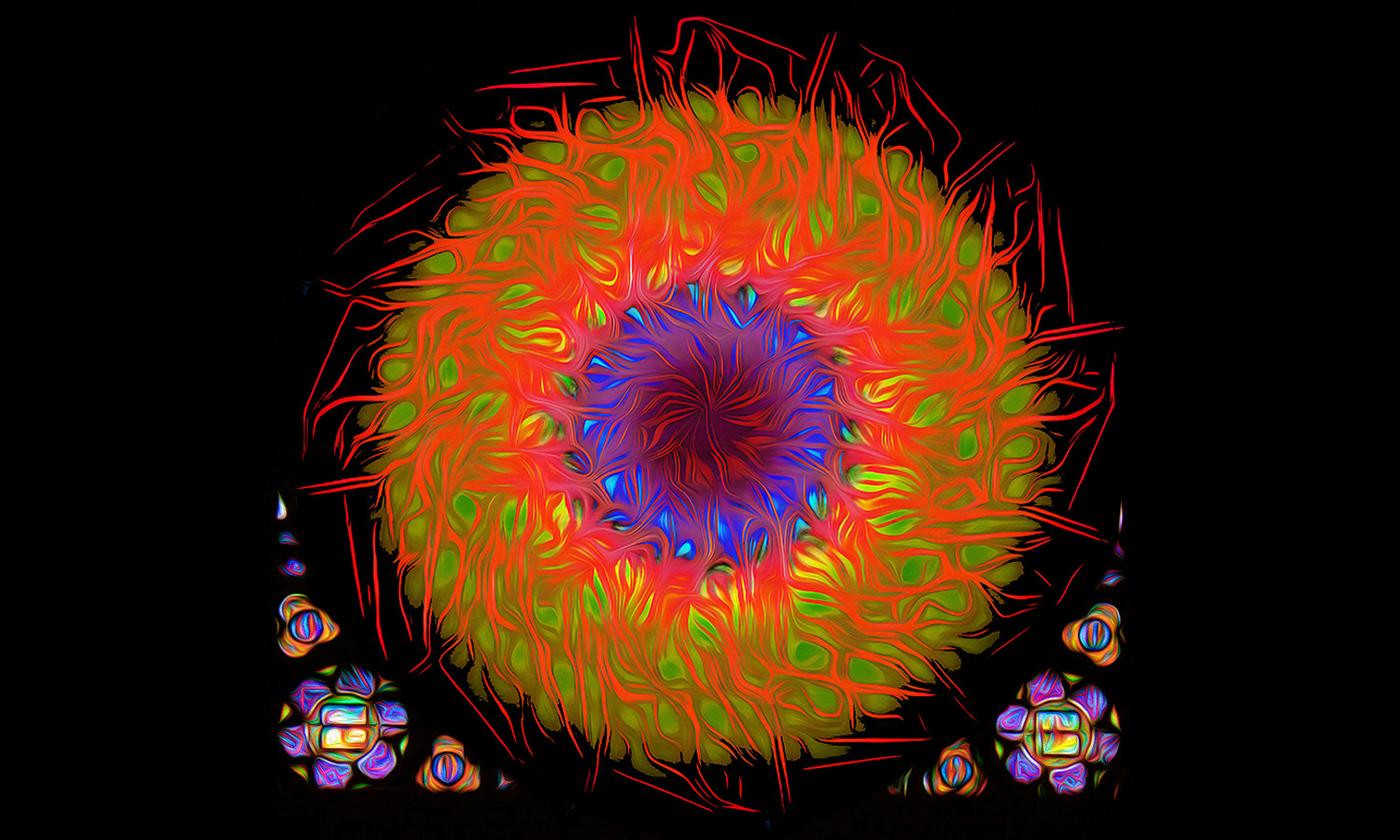
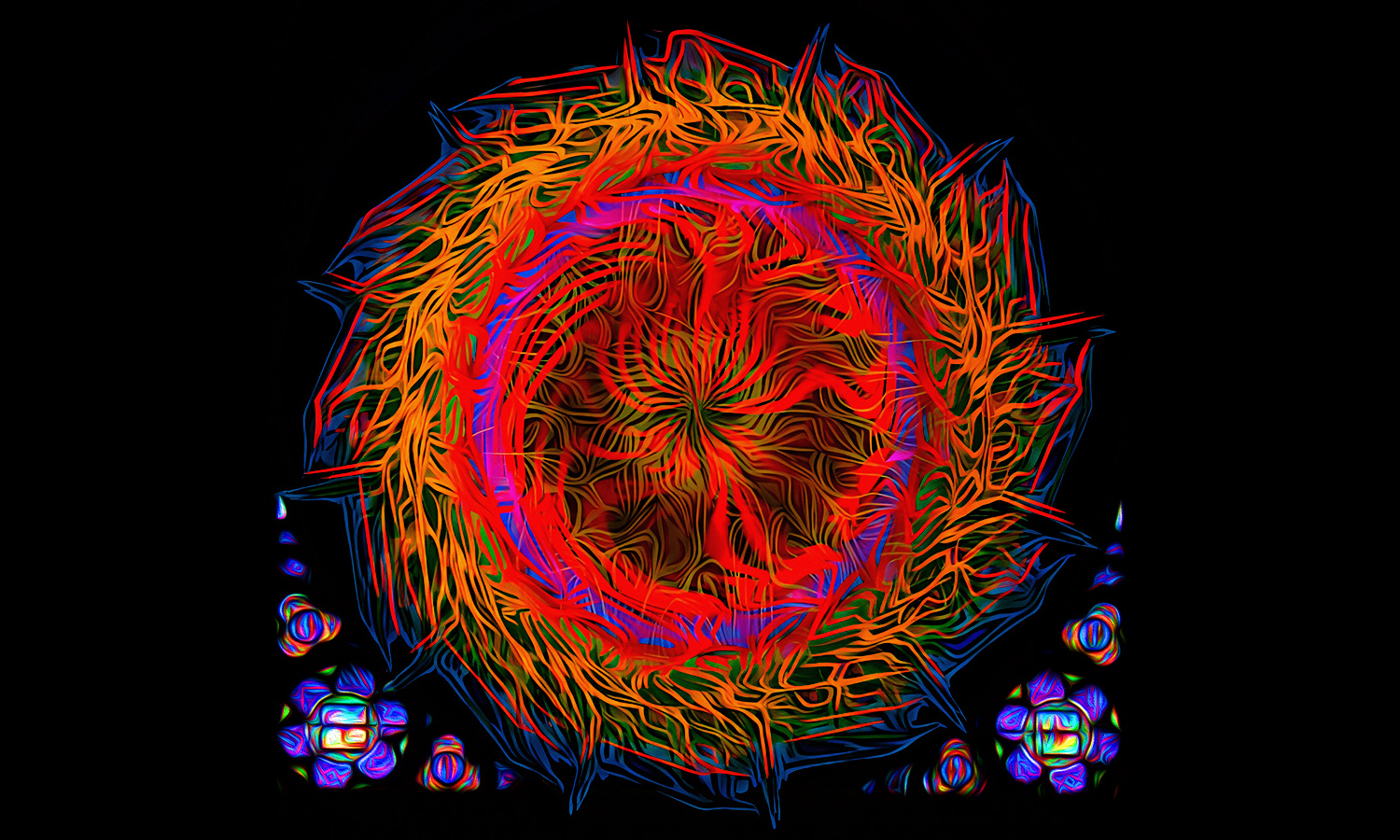
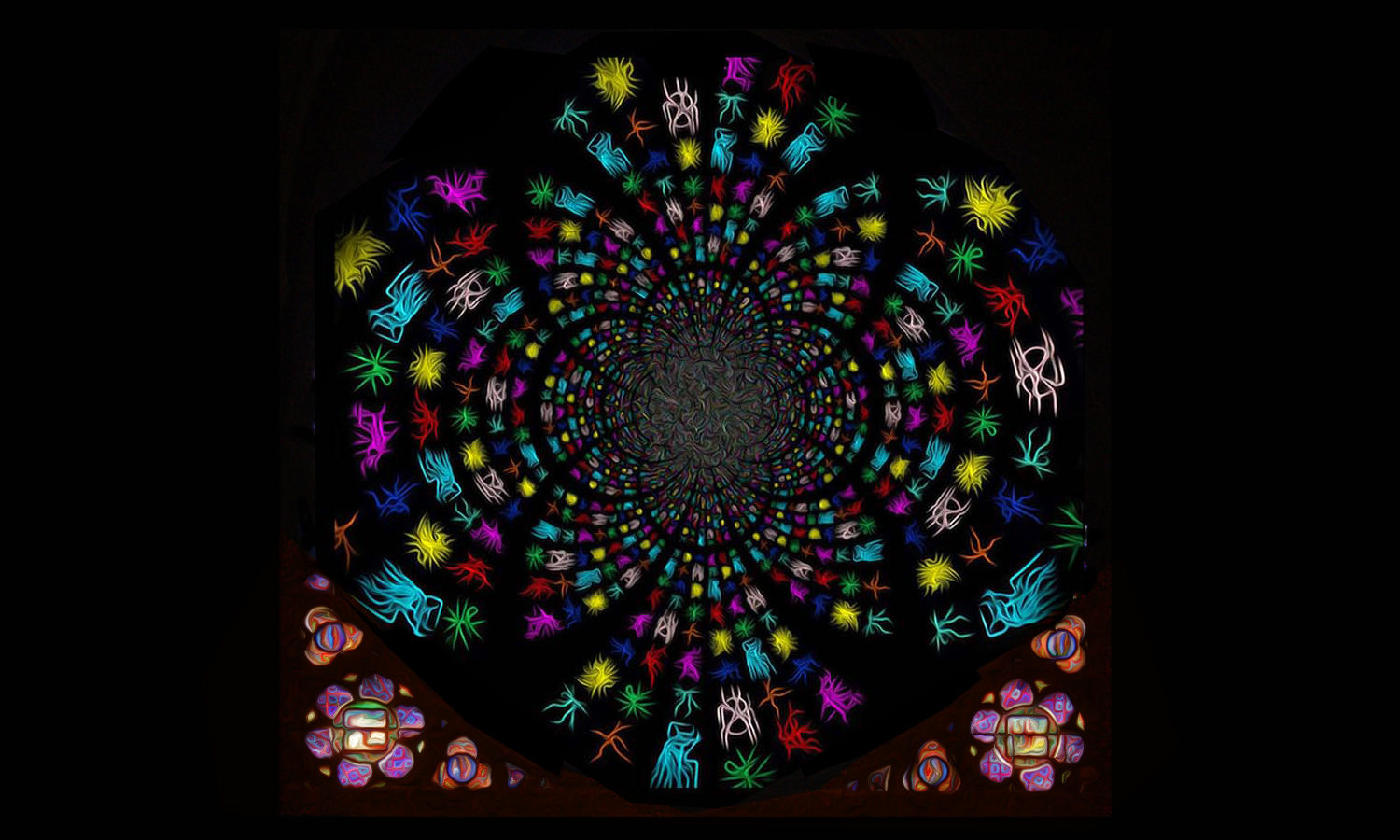
The resulting enormous stained glass artwork based on a map of the Paris Metro led to further artworks that became a series of mandala-like digital compositions based on rotating on its axis twelve copies of the lines of a Paris Metro map.
Some examples of these artworks, which I’ve entitled, “Paris Rose Mandala Series,” are presented in the background slide show of this page. Although I thoroughly understand the reasoning behind restoring Notre Dame that is true to its original magnificance, one could only imagine what it might look like if it could have integrated 21st century technology and aesthetics with the distant past.
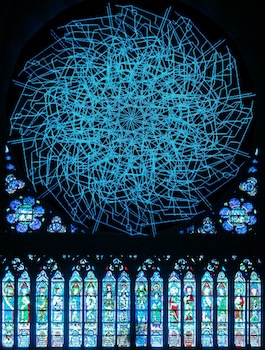

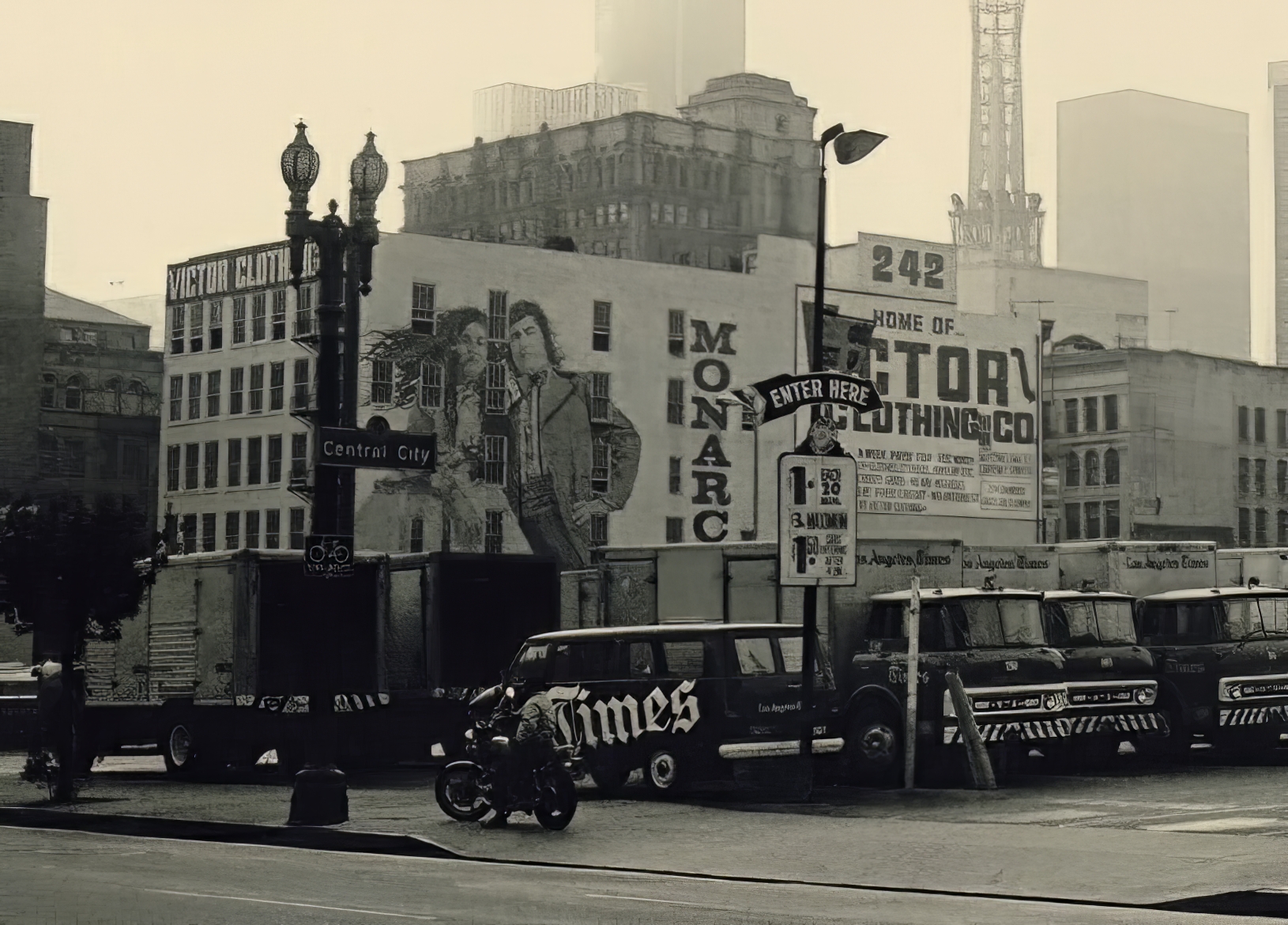
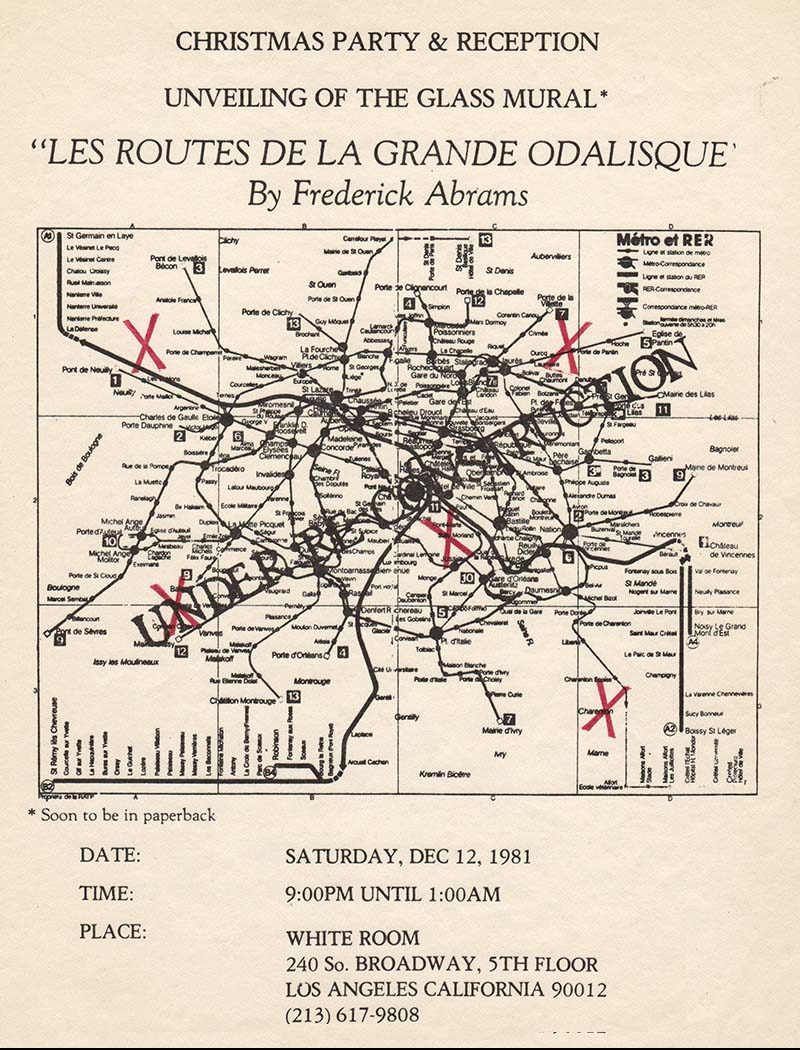
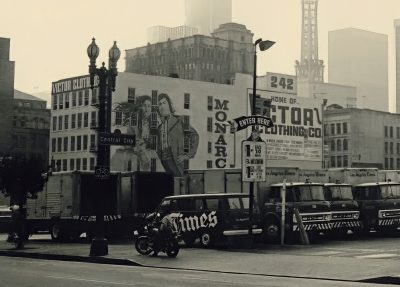
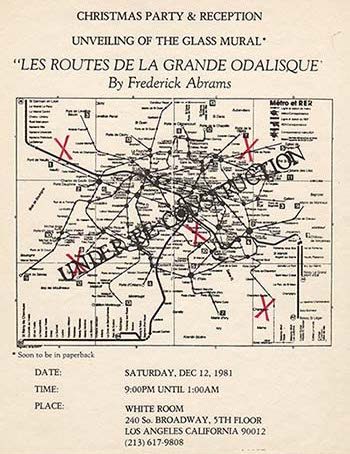
A long apparently destined journey in my life became the outcome of unveiling the huge stained glass artwork of “Les routes de La Grande Odalisque (The Large Brain)” for the first time at my new downtown Los Angeles loft space, on the top floor of an old 4-story warehouse building, that was situated directly across the street from the the Los Angeles Times newspaper headquarters. On December 12, 1981, I hosted a Christmas party that was attended by about 250 people.
A young man introduced himself to me, who said that he was preparing to write a book about subway systems of the world and he asked if I would like to collaborate on the project. He had collected extensive material from numerous cities and one day he dropped by with two boxes filled to the brim containing pamphlets, booklets, documents, maps and tickets that had been sent to him from across the globe.
Then he moved to Canada and left me with the two boxes.
To think of all of the effort he had expended to gather so much information and visuals on the subject and to have inadvertently served my artistic inclinations, as if he were a messenger from God. On top of that, to think that today collecting such material worldwide would be as simple as doing a Google search.
I knew I had to do something with all of this assorted material on such an esoteric subject, but what? The first thing I did was to fill up a folder with maps and tickets that would eventually be utilized in my artwork, in as yet unknown ways.
I envisioned a gallery or museum space filled with such grand glass artworks, but the practical possibility of doing so was daunting. Given that the enormous artwork made of delicate stained glass that I had just shown for the first time took about an entire year to complete, and that another one and one half years was devoted to applying a complex network of words to the glass surface, to attempt the same with several more of such maps would have required training an army of craftsmen. The only other alternative would have been to devote the next ten to twenty years on my own in preparation for a single exhibition.
Little did I then realize that similarly to the creation of the Great Cathedrals, The Underground Cathedral would become a lifetime endeavor, albeit of a slow, endlessly evolving process of creation.
Instead, the first thing I did with the maps in my possession was to reproduce a number of them as photocopy transparencies, which I laminated between thin sheets of glass and inserted them into a second large stained glass map, this one mainly depicting Los Angeles’ main boulevards and freeways. Click here for detailed information:
The Routes of the Grand Illusion
This being four years before the first lines of the new LA Metro were about to open, it was my intention to make a statement about the unsustainable dependency of Californian residents on a very inefficient transportation system. Simultaneously, the hand sized maps were intended to symbolize the underground of broad multicultural influences of the city of Los Angeles, which makes it so special.
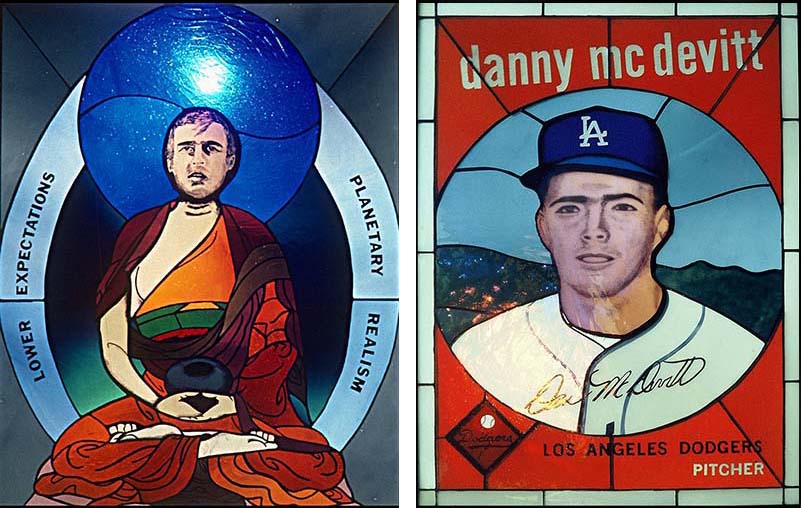
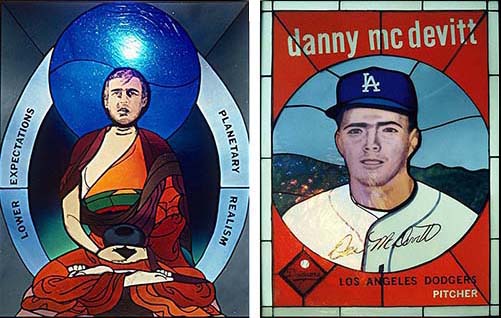
In its first solo exhibition, back in 1986, I also included, among other artworks, two stained glass portraits, one of former California governor, Jerry Brown Jr, as a young man posing as Buddha. Another was the replica of a portrait of a pitcher on a baseball card from the year of 1959. There are stories behind the reason and subjects of these stained glass artworks, as there are of the subjects of so many religious church windows. In fact, Jerry Brown can be thanked for alleviating southern California from the deadly debilitating smog resulting from automobile exhaust fumes.
Not long afterward, I discovered a new usage of the maps in my collection, upon seeing the first CAD architectural computer system in existence, inside of my father’s restaurant kitchen facilities design firm’s office.
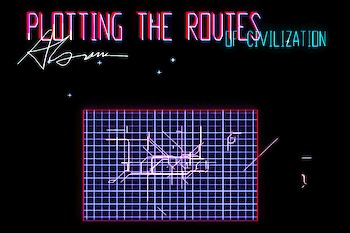
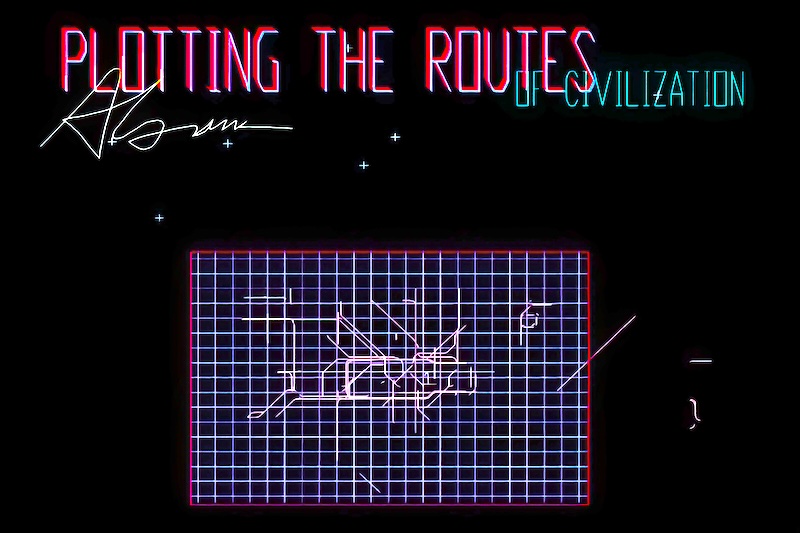
Click here for: CAD drawings of The Routes of Civilization
Artworks in various forms that emanated from the origins of The Underground Cathedral are seen on this section of the website. Also, some of the pages are directly linked to my older website, The Underground Cathedral. On this site as well is more extensive documentation of this ongoing project, which further encompasses video art and music.
Also, numerous newer versions of the artworks are available for sale at: Frederick Abrams Art.