
Click on the toggle button above for full screen slideshow
A MULTIMEDIA EVOLUTION
This site documents a life-long multimedia project, starting with the contemporary definitions and application of a traditionally biblical and later decorative art form. The formal public documentation of this began two years before I became editor of Glass Art (later called GLASS) magazine, the publication which opened the doors to exhibiting my early stained glass artworks across the United States. These exhibitions served as the genesis of a concept that began in an ancient art medium and eventually branched out into a massive lifetime multimedia project.
It all began upon submitting a photo of one of my early stained glass artworks to the magazine, which was published, resulting in becoming invited to participate in group shows of contemporary stained glass artwork with other artists who, along with myself, became recognized by Otto Rigan’s 1976 book, New Glass. Here is a link to the book’s introduction and the page about my work. It describes the inspirations behind my first independent, autonomous experimental contemporary stained glass artworks, both in his words and my own, focusing on how I became influenced by growing up in the media capital of Los Angeles, long before I left for Europe, where I subsequently lived for twenty-five years. Since these pages derive from photocopies, I have added to this PDF higher quality reproductions of the four artworks documented in his book. They can also be found elsewhere on this site in larger formats and with more current reflective descriptions:
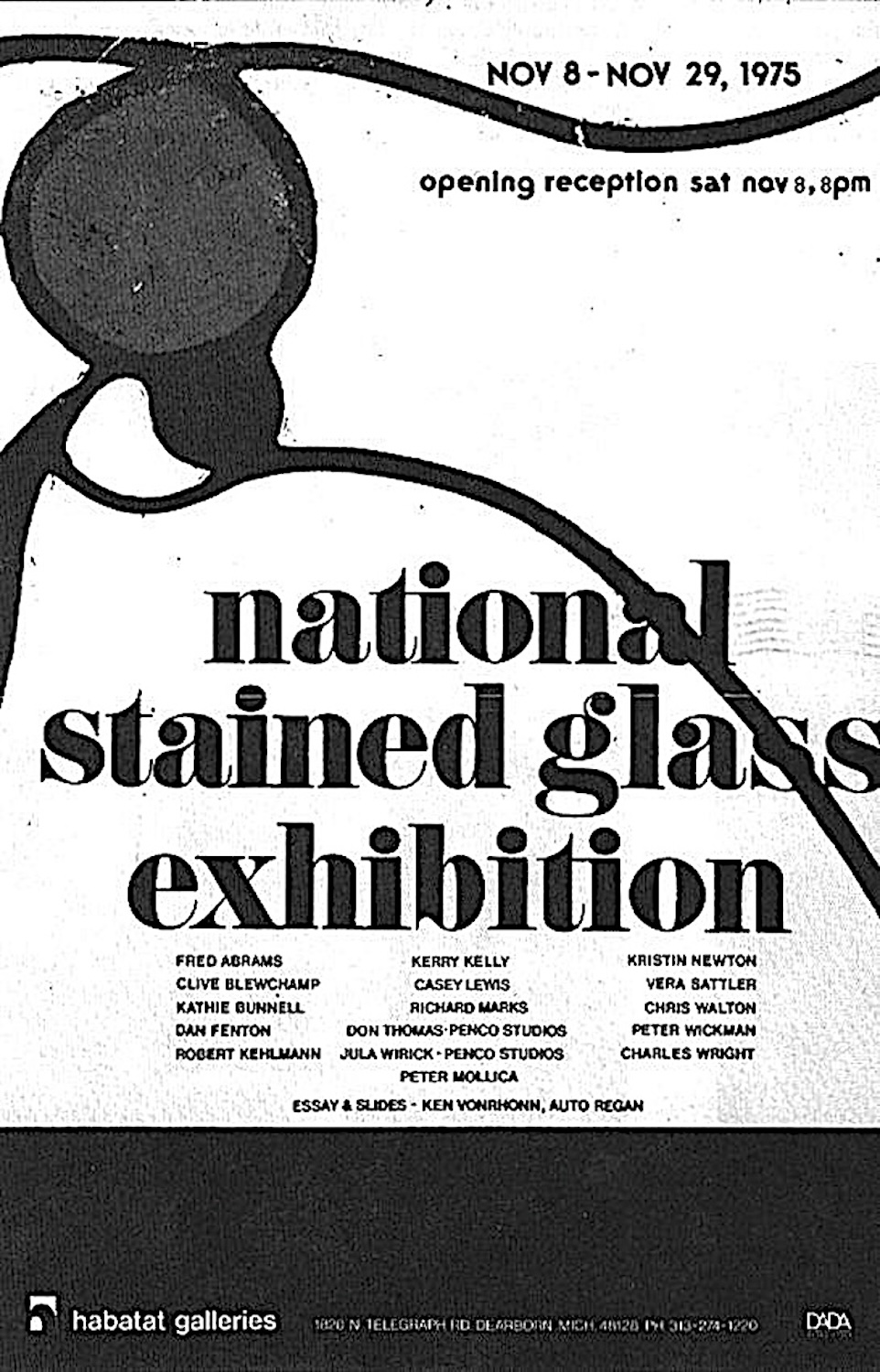
Rigan’s book, which received national attention, was largely inspired by these group exhibitions of autonomous contemporary stained glass artworks created mainly by artists living on the west coast of the US. Here are invitations from two 1975 group exhibitions, at Galeria del Sol, Santa Barbara, California and Habatat Galleries in Dearborn, Michigan:
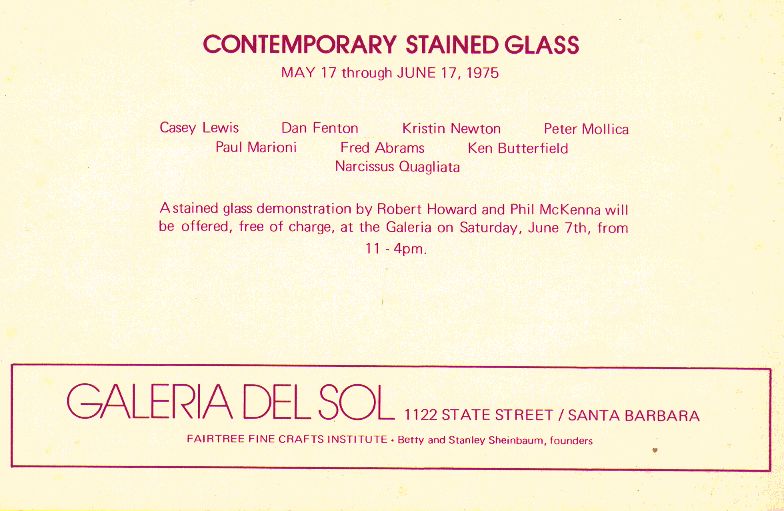

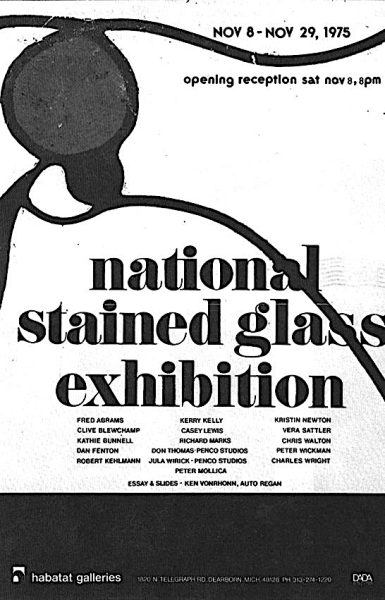
In 1976, I was invited by the Xerox Corporation, in Rochester, New York, to present one artwork in the show, “One Hundred Artists Commemorate Two Hundred Years,” which celebrated the bicentennial anniversary of The Declaration of Independence. This became the first opportunity to exhibit my work outside of the narrow confines of “glass art.” Still, the exhibition remained categorized within the realm of crafts, for which I shared only a marginal affinity. What was of far greater significance is the fact that this was also the first time that my work was selected based on its content. Here is the introduction from the show’s catalog and page documenting my artwork:
XEROX CORPORATION 1976 BICENTENNIAL EXHIBITION
As I write this, the subject of this artwork: U.S. dependency on overseas oil, is now of both historical and currently vital significance exactly fifty years later. Here is its full, detailed documentation:
There was one stained glass art exhibition at the end of 1976 and early 1977, which garnered the most attention, at the Fresno Arts Center. Here is another PDF containing the exhibition’s introductions, by gallery director, Andrew Maass, Otto Rigan and former Glass Art magazine editor and glass artist, Dan Fenton, plus another early description of my work, in my words:
For the next several years, I served as editor of Glass Art magazine, during which time I set my own work aside, then renamed the magazine GLASS, at which time I channeled my creative instincts also as its art director. Working directly with a state-of-the-art printing house, a high quality magazine coffee table-style quarterly emerged, which I advertised: “If we could, we would make the magazine itself out of glass.” The story is briefly told here:
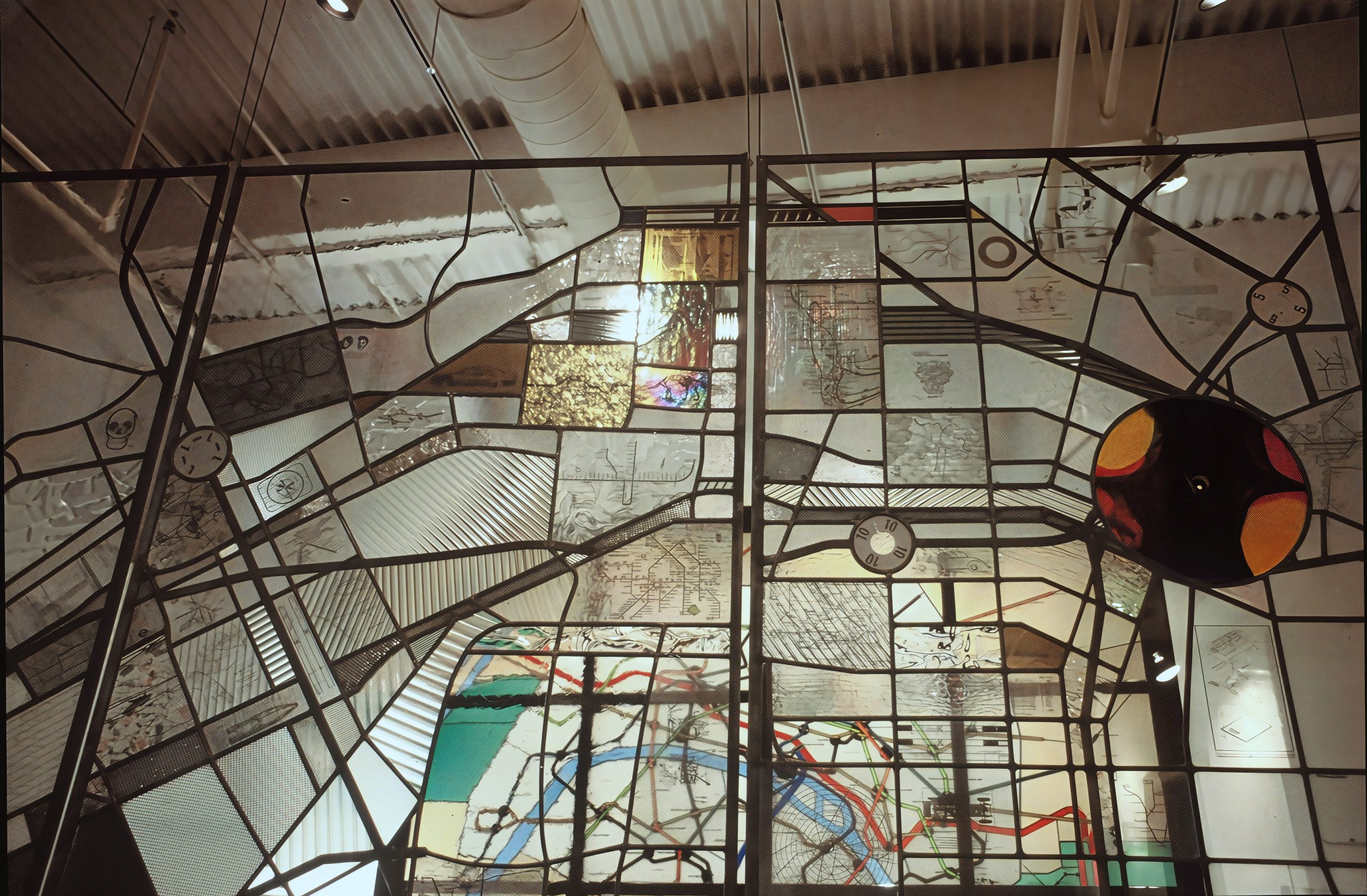
Following my tenure, I took my first voyage to Europe, where I witnessed enormous architectural stained glass windows both in medieval cathedrals and modern ones built during post-WWII reconstruction and returned to Los Angeles, determined to achieve something profound and dramatic. So, I devoted the next few years to creating a single enormous autonomous stained glass artwork, entitled after artworks by two famous modernist French artists, Jean-Auguste-Dominuque Ingres and Marcel Duchamp. It is documented here:
LES ROUTES DE LA GRANDE ODALISQUE (THE LARGE BRAIN)
The artwork, which took almost three years to complete, was first exhibited in 1984 at the Richard L. Nelson Gallery, at the University of California at Davis, a gallery with a reputation of presenting artworks in nontraditional media worthy of being recognized as contemporary “fine art.” Two published reviews of the exhibition addressed this question and discussed my artwork, which dominated the exhibition. Christopher French of Artweek called it a “Duchampian requiem,” while assessing the boundaries of possibilities that an artist working in glass faced. Perhaps his words struck a nerve, for this was the last exhibition of my work, in the context of the medium which I had relied on to express myself, up until then:
UNIVERSITY OF CALIFORNIA AT DAVIS EXHIBITION REVIEWS
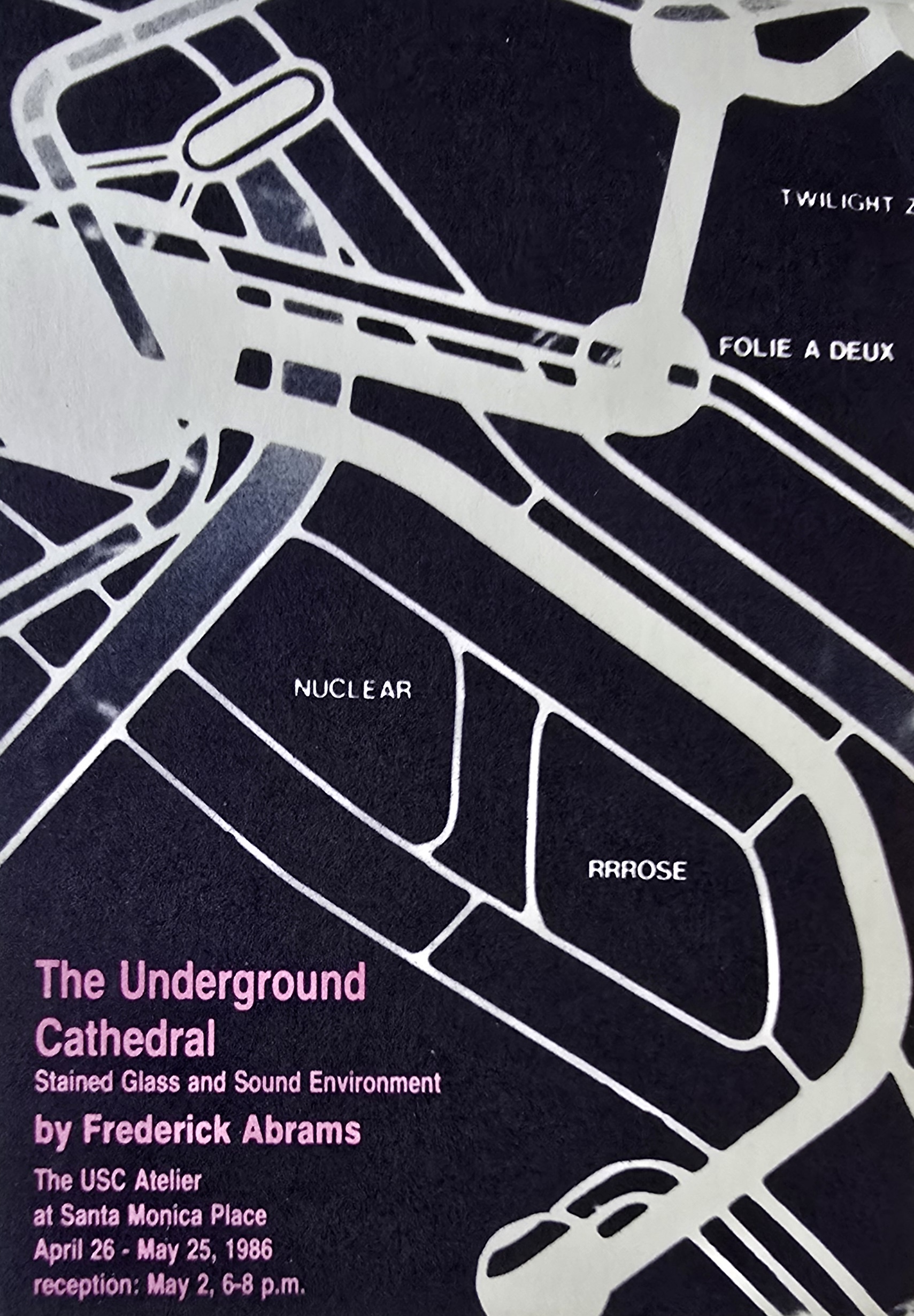
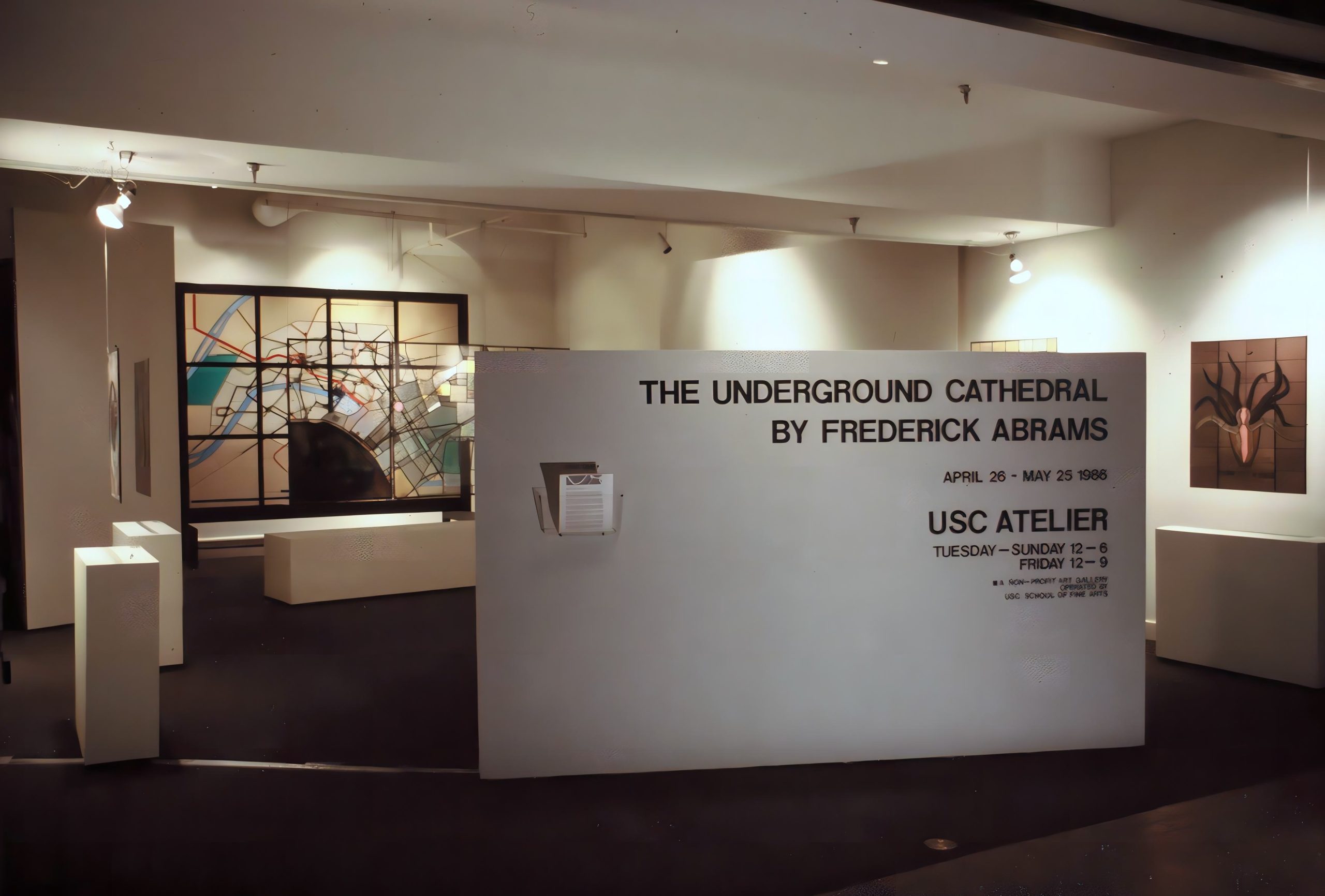
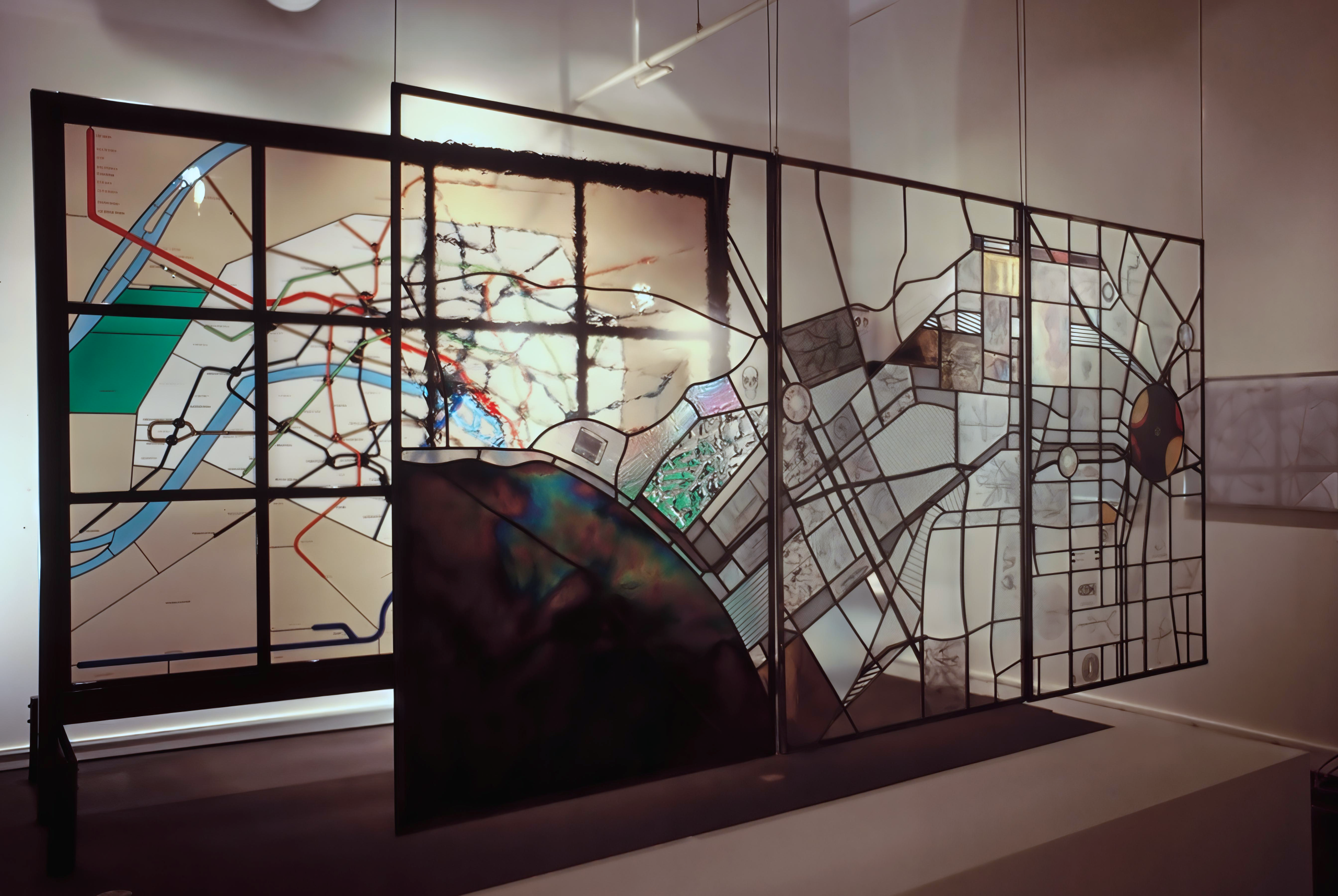
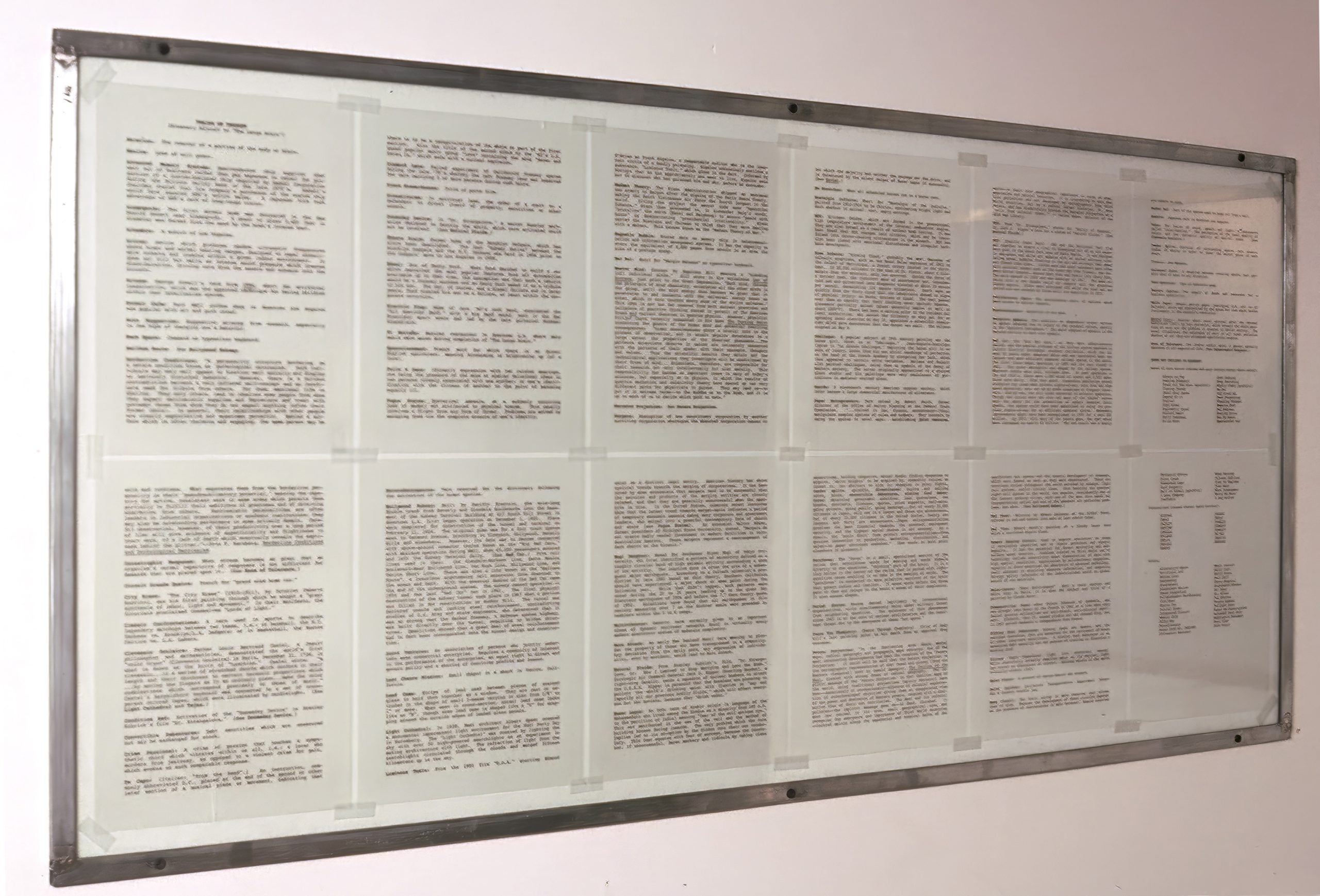
The exhibition that ended my formal association with the glass art movement occurred two years later, when I presented The Underground Cathedral for the first time as a multimedia installation, consisting of stained glass artworks, including a major new one incorporating mixed media: “The Routes of the Grand Illusion (Shooting Star Triptik),” digital ink drawings, words, texts, recorded sounds, and music.
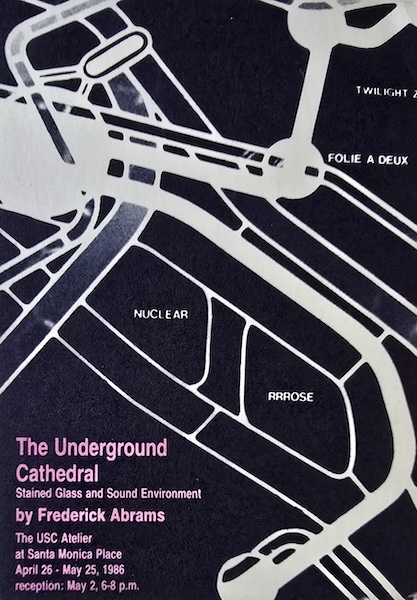
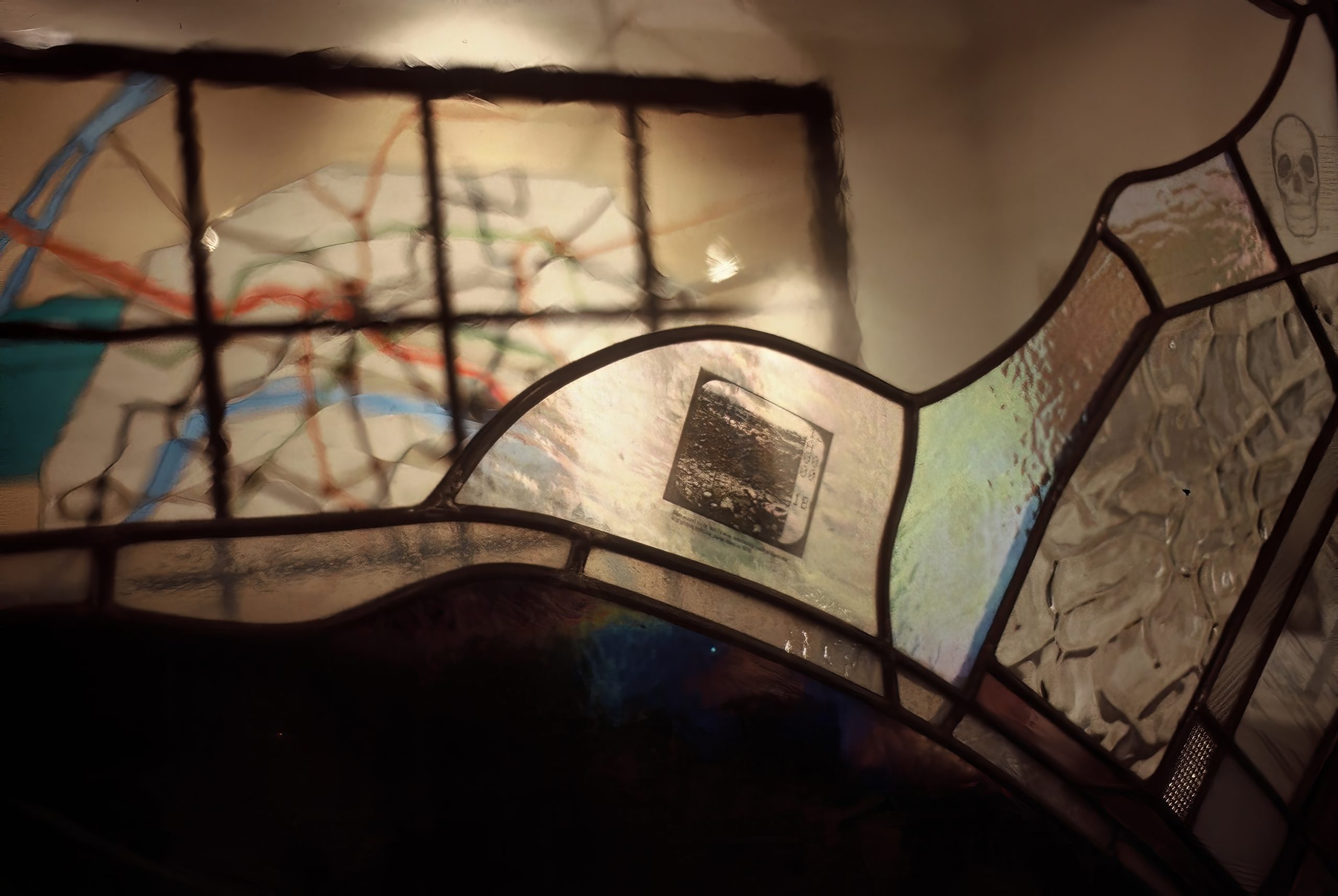
The title of “The Routes of the Grand Illusion (Shooting Star Triptik)” is the name of the famous movie by French filmmaker, Jean Renoir. It was a pivotal artwork in the process of the burgeoning multimedia evolution of my work, given that it incorporates numerous flat objects laminated between wafer-thin sheets of glass, of historical, sociological and anthropological significance. This includes: fragments of 35mm motion picture film, a rare multicolored 33rpm vinyl record, size rings from commercial clothing racks and transparent photocopy acetates containing a wide variety of details and subject matter pertaining to modern life in the realm of transportation, the entertainment industry, sports, geography, geology and scientific invention. Much of the glass incorporated in the artwork was not invented for creating stained glass design but rather for industrial and functional purposes. Details of this artwork can be found here:
THE ROUTES OF THE GRAND ILLUSION (SHOOTING STAR TRIPTIK) Not only had I transcended the medium I had worked in for fifteen years but the theme of the exhibition, which was extremely complex, was brilliantly deciphered by this review: At that point in my life, I had finally made a conscious transformative break from the medium to which I had devoted so many years, at which point my main media would include an often synergetic combination of photography, digital art, video, animation, sound, music, textural content and even food and architecture. All of this is showcased and described elsewhere on this site. More published invitations of exhibitions ranging from photography to digital art that followed and a video documentation of a multimedia installation back in 1997 can be found here on my older website: LATER INSTALLATIONS AND EXHIBITIONS The full screen slideshow on this page consists of photos from my first multimedia installation.