
Click on the toggle button with two arrows above for full screen slideshow
DOING ART IN POST-COMMUNIST POLAND
Visiting, let alone living in Poland was not on my bucket list, when on April 5, 1989 I was introduced to a man named Jerzy Ryba, who was sent to the United States by a U.S. Consulate in the Polish city of Poznań for the sake of cultural exchange. The meeting was facilitated by a journalist friend, who was informed of his visit to Los Angeles and of his goal, to invite American artists to tour his country. This opportunity came as quite a surprise, for back then traveling to anywhere in the Soviet Union was unthinkable. Like most Americans, all that I knew of the critical current political circumstances was that there had been a union named “Solidarity” which opposed the totalitarian government and that it was led by a heroic shipyard worker named Lech Wałesa.
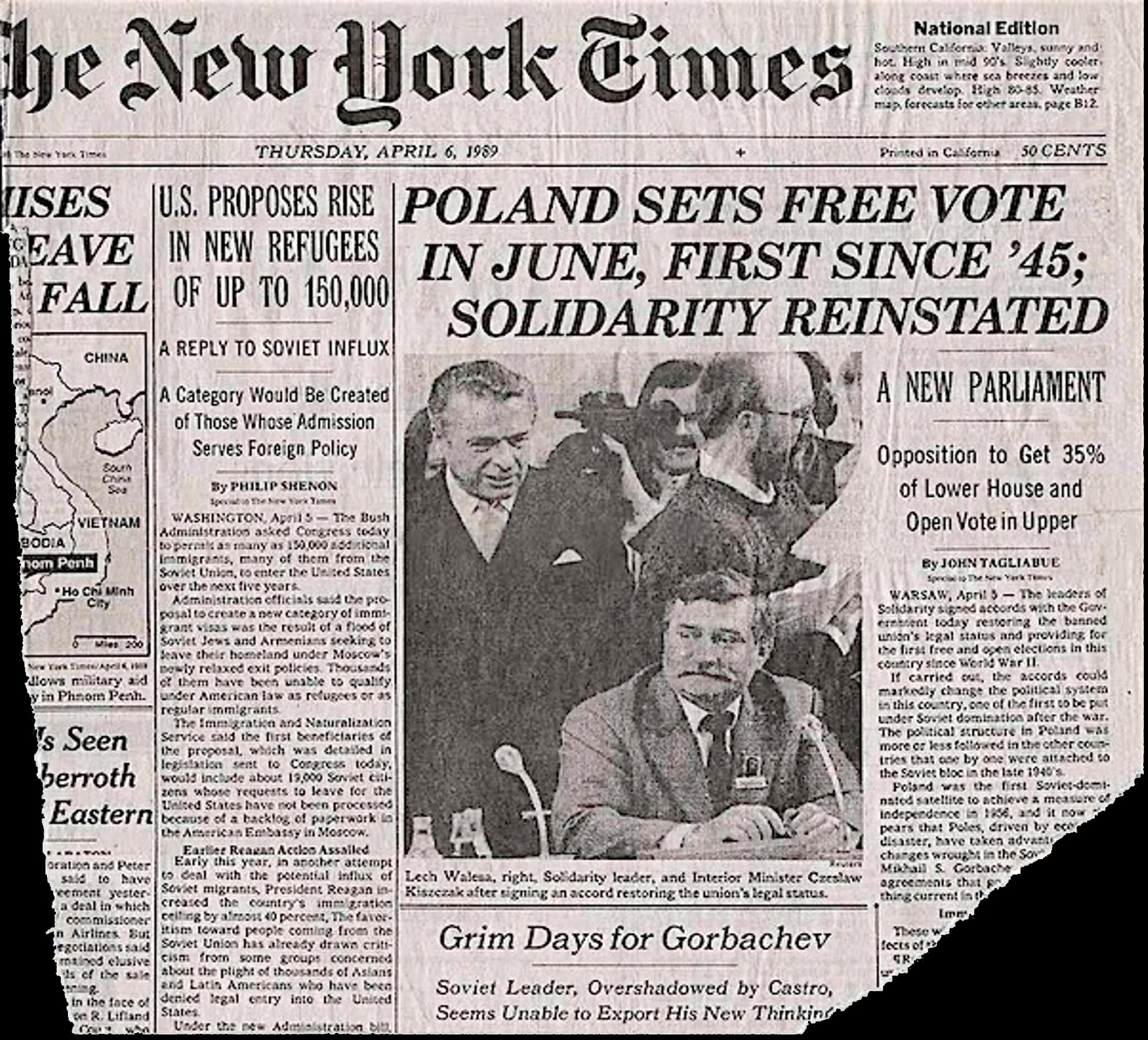
Previously, I had spent a year in Paris and I wanted to return to Europe; however, Poland was one of the last countries I would have imagined as a desired destination. Fatefully, we met in an artist’s loft in downtown LA, where my huge stained glass artwork, “Les routes de La Grande Odalisque (The Large Brain),” was on display, on what would later become recognized as a historical day, when what is known as the “Roundtable Discussions” resulted in allowing Poland to have its first free elections since 1945.
Ryba was a leader of an underground of artists throughout the country, who during a period of totalitarian suppression kept free expression alive. He showed me a video about a massive group of artists from his native city of Wrocław known as “Pomarańczowa Alternatywa” (Orange Alternative), who dressed in orange costumes and with orange caps on their heads staged humorous political demonstrations, which made the national guard laugh. This act of creative nonviolent resistance inspired me to consider his invitation to tour his country, on the premise that I would be housed, fed and supported during my stay, although I would have to pay for the plane fare. Further, it would become my obligation to create an artistic project while there, with no hint of how, where or what materials would be provided, if any.
What utterly convinced me to accept Ryba’s out-of-the-blue offer was the stunning headline of The New York Times the very next morning:


I then knew someone above was guiding me, though I had no idea at all how big this destiny would become!
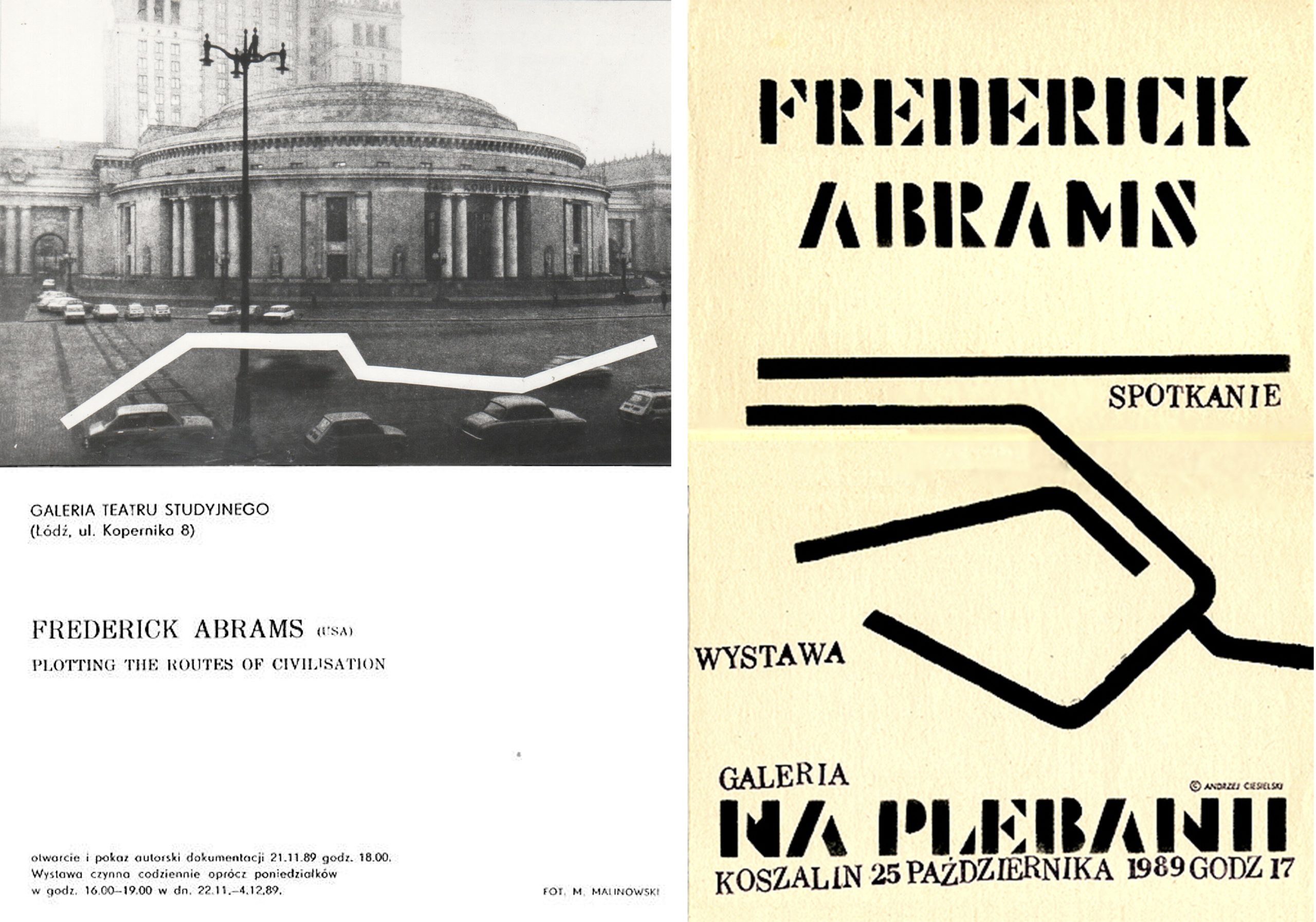
I kept a handwritten diary as I took trains alone to 9 cities within 21 days, on a tour of Poland that was arranged by Ryba. I carried with me about 40 of my first CAD ink drawings rolled up in an architectural drawing tube, which were exhibited during my travel, in the cities of Koszalin and Łódż. I also sold 3 of them to the Muzeum Sztuki (Art Museum) of Łódż, which is the oldest museum in Europe and second oldest in the world, after The Museum of Modern Art in New York.
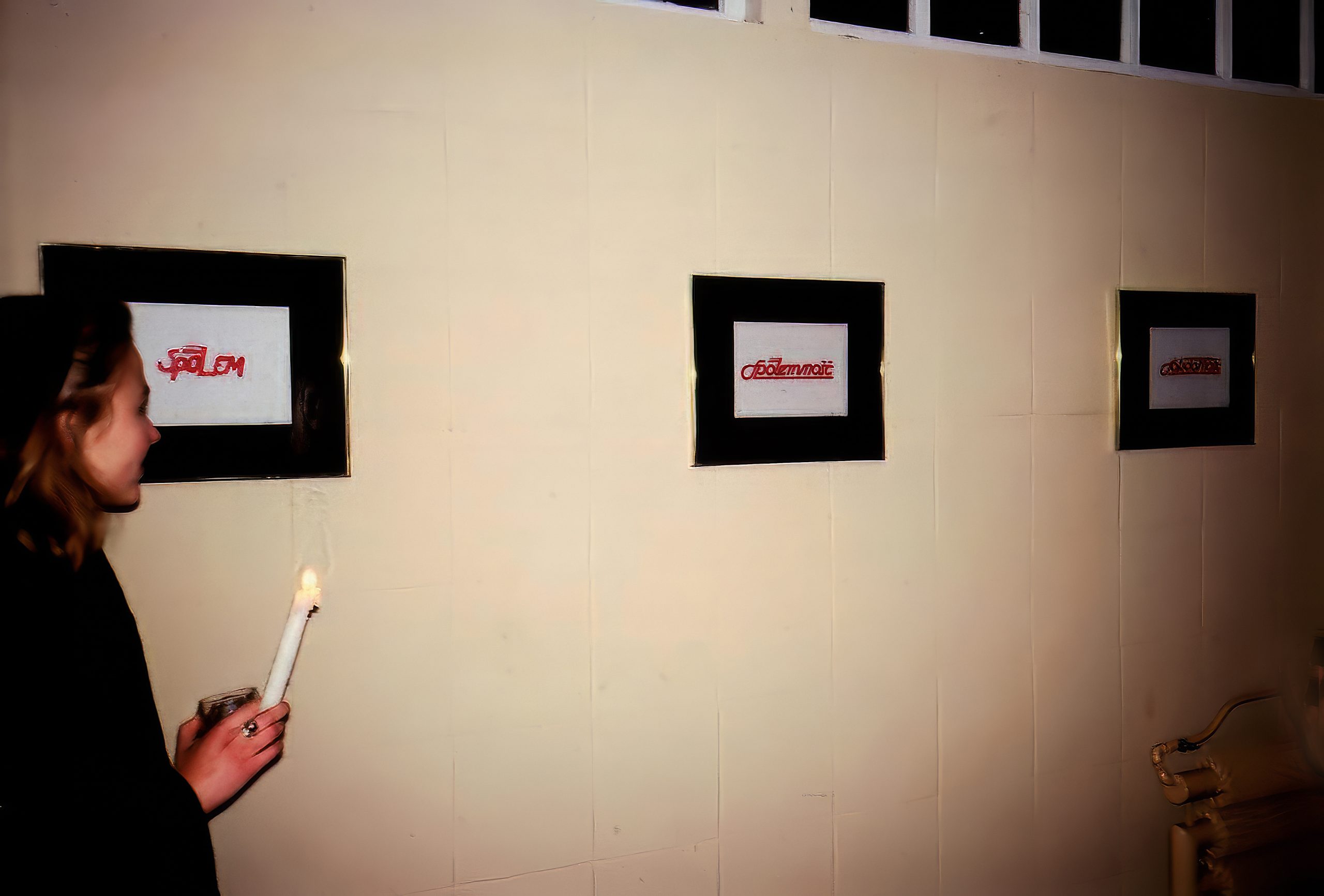
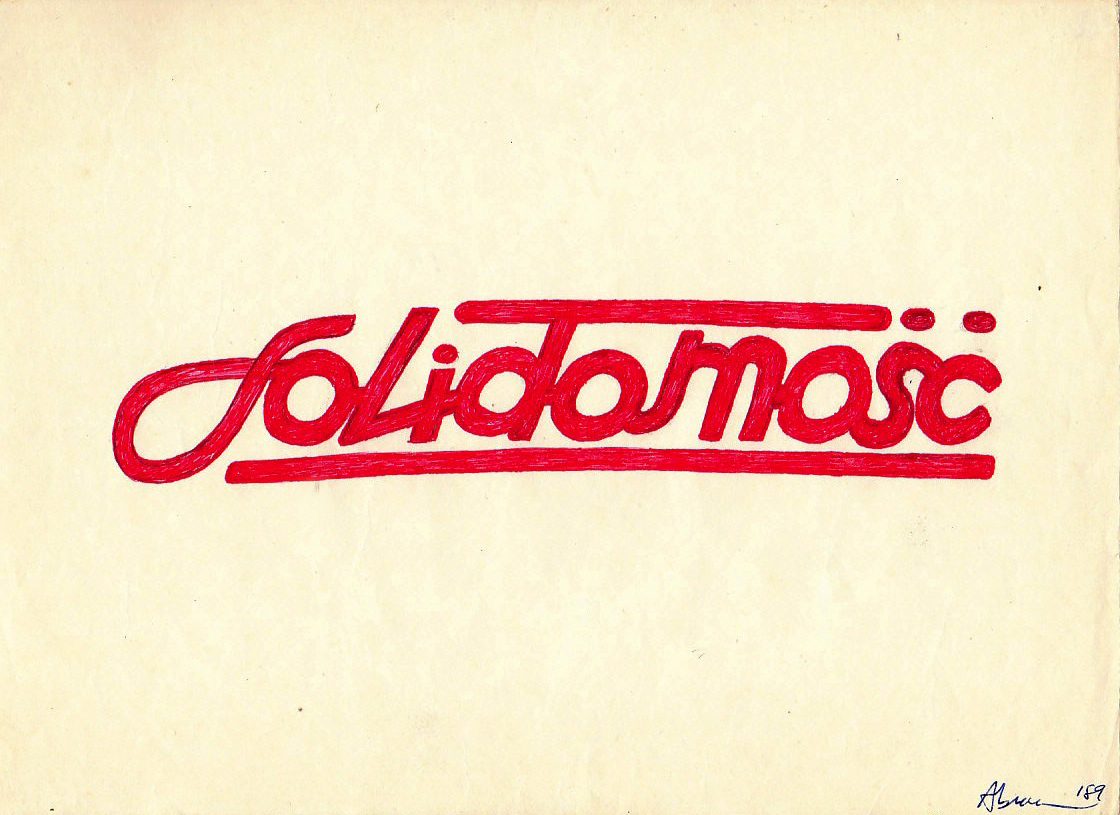
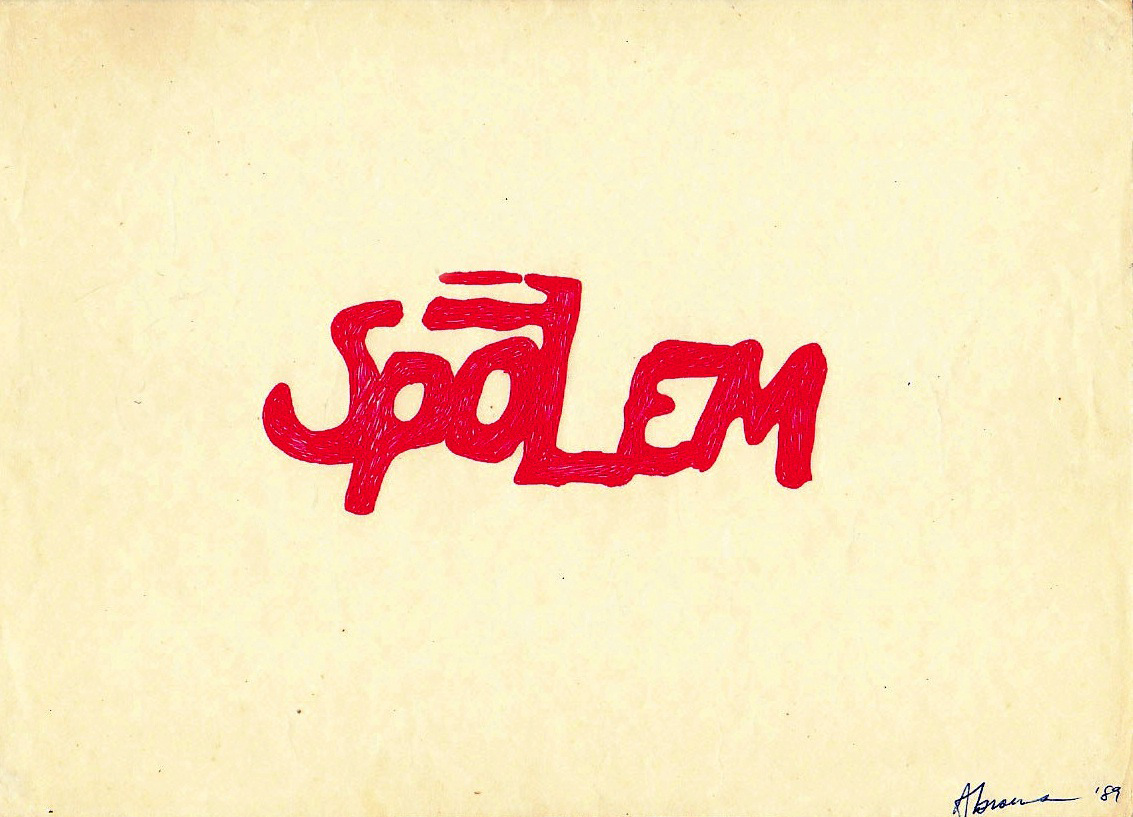
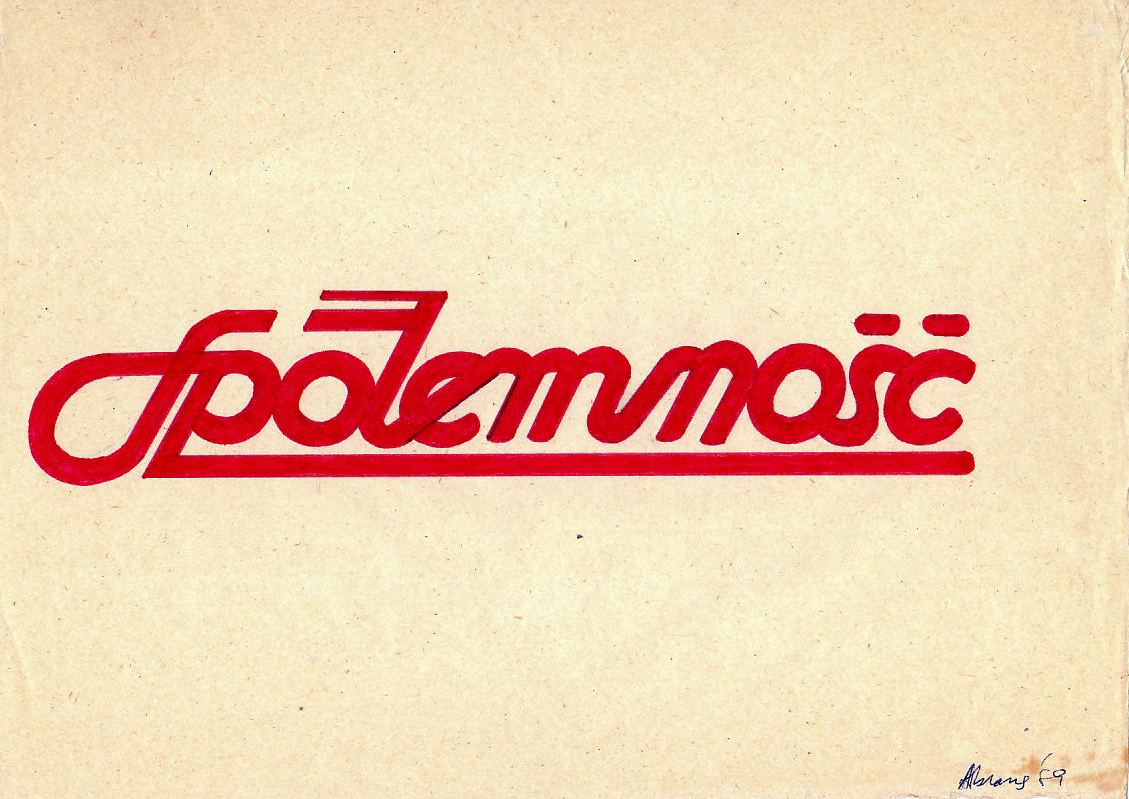
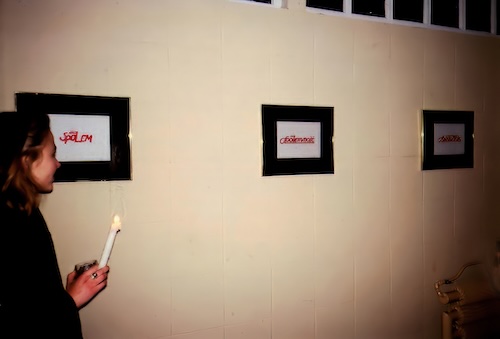
The art project I came up with seems extremely simple, only what it led to is an enormous story that became the subject of a soon to be released book. On normal sheets of typing paper I made three graphic drawings based on two logos seen everywhere in Poland, the last one a hybrid of both. Linked together, I found them symbolic of how I perceived the country would be headed, as communism gave way to a free market system. Seen in the background full-screen slideshow, “Solidarność” (Solidarity) was the union that resisted the communist regime. “Społem” (Together, in English) was the communist entity, akin to a nationalized corporate monopoly, its name found on almost every commercial product, including cafe windows, restaurant dinnerware and department store neon signs.

Both logos were ubiquitous, always with the exact same graphics: “Solidarność” was always a crude painterly graphic with a Polish flag on top, “Społem” always a slick modernist design. Seen in the background slideshow, I switched their iconic graphics and “Spolemność” became my hybrid of the two words, for ironically the two words have similar meanings concerning togetherness, yet what they symbolized was in opposition to each other.
I showed them on Polish TV as the first guest of a new weekly show, “Man in Space.” It was hosted by Zbigniew Makarewicz, who had been recently elected president of the Polish Artists Association, while I had been staying as a guest in his home.
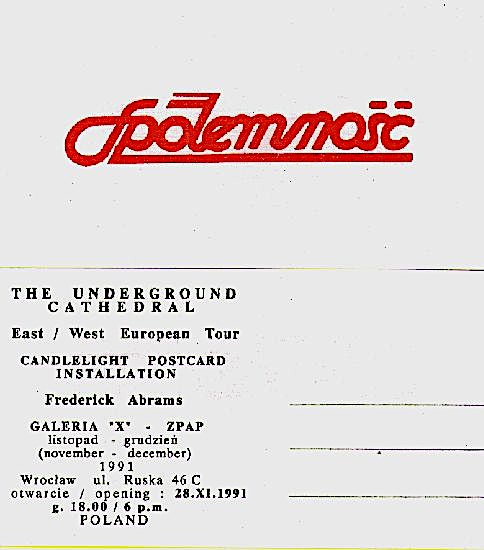
After I left the country, I kept in touch with a few people I came to know during this profound historical moment and out of extreme curiosity I returned two years later to witness the beginning stages of a transform into a free market economy. Waiting for me at the train station was Zbigniew Makarewicz holding keys to his new art gallery, “Galeria X,” which had been handed to him that very day by Jerzy Ryba, who had become Director of Culture of the city of Wrocław. Galeria X had been a clandestine gallery during Martial Law in a private apartment but was found by the communists, who shut it down and Makarewicz was imprisoned for nine months. Upon reopening in a new space in 1991, Makarewicz published a brochure which tells a remarkable story, in which I was most surprisingly included. It describes not only the gallery’s history but its committed mission, and the consequences, during the era of Martial Law. The brochure further states that it was revived in cooperation with scholars at my alma mater, the University of California at Berkeley:

Just as I had been his first TV guest two years earlier, Makarewicz invited me to become the first artist to exhibit in his new gallery. A few months later, I returned to Poland for this exhibition in a new space that still had no electricity. In seven large rooms and an adjoining hallway I exhibited 50 postcard-sized photos, plus the three artworks I made by Ryba’s request to create an art project during my first visit. The evening of the opening reception, I lit candles that I handed to patrons as they arrived to the gallery.
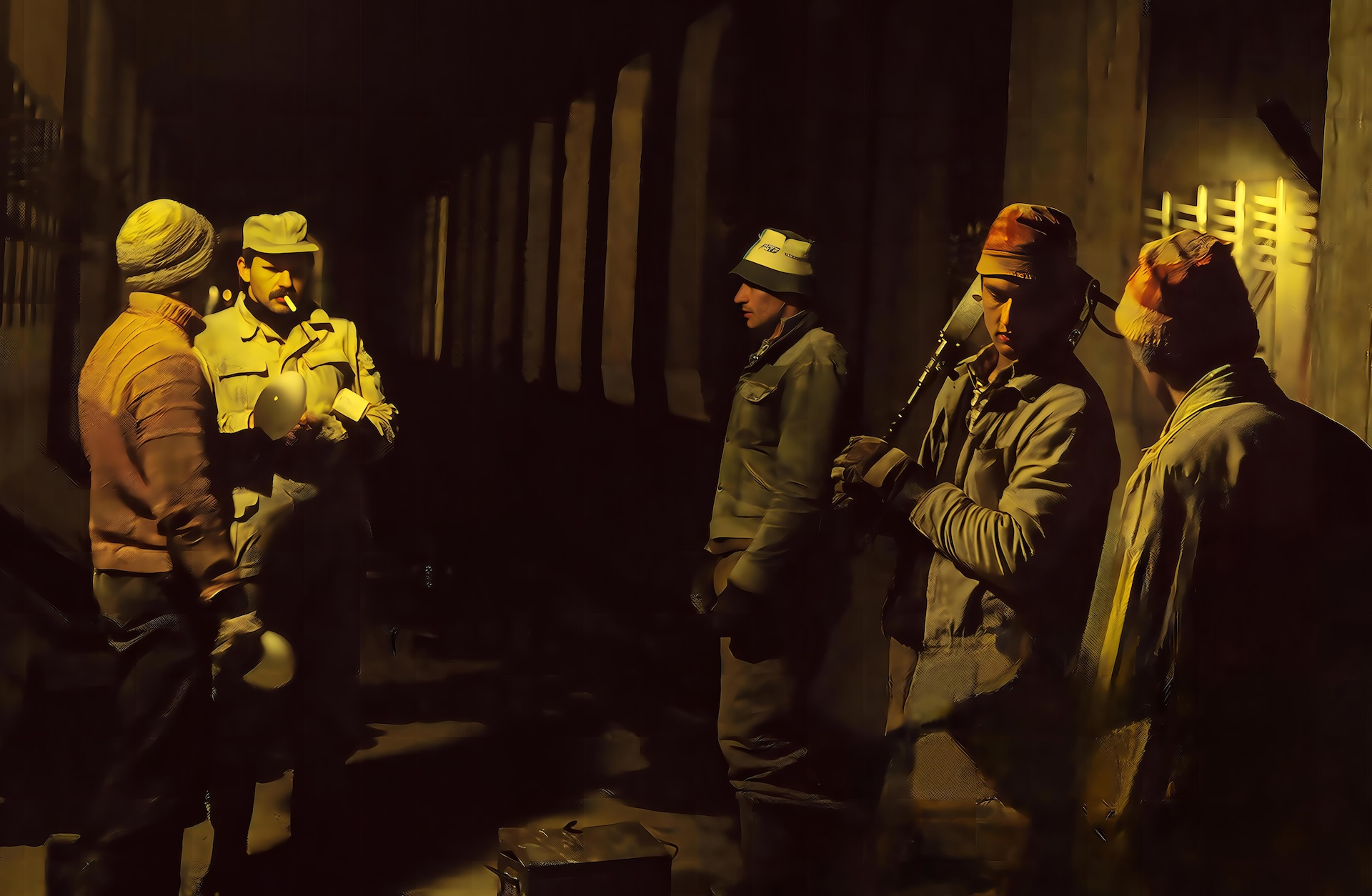
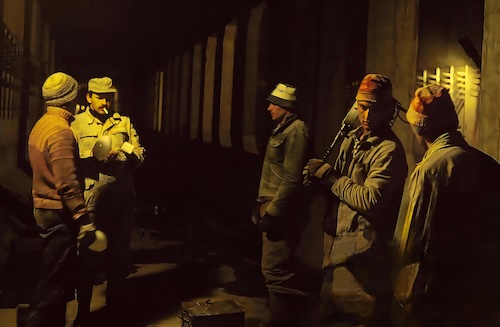
The first example of the photo essay I presented had been taken when I was invited in 1989 to tour one of the only two stations of the Warsaw Metro, which had been under construction.
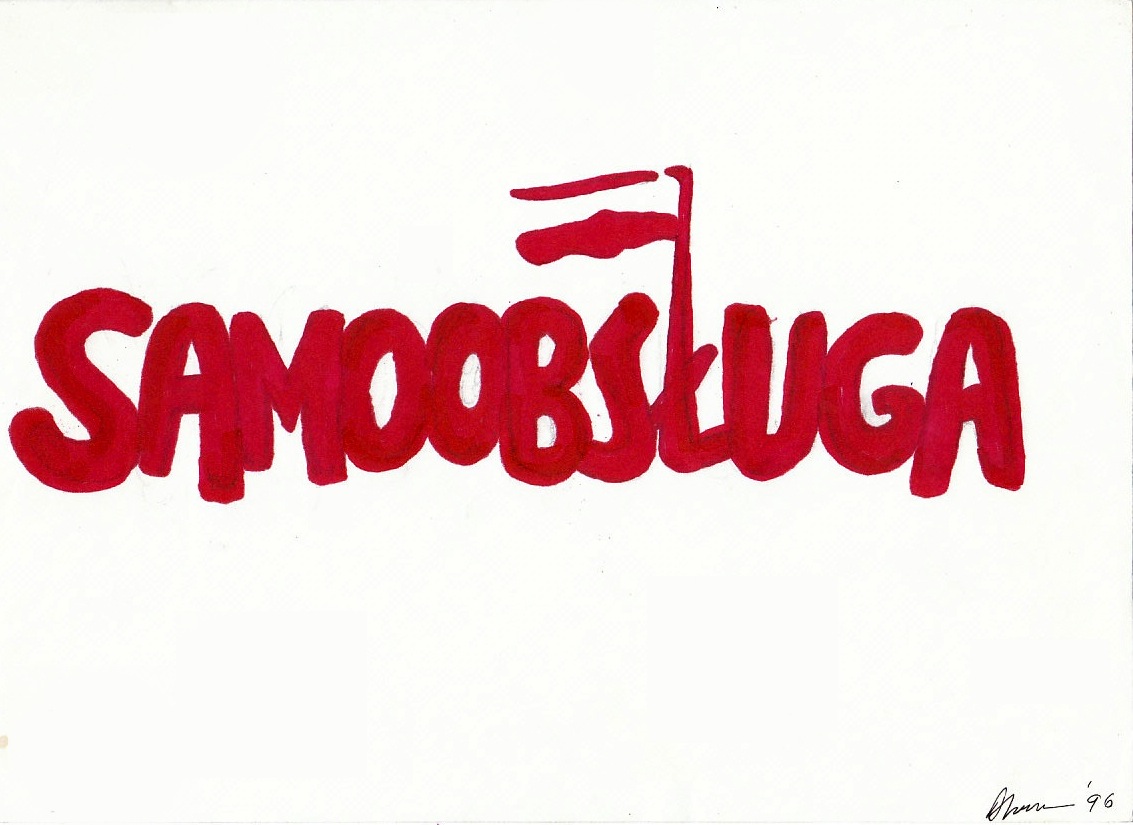
Four years later, I returned to Poland once again, this time I stayed for 16 years. Shortly after my arrival, I entered a cafeteria and saw a word printed very large overhead where the food was served: “SAMOOBSŁUGA” (“Self-Service,” in English). This was another ubiquitous term that I would discover, typically in such places to eat, which in Poland are known as “bary mleczne” (milk bars, in English) and it become the bookend of the alliteration artwork, beginning with the letter “S,” that I made during my first visit in 1989. These four artworks also later became the theme of a short film I created, entitled, “Samoobsługa,” which is one segment of my film version of “The Underground Cathedral” and a live performance that occurred twice in Poland, in 1997.
There is more about this on this page of a detailed 1999 interview about my film by Christine Rheys of Radio France Culture:
France Culture Radio Interview: SAMOOBSŁUGA
Yet, the by far biggest part of this story was yet to come…This mainly concerns a medieval tower which I renovated and transformed into an arts center, global cuisine restaurant and wine bar. It is thoroughly documented on this site here:
In 2012 I returned home to Los Angeles and visited Poland fourteen years later, invited to give a talk at a rare conference concerning the subject of aphorisms, which was sponsored by the German Department of Wrocław University. I was slated to discuss how aphorisms played a significant role in the lyricism of the music of the Counterculture era of the late 1960s and ’70s and I expanded this subject to convey how it had impacted the lyrics for original songs I had written back in the 1980s and ’90s. One in particular, which I wrote in 1989, was intended to reflect the spirit I encountered in Poland as it had emerged from decades of totalitarian communist suppression. At the conference I gave a slide show from a video I had only recently made to illustrate the inspirations for the words of the song. Photos I had taken in 1989, which are part of the video, directly inspired some of the lyrics. Here is a video documentation of my talk:
The following day I was interviewed on the top radio station in the city, Radio RAM, where the song was played for the first time anywhere for the public. It also summarizes my story in Poland. Here is the radio interview containing the song and one other, which was performed at one of the 1997 concerts, though the video for this song is very recent: