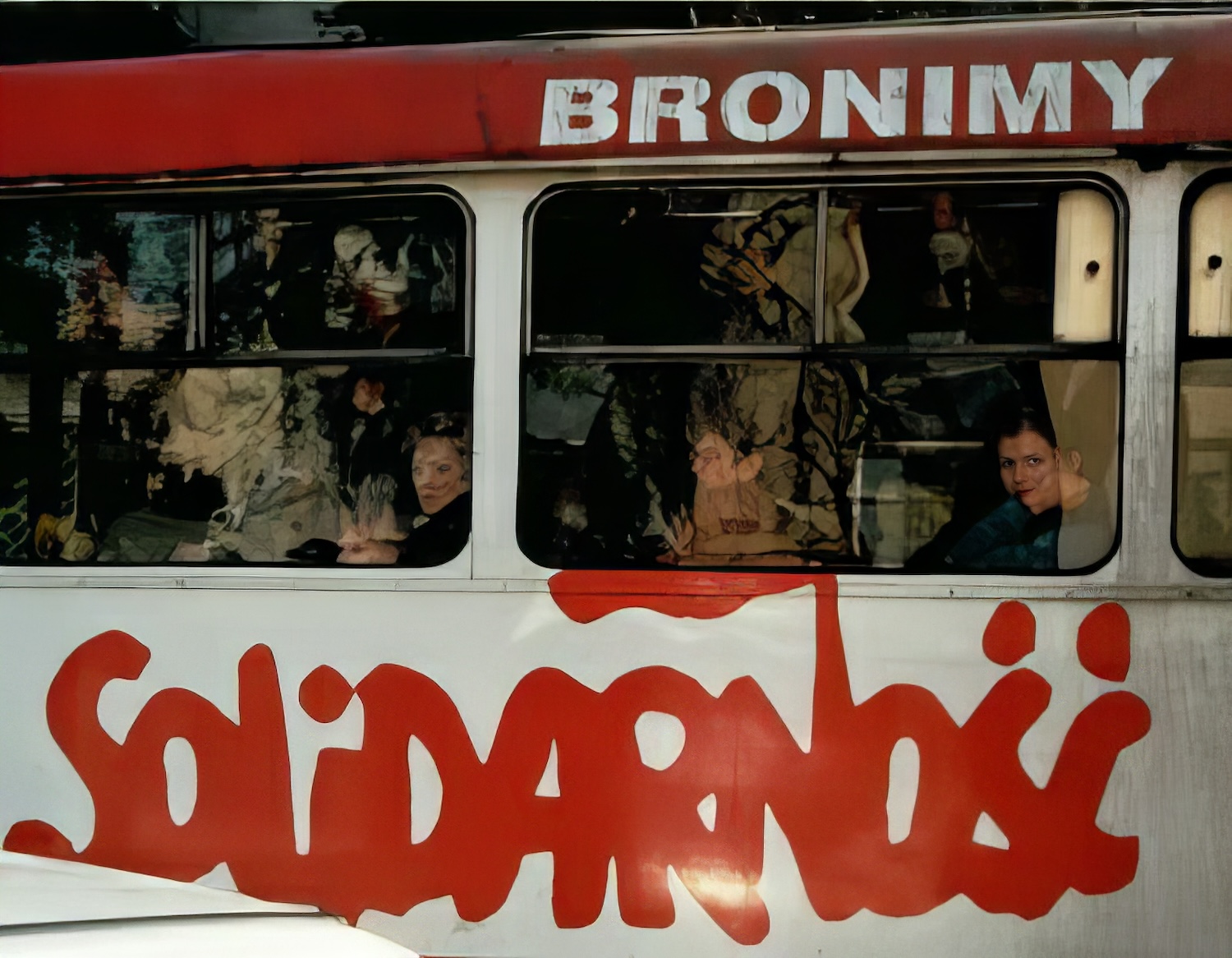
These photos were taken during my first visits to Poland, when the visibly deteriorated conditions of Wrocław’s city center reflected what had led to the dissolution of the bankrupt Soviet Union and it’s devastating impact on daily life. I captured a typical scene of people standing in a bread line outside of a market, in the cold of winter and the remains of a church that had been destroyed by a fire, its tower hidden inside a wooden scaffolding.
What most captured my imagination was a wedding shop, which look like the facade hadn’t been painted since before WWII, where a female mannequin on display in the front window, her head sadly tilted downward. Presumably her young groom appeared to be reaching out to her from behind, yet without any hands. When I returned to Poland two years later, I took more photos of the exact same shop window and discovered the very first signs of a dramatic transformation, that would happen over the following years. Most notably, the shop’s facade had been freshly repainted and a young girl wearing a flowery dress was peering dreamily inside.
Yet, one commonality remained in these times, symbolized by the word “Społem.” The same slick modernist logo was ubiquitous, on shop windows, on restaurant china and cutlery, even on building tops as neon signs. The word’s English translation is “together.” What it actually signified was the former communist monopoly, which controlled and operated nearly all commercial productivity and activity in Poland.
Outside of the city’s art academy building was a water pump, upon which someone had painted a sarcastic statement, by naming it after the great contemporary industrial-style art museum in Paris, Centre Pompidou.